

We Love Our Quilting Community
At High Country Quilts we care deeply about community. With our experiences in retail, we know that a store is not only a place to shop but also a place for the community to gather and share. During this busy...


When you start talking about the best rotary cutters, two names almost always come up: OLFA and Fiskars. Quilters have relied on these brands for years, and for good reason. The OLFA 45mm Ergonomic Rotary Cutter is a workhorse, loved for its perfect balance of comfort and cutting precision. On the other hand, the Fiskars 45mm Comfort Loop Rotary Cutter is often celebrated for its simple, easy-to-handle design.
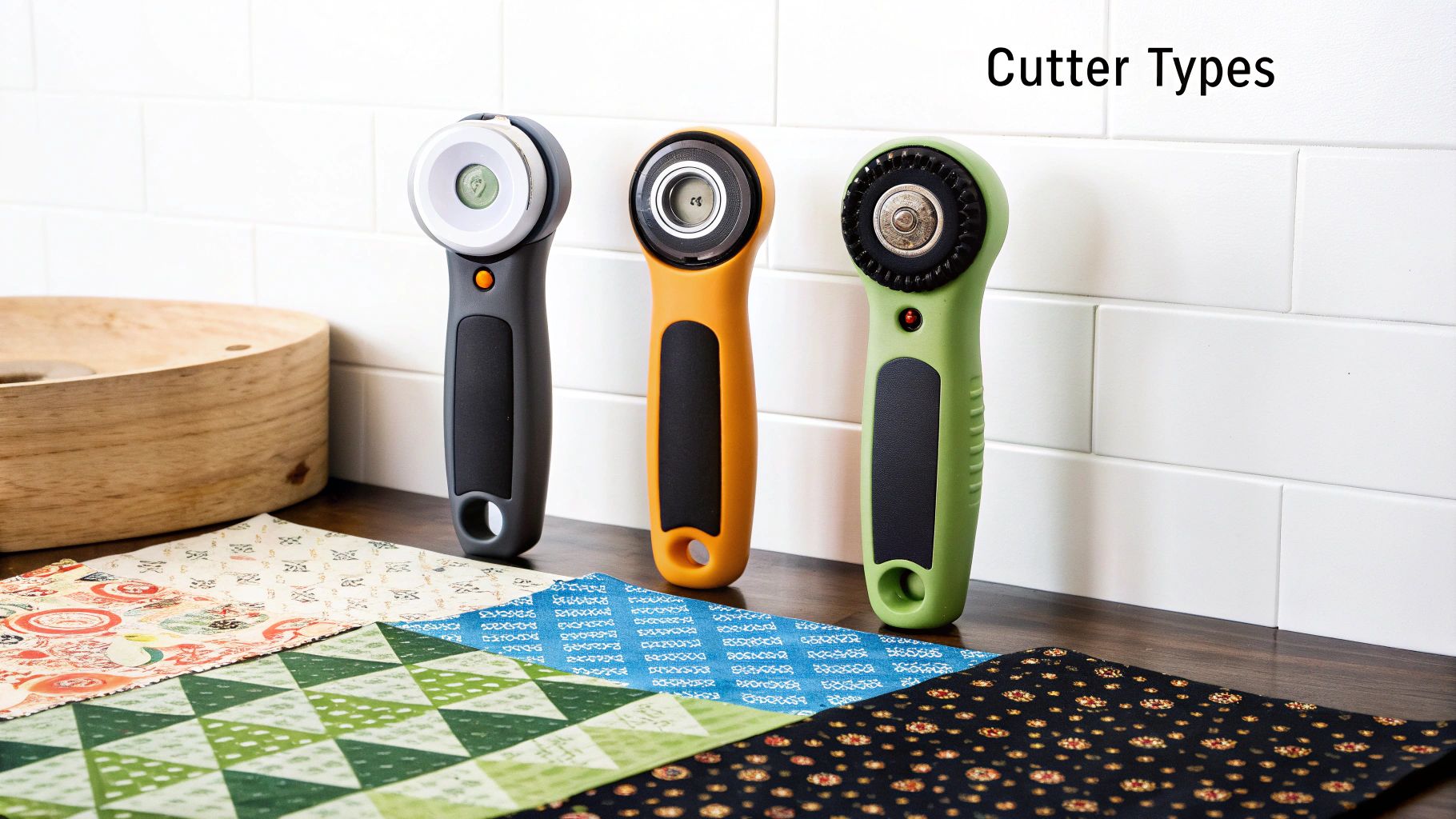
If you’d rather be quilting than endlessly researching tools, you’ve come to the right place. The sheer number of rotary cutters out there can make your head spin, but honestly, only a few key features separate a decent cutter from a truly great one.
We're going to cut through the noise and focus on what actually makes a difference in your sewing room: the sharpness and reliability of the blade, how the handle feels after an hour of cutting, and safety features that work without getting in your way.
Think of this as your personal cheat sheet. Whether you're finally upgrading from that old cutter you’ve had for years or buying your very first one, this guide will help you pick a tool that makes quilting more of a joy and less of a chore.
To make things even easier, I've put together a simple comparison of my top recommendations. This table lays out the most important details side-by-side, so you can quickly see which cutter lines up with what you need. Some are built to power through thick fabric stacks, while others are designed to give your hands and wrists a break during those marathon cutting sessions.
| Model | Blade Size | Handle Type | Safety Feature | Best For |
|---|---|---|---|---|
| OLFA 45mm Ergonomic | 45mm | Contoured Ergonomic | Squeeze-Trigger Blade | All-purpose cutting with reduced hand fatigue. |
| Fiskars 45mm Comfort Loop | 45mm | Loop Handle | Manual Blade Lock | Beginners and quilters prioritizing affordability. |
| Martelli Ergo 2000 | 45mm or 60mm | Angled Ergonomic Grip | Spring-Loaded Guard | Quilters with arthritis or wrist pain. |
A high-quality rotary cutter is more than just a convenience; it's a fundamental tool that directly impacts the accuracy of your piecing and the final quality of your quilt. The right cutter delivers clean, precise cuts every single time.
At the end of the day, the "best" cutter is the one that works for you. It depends on your budget, your hands, and the kind of quilting you love to do. Use this guide as a starting point to find a cutter that feels less like a tool and more like a natural extension of your own hand.
Let's get one thing straight: the right rotary cutter isn't just another gadget in your sewing basket. It's your partner in crime for every single quilt you make. Trying to quilt with a cheap, flimsy cutter is like trying to paint a masterpiece with a worn-out, dollar-store brush. You’re immediately fighting a losing battle, and the whole process turns into a frustrating mess.
A truly great cutter is what stands between you and the kind of crisp, accurate cuts that make intricate patterns possible. It slices through the tedious work of using scissors, turning hours of fabric prep into a quick, satisfying part of the process.
The first thing you’ll notice when you upgrade your rotary cutter is the incredible jump in accuracy. All those perfect points and beautifully nested seams you see in professional quilts? They all start with flawlessly cut fabric. A quality blade glides through layers of fabric without snagging or pulling, leaving you with an edge that’s straight and true every single time.
This initial precision sends positive ripples through your entire project. When your cuts are perfect from the get-go, your pieces fit together like a dream, your seams align effortlessly, and your finished quilt top lies perfectly flat. It’s the difference between wrestling with your fabric and having it cooperate with you.
Think of it this way: a quality rotary cutter doesn't just cut fabric. It cuts down on mistakes, frustration, and wasted time, letting you focus on the creative vision you’re trying to bring to life.
Beyond the perfect cut, a well-designed rotary cutter can save your hands, wrists, and shoulders a world of pain. We all know quilting can involve long hours of cutting, and a clunky, awkward tool will lead to aches and fatigue—or worse, a repetitive strain injury. Ergonomic handles are shaped to fit your hand naturally, which means you can cut comfortably for much longer stretches.
And, of course, there’s safety. These blades are incredibly sharp and demand respect. A good cutter will always have a reliable safety feature, like a blade guard or a trigger that retracts the blade automatically. These features should be second nature to use, protecting your fingers so you can stay in your creative zone without worry.
This demand for better tools isn't just anecdotal. The global market for rotary cutters is growing every year, fueled by a massive community of quilters and crafters who know that reliable, ergonomic equipment is a must. You can learn more about the growth of the rotary cutter market and see just how many people are investing in their craft.
The blade is the real engine of your rotary cutter, and its size dictates the kind of work you can tackle. Think of the different blade diameters like gears on a bike—some are built for raw power and long, straightaways, while others are for nimble maneuvering around tight corners. Matching the blade to the quilting task isn't just a suggestion; it's the secret to getting clean cuts and working without frustration.
Let's break down the four most common sizes you'll run into: 18mm, 28mm, 45mm, and 60mm. Once you understand what each one does best, you can build a small arsenal that ensures you always have the perfect tool ready to go.
The 60mm blade is the heavyweight champion in any quilter's toolbox. Its large circumference lets it plow through up to 12 layers of cotton fabric without breaking a sweat. This makes it the absolute go-to for cutting long, straight strips for borders, sashing, or bindings in a single, clean pass.
I also grab my 60mm when I'm working with tougher materials like denim, cork, or even multiple layers of canvas. Because it's so big, the blade doesn't have to rotate as many times to cover the same distance, which can actually help it stay sharp a bit longer than its smaller cousins.
Pro Tip: Reach for the 60mm blade when you're bulk cutting, powering through thick fabric stacks, or squaring up large quilt tops. It’s all about power and efficiency, not tiny, detailed work.
For most quilters, the 45mm blade is the old faithful. It hits that sweet spot right between power and precision, easily handling four to five layers of fabric while still feeling agile and easy to steer. This is the blade you'll use for cutting out your standard quilt blocks, tracing around templates, or even trimming down garment patterns.
For years, the quilting community has generally favored blades between 28mm and 45mm, and you can see why the 45mm comes out on top for its sheer versatility in rotary cutter market preferences. If you’re just starting out and can only buy one cutter, make it this one.
When your project gets fiddly and precision is everything, it's time to size down.
This simple routine is a great way to keep every blade you own in top condition.
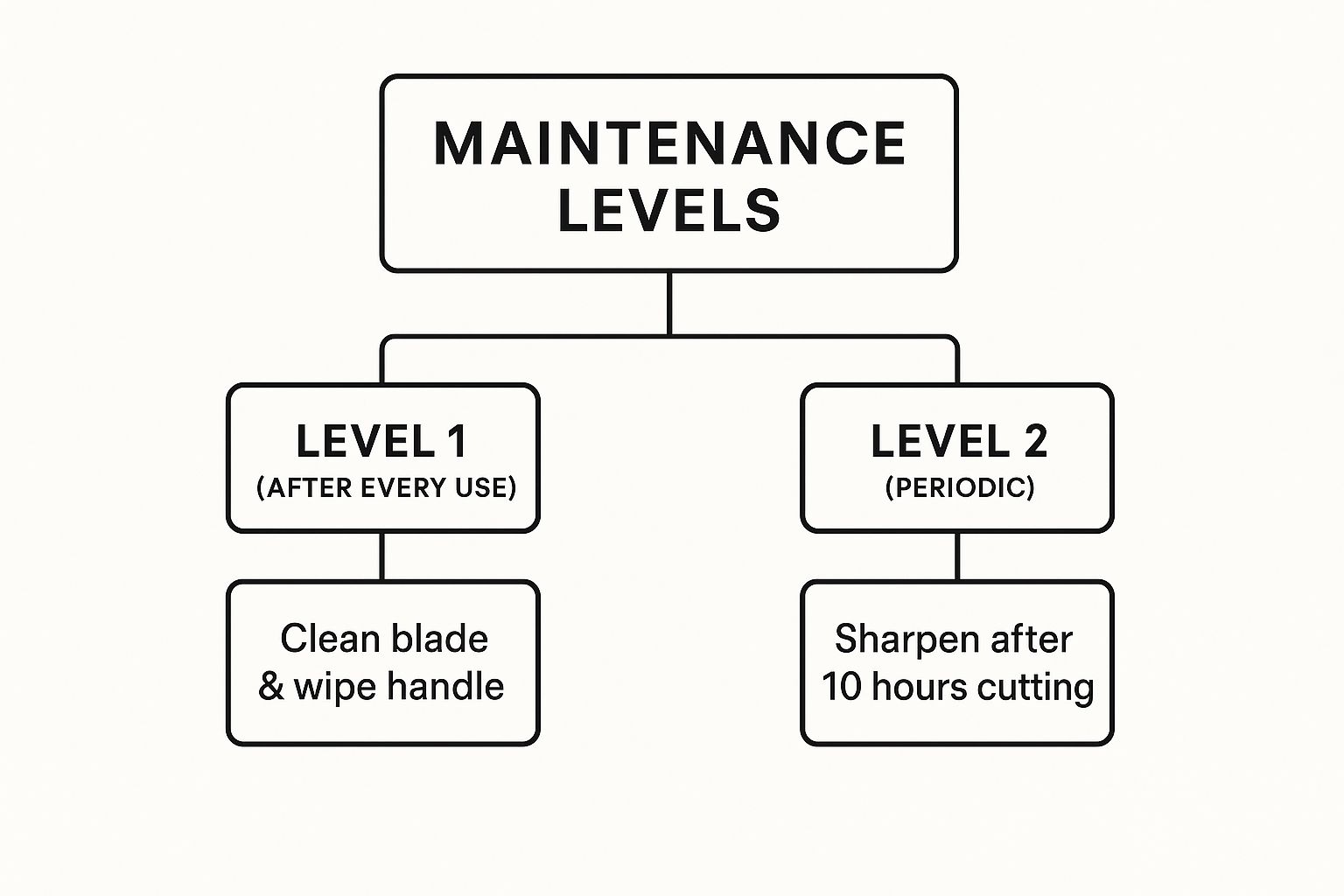
It really shows that those quick, simple habits after each quilting session are just as important as the occasional deep clean or blade replacement for keeping your cuts sharp and accurate.
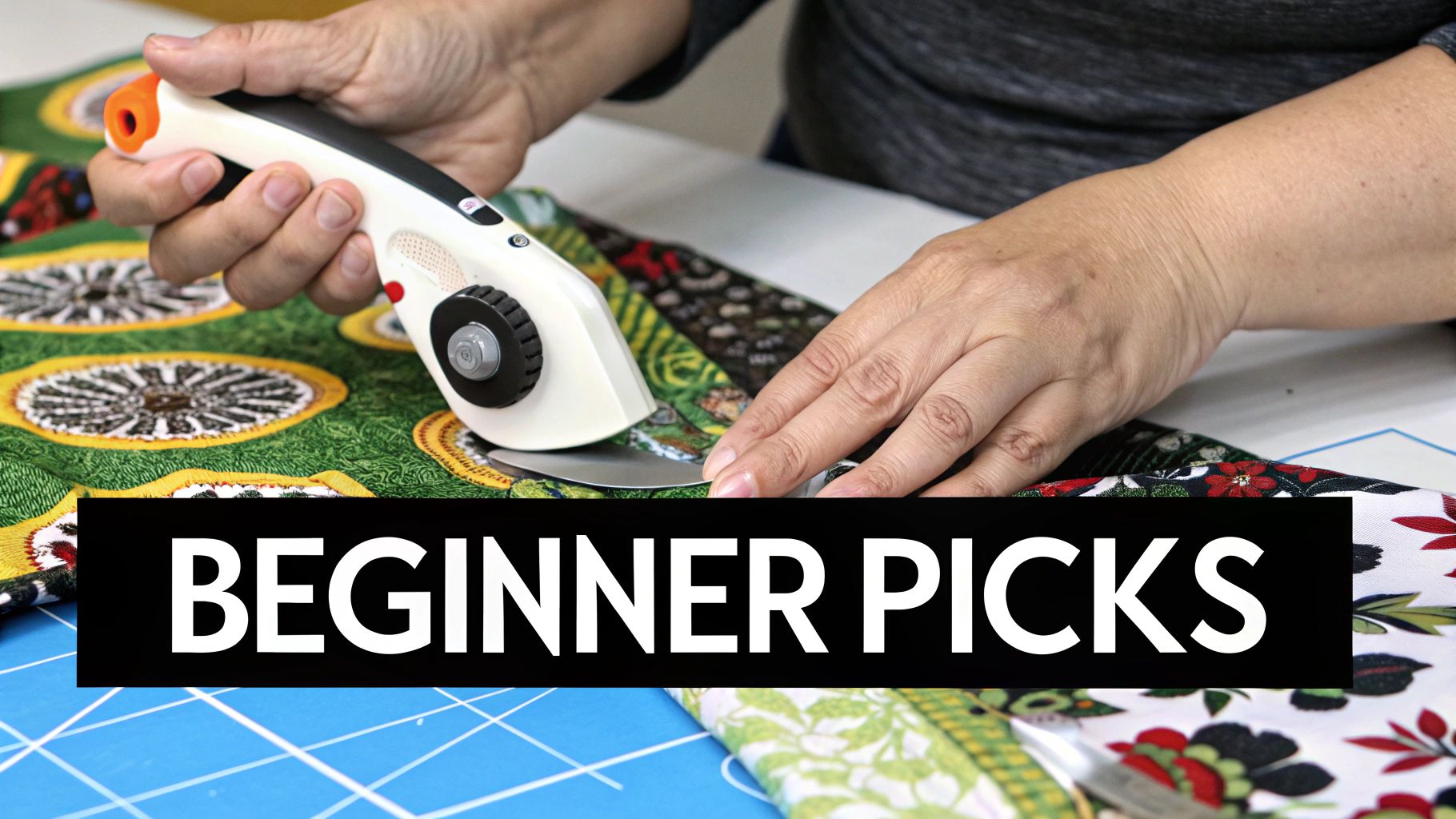
When you're settling in for a long quilting session, your rotary cutter should feel like a natural extension of your hand, not a clunky tool that causes aches and pains. The blade does the heavy lifting, but it's the handle that dictates your comfort, control, and stamina. This is why ergonomics and safety aren't just features—they're essential.
Think of it like picking out a good pair of running shoes. You wouldn't attempt a marathon in stiff boots, right? In the same way, you shouldn't tackle a king-sized quilt with a cutter that makes your wrist scream. The right handle can be the difference between finishing your project with a smile and quitting early because of hand fatigue.
Rotary cutter handles typically come in two main styles: the classic, straight "stick" design and the more modern, curved ergonomic grip.
The trend toward comfort is undeniable. Recent surveys show that 70% of quilters in North America and Europe now opt for ergonomic handles specifically to minimize wrist strain. If you're curious, you can find more data on quilting tool preferences that shows just how much comfort drives today's market.
A great ergonomic handle doesn't just feel good—it gives you better command over the blade. This translates into straighter, more precise cuts with a lot less effort.
Let’s be honest: rotary cutter blades are incredibly sharp. Safety should always be front and center, not an afterthought. Thankfully, modern cutters have built-in mechanisms that keep your fingers safe without slowing you down. The best safety features are the ones that become second nature.
Here are the most common safety systems to look for:
Choosing a cutter with good ergonomics and solid safety features lets you sink into your creative flow, completely confident that your tool is working with you, not against you.
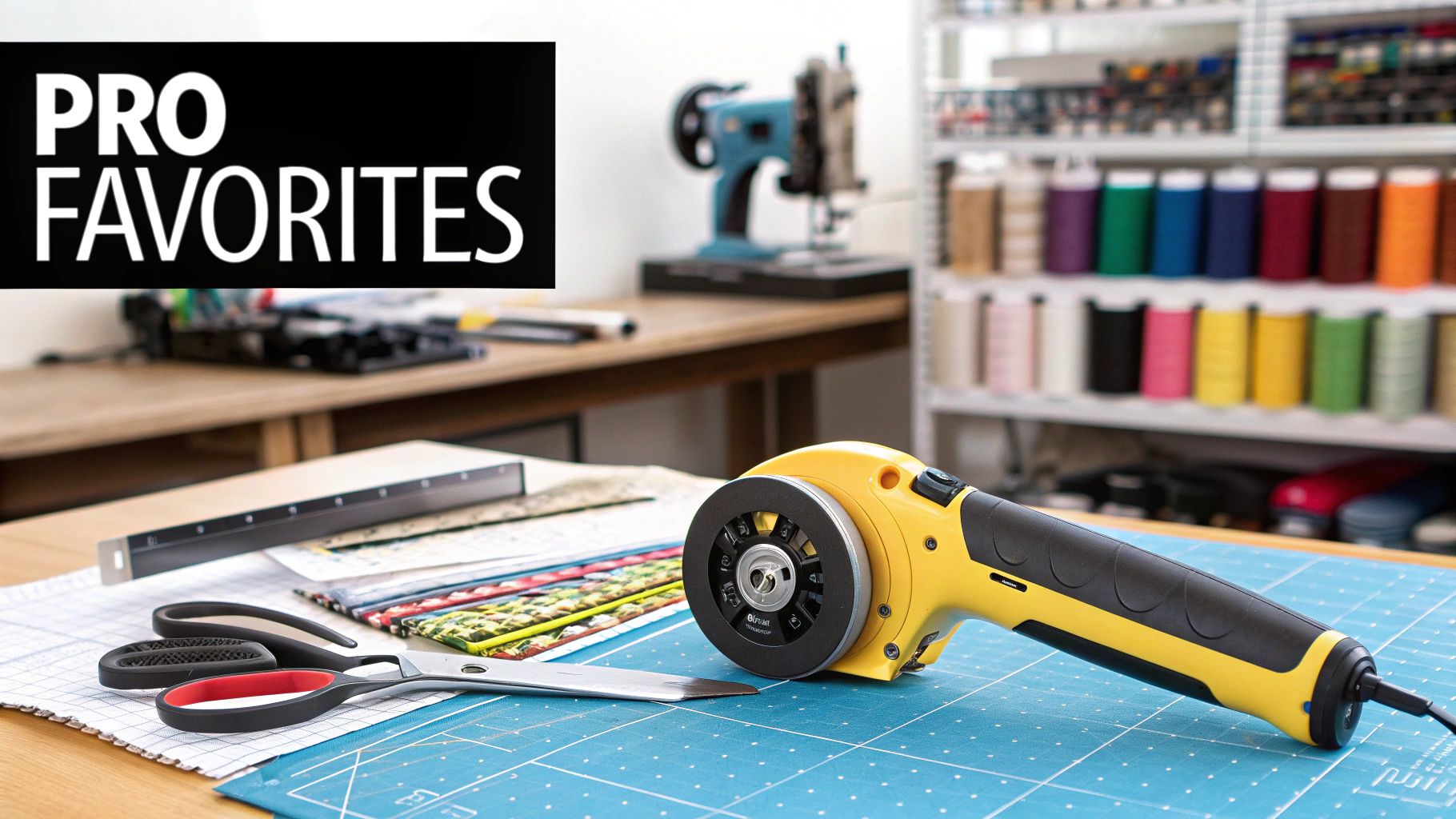
Now that we’ve broken down the anatomy of a rotary cutter, let's talk about the big names you'll see on the shelf. Each brand has its own personality and design philosophy, and understanding them is key to finding your perfect match. Think of it less like a competition and more like finding a partner for your quilting adventures.
We'll focus on the three brands that have earned a permanent spot in most quilters' toolkits: OLFA, Fiskars, and Martelli. Getting to know what makes each one tick will help you choose the cutter that feels right for your hands, your projects, and your budget.
When it comes to the blade itself, everyone knows OLFA. They literally invented the rotary cutter, and their reputation is built on one simple thing: uncompromising blade quality. Their blades are famously sharp straight out of the package and hold their edge for an impressively long time.
This obsession with blade performance is why you’ll find an OLFA in the hands of so many prolific quilters. They need a tool that can slice through multiple layers of fabric all day, every day, without fail. Models like their popular Splash and Ergonomic series are true workhorses, pairing that legendary cutting power with comfortable handles that help keep hand strain at bay.
For many quilters, that bright yellow OLFA isn't just a tool—it's a symbol of pure reliability and precision. If performance is your top priority, you simply can't go wrong here.
If OLFA is all about the blade, then Fiskars is all about the person holding it. Instantly recognizable by their signature orange handles, Fiskars has always focused on making tools that are comfortable, intuitive, and just plain easy to use. They were pioneers of features like the comfort loop handle, which gives you a super secure grip no matter your skill level.
Fiskars is brilliant at user-focused innovation. Many of their designs are naturally ambidextrous, making them a go-to for left-handed quilters. They also have some of the most straightforward blade-changing systems and safety locks around. This makes them a fantastic first cutter for beginners who want something dependable without any fuss.
And then there's Martelli, who completely carved out their own niche by putting ergonomics above everything else. Their cutters look radically different from anything else on the market, and that’s entirely by design. They didn't just tweak the handle; they re-engineered the entire cutting motion.
Martelli’s signature angled handle is designed so you cut with your arm and shoulder, not your wrist. This is a total game-changer for anyone who struggles with arthritis, carpal tunnel, or general hand fatigue. By shifting the effort to larger, stronger muscle groups, Martelli gives quilters a way to work for hours with dramatically less pain and strain.
A good rotary cutter is one of the best investments you can make for your quilting studio. But just like a chef's favorite knife, it needs a little TLC to keep performing at its best. Keeping your cutter maintained is simple, and it's the key to getting those crisp, clean cuts every single time.
Think of it this way: trying to quilt with a poorly maintained cutter is like trying to drive a car that desperately needs an oil change. It’ll still move, but not very well, and you're risking a bigger problem down the road.
The biggest part of maintenance is knowing when your blade has had enough. Your fabric will tell you everything you need to know. Are you seeing skipped threads? Are the edges looking a little ragged? Do you feel like you have to put your whole body weight into a cut that used to be effortless? If so, it’s time for a fresh blade.
A dull blade isn't just frustrating; it’s a genuine safety risk. The extra pressure you have to apply makes it much more likely the cutter will slip and go somewhere you don't want it to.
A sharp blade is a safe blade. It does the work for you, gliding through fabric with minimal effort. This gives you far more control and dramatically lowers the chance of a slip-up.
Swapping out a blade is a quick job, but it’s one that requires your undivided attention. Those little discs are incredibly sharp. Always handle them by the hub, never the edge, and have a safe place ready for the old one—an old mint tin or a dedicated blade disposal case works perfectly.
Here’s a simple breakdown of the process:
Blade changes are important, but don't forget the small stuff. Lint and tiny fabric fibers love to build up around the blade and in the housing. Over time, this gunk can make your blade drag or even wobble.
A quick blast of compressed air or a once-over with a soft little brush after a big project is all it takes to keep things running smoothly.
Finally, get into the habit of storing your cutter correctly. Always retract the blade guard and keep it somewhere safe, not perched on the edge of your cutting table. Using your cutter with a good self-healing mat is also non-negotiable. The mat gives the blade a forgiving surface to cut into, which protects your blade’s edge (and your table!), ensuring even the best rotary cutters for quilting will have a long, happy life in your studio.
Even after you've got the basics down, a few questions always seem to come up when you're in the middle of a project. Getting a straight answer can save you a ton of frustration and help you cut with more confidence. Let's tackle some of the most common things quilters ask.
Think of this as your quick-reference guide for those little details that make a big difference, from picking your first cutter to knowing when that blade has finally had enough.
If you're just getting started, go with the 45mm blade. It truly is the workhorse of the quilting world and the one you'll reach for most often.
It’s big enough to slice through multiple layers of fabric when you're cutting strips, but it's still nimble enough to handle curves without feeling clumsy. While you might add other sizes to your collection later on, the 45mm is the perfect starting point that will handle just about anything you throw at it.
This is a tempting shortcut, but I always recommend sticking with the same brand for both your cutter and your blades. It might not seem like a big deal, but manufacturers design their handles, blades, and safety features to work together as a single unit.
Popping in an off-brand blade can cause a wobbly, insecure fit. That wobble can lead to skipped threads, snagged fabric, and just plain sloppy cuts. More importantly, an ill-fitting blade can be a safety hazard. For the best performance and your own peace of mind, matching the blade to the cutter is the way to go.
A manufacturer's handle and blade are designed to work in perfect harmony. When you stick with the same brand, you're getting the tool to perform exactly as the engineers intended, which means better, safer cuts for you.
Your fabric will tell you everything you need to know. The moment you start seeing little skipped threads or uncut spots in your fabric, it's time for a new blade. Jagged, fuzzy edges are another dead giveaway.
You'll also feel it. If you suddenly have to press down a lot harder to get a clean cut, your blade is dull. Pushing on a dull blade is not only frustrating, it’s a recipe for slipping and potential injury. As soon as you notice your cut quality dropping, swap it out for a fresh one. It makes all the difference for both your accuracy and your safety.
At High Country Quilts, we know that the right tools can completely change your creative process. To see our hand-picked collection of top-quality rotary cutters, blades, and quilting supplies, come visit us at hcquilts.com.
At High Country Quilts we care deeply about community. With our experiences in retail, we know that a store is not only a place to shop but also a place for the community to gather and share. During this busy...

Hi! We’re Adam and Renee Wheaton, the new owners of High Country Quilts! For more than 40 years, we’ve owned and operated vacuum and sewing businesses. Following in Renee’s father’s footsteps after he retired from All Discount Vacuum and Sewing in Colorado...


Leave a comment