
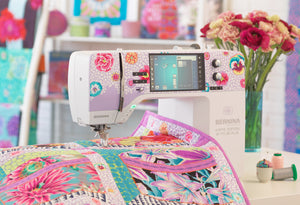

We Love Our Quilting Community
At High Country Quilts we care deeply about community. With our experiences in retail, we know that a store is not only a place to shop but also a place for the community to gather and share. During this busy...


Figuring out which needles to use for hand sewing can feel a little overwhelming. Suddenly, you're staring at a wall of needle packets, and they all look the same. But here’s the good news: you really only need to start with three core types to handle over 80% of your projects.
The best needles for hand sewing are always the ones designed for your specific task. Think of it like a chef choosing the right knife—the right tool makes the work smoother, cleaner, and honestly, a lot more enjoyable.

Grabbing any old needle is a common rookie mistake, but it can lead to snagged fabric, clumsy stitches, or even a snapped needle halfway through a seam. Let’s skip that frustration.
Instead of trying to memorize dozens of specialty needles right away, the trick is to build a small but mighty collection. We’ll focus on the essential trio that will see you through everything from mending a favorite shirt to starting your very first quilt.
Think of these three as your desert-island needles. Each one has a specific job, and its design—the length, the size of the eye, and the shape of the point—is what makes it perfect for that task.
Sharps for General Sewing: These are your workhorses. Sharps have a medium length, a very sharp point, and a small, rounded eye, making them perfect for most woven fabrics. Use these for hemming trousers, fixing a split seam, or any general garment repair. They’re the all-rounder every sewing kit needs.
Betweens for Quilting: Shorter, stouter, and also very sharp, Betweens (or Quilting needles) give you incredible control. Their compact size helps you make the tiny, even stitches needed to go through multiple layers of fabric and batting. This is what gives hand-quilting its beautiful, classic look.
Embroidery Needles for Detail Work: At first glance, Embroidery needles look a lot like Sharps, but they have one key difference: a much longer, larger eye. This is a game-changer. It’s designed to let you thread thicker embroidery floss or multiple strands of thread without shredding them, which is crucial for clean, beautiful decorative stitching.
Once you get a feel for these three, you’ll start to intuitively understand how a needle’s design impacts your sewing. This hands-on experience is so much more valuable than just reading charts—you’ll simply know which tool to reach for.
When you start a new project, just ask yourself two questions: What fabric am I using, and what am I trying to accomplish?
Is it a basic repair on a cotton shirt? Grab a Sharp. Are you stitching together quilt blocks? A Between is your best friend. Want to add a little floral flourish to a denim jacket? The Embroidery needle is the clear choice. This simple approach demystifies needle selection and builds your confidence with every stitch.
To make it even easier, here's a quick reference table to help you match the right needle to your next project.
| Project Type | Recommended Needle | Why It Works Best |
|---|---|---|
| Mending a torn seam on a cotton dress | Sharps | The medium length and sharp point glide through standard woven fabrics without causing damage. |
| Hand-quilting a patchwork blanket | Betweens | Its short, sturdy shaft allows for precise, even stitches through multiple layers of fabric and batting. |
| Adding a monogram to a handkerchief | Embroidery | The long, wide eye easily accommodates embroidery floss without fraying or splitting the thread. |
| Hemming a pair of denim jeans | Jeans/Denim Needle | This is a specialty needle with a strong shaft and very sharp point designed to penetrate dense fabric. |
| Appliquéing felt shapes onto a banner | Sharps or Appliqué | A Sharp works well, but a dedicated Appliqué needle is even shorter, offering more control for tiny stitches. |
| Sewing on a button | Sharps | A standard Sharp is strong enough for the job and its eye is typically large enough for button thread. |
This table covers some of the most common tasks you'll encounter. As you can see, starting with the "essential trio" gets you most of the way there, and from that foundation, it's easy to see when a specialty needle might make your life a little easier.

Hand sewing needles might look like simple bits of metal, but they’re actually precision tools. Getting to know their basic anatomy is the first step in moving from guesswork to picking the perfect needle every single time. It's a lot like finding the right key for a lock; the right needle just works with your chosen fabric and thread.
Every sewing needle has three core parts: the point that pierces the fabric, the shaft (or blade) that carries the thread through, and the eye that holds the thread. It’s the small, smart differences in these three areas that give each needle its specific job.
The point, shank, and eye are all engineered slightly differently from one needle type to the next. For instance, the length and thickness of the shank directly impact how much control you have and the size of the hole the needle leaves behind.
Let's get into the nitty-gritty of how each part works. Once you understand this, you can start to see why some needles are perfect for certain tasks and even troubleshoot common sewing frustrations.
The Point: This is where the action happens. A sharp point is the standard, made to cleanly pierce tightly woven fabrics. A ballpoint or blunt point, on the other hand, is designed to slide between the fibers of knits or canvas, preventing snags. Then you have specialty points, like the triangular tip on a Leather needle that acts like a tiny knife to cut through tough hides.
The Shaft: The shaft's thickness dictates how big of a hole you're making. You'll want a thicker, stronger shaft for dense materials like denim, but a very fine shaft is crucial for delicate fabrics like silk to avoid leaving noticeable punctures. The length matters, too. Shorter needles, like Betweens used in quilting, give you more precise control for quick, even stitches.
The Eye: The eye's job is to hold the thread, and its size and shape must be a good match. Using a needle with an eye that's too small is a classic rookie mistake—it will shred and fray your thread as you sew. Embroidery needles have long, oval eyes to fit multiple strands of floss, while Sharps have small, round eyes meant for a single strand of general-purpose thread.
Think of a needle as a delivery system. Its only job is to create a temporary path in the fabric just wide enough for the thread to follow without getting damaged. When you're done, the fabric should close back up around the thread. The wrong needle either makes a path that’s too big (leaving a hole) or too small (damaging both the thread and the fabric).
Needle sizing can feel a bit backward at first, but it follows one simple, if counterintuitive, rule: for hand sewing needles, the higher the number, the finer and shorter the needle.
A size 12 needle is therefore much finer than a size 5. It’s kind of like sandpaper grit—a higher number means you're using a finer tool for more delicate work.
You'll often see needle packets labeled with a size range, like "Sharps 5/10." This just means the package contains an assortment of sizes, from a heavier size 5 to a finer size 10. It’s a great way to stock up and have options on hand. Once you get this sizing rule down, you can walk into any craft store and read a needle package like a pro.
Once you’ve mastered the basics with Sharps and Betweens, you’ll quickly find that certain projects just... fight you. That’s usually when a specialty needle can save the day. Think of your needle collection like a chef’s knife roll; you have your main chef's knife for most tasks, but you wouldn't use it to shuck an oyster or peel a potato.
These specialized needles are designed to solve very specific problems. Using the right one can be the difference between a frustrating afternoon and a finished piece you’re proud of. They make tough jobs feel easy and delicate work possible.
Some materials just laugh at a standard needle. When you’re staring down a project involving leather, thick vinyl, or multiple layers of denim, you need to bring in the heavy hitters.
Leather (or Glover’s) Needles: The secret to a Leather needle is its unique triangular point. Instead of just poking a hole through the material, it cleanly slices a tiny, three-sided slit. This is a game-changer, allowing your thread to pass through tough, non-woven materials like leather, suede, or vinyl without causing ugly tears or requiring superhuman strength. If you’re making bags or working on cosplay armor, these are simply non-negotiable.
Jeans/Denim Needles: We often think of these for machine sewing, but the hand-sewing versions are a lifesaver for repairs. They have a tough, reinforced shaft that resists bending and a wicked-sharp point that’s engineered to pierce the dense weave of denim without damaging the surrounding fibers. This is your go-to for mending that rip in your favorite pair of jeans.
Moving on from pure construction, there's a whole family of needles designed for adding texture, color, and embellishments, or for making seamless repairs.
Chenille and Tapestry Needles People get these two mixed up all the time because, at first glance, they look almost identical. Both have a sturdy shaft and a large, easy-to-thread eye to accommodate thicker yarns and embroidery floss. The real difference is all in the tip.
A Chenille needle has a sharp point and a large eye, making it the perfect tool for ribbon embroidery or crewelwork. It can easily pierce tightly woven fabric while carrying a thick strand of wool or a delicate ribbon.
A Tapestry needle, by contrast, has a blunt, rounded tip. It’s designed to slide gently between the woven threads of canvas or Aida cloth for things like needlepoint or cross-stitch. You're parting the fabric, not piercing it.
Here's the key takeaway: Chenille needles pierce, and Tapestry needles part. That blunt tip also makes a Tapestry needle the absolute best tool for weaving in the ends on your knitting and crochet projects.
Darning and Sashiko Needles These two are all about length. They are built for weaving threads through fabric, whether you're fixing a hole or creating a beautiful, traditional pattern.
Darning Needles: Just as the name implies, these are for mending. Their long shafts make it easy to weave a patch of new threads over a hole in a sock or a worn-out elbow on a favorite sweater. You can find them with sharp or blunt points, depending on the fabric you’re working with.
Sashiko Needles: Created specifically for the traditional Japanese art of sashiko, these needles are characteristically long, rigid, and sharp, with a surprisingly small eye. The length is everything here—it allows you to load multiple, precise running stitches onto the needle at once before pulling the thread through, which is how you get those iconic, rhythmic patterns.
And finally, we have the needles for tasks that require the utmost precision and a delicate touch.
Beading Needles Welcome to the supermodels of the needle world: incredibly long, thin, and flexible. The entire design of a Beading needle is built around one simple mission: fitting through the minuscule holes in glass beads and sequins. To achieve this, the eye of the needle is made to be no wider than the shaft.
They're far too wispy and flexible for any kind of general sewing, but for embellishment and beadwork, they are absolutely essential. Their delicate nature means they do bend easily, so it’s always a good idea to keep a pack of them in your kit—you’ll be glad you have spares.
Have you ever tried sewing a delicate fabric only to end up with a line of unsightly snags and puckers? It’s a frustratingly common problem, and the culprit is almost always the needle. Think of it like trying to paint a watercolor with a thick house-painting brush—the tool is simply wrong for the job, and it shows.
To get those smooth, professional-looking stitches, the secret is to match your needle to your fabric. A good needle should glide through the material, parting the fibers just enough for the thread to follow, then letting them settle back into place as if nothing happened.
Working with fabrics like silk, chiffon, organza, or a fine cotton lawn demands finesse. These materials are notorious for showing every single puncture, so a fine, razor-sharp needle is non-negotiable.
Your best friends here are size 9 to 12 Sharps or even a delicate Milliner’s needle. Their slender shafts create the tiniest possible entry point, protecting the fabric's delicate weave. Using a needle that’s even slightly too thick is a classic mistake that will leave a trail of visible holes along your seam line.
This is where most of us spend our sewing time. We're talking about quilting cottons, linen, chambray, and flannel—the workhorses of the fabric world. They're generally stable, forgiving, and a pleasure to work with.
For these projects, a mid-range Sharp (size 7 or 8) is the perfect all-rounder. It has the right balance of strength and sharpness to pierce the fabric cleanly without being excessive. If you're a quilter piecing cotton blocks, you might prefer a size 9 or 10 Between for the added control it gives you over those tiny, precise stitches.
Here’s a pro tip: Listen to your needle. If you hear a distinct "pop" or feel like you're punching through the fabric, it’s telling you something. Your needle is either too thick for the material or has become dull and needs to be replaced.
On the other end of the spectrum are tough materials like denim, canvas, upholstery fabric, or a thick quilt sandwich ready for quilting. Trying to use a fine needle here is a recipe for disaster; it will almost certainly bend or snap on the very first stitch.
For these heavy-duty jobs, you need a needle that can handle the pressure.
To make choosing the right needle even easier, here’s a quick-reference chart pairing common fabrics with their ideal needle partners.
| Fabric Type | Best Needle Type | Recommended Size Range | Sewing Tip |
|---|---|---|---|
| Silk, Chiffon, Organza | Sharps, Milliners | 10-12 | Use a new, very fine needle to prevent snags and visible holes. |
| Cotton Voile, Lawn | Sharps, Milliners | 9-10 | A fine thread and needle combination is key for delicate seams. |
| Quilting Cotton, Linen | Sharps, Betweens | 7-9 | A size 8 Sharp is a great all-purpose choice for these fabrics. |
| Flannel, Chambray | Sharps | 7-8 | Choose a needle sturdy enough to handle slightly thicker weaves. |
| Denim, Canvas | Jeans/Denim, Sharps | 1-5 | A dedicated Jeans needle has a reinforced shank to prevent breaking. |
| Jersey, Knits | Ballpoint, Stretch | 7-9 | A rounded Ballpoint tip separates knit fibers instead of cutting them. |
| Leather, Vinyl | Leather (Glover's) | 3-7 | The triangular point cleanly slices the material, preventing tears. |
| Upholstery Fabric | Upholstery, Sharps | 1-5 | A heavy-duty needle is required to penetrate dense, thick weaves. |
Keep this chart handy, and you'll always have a great starting point for any project that comes your way.
Sometimes, your project takes you off the beaten path into materials that require a truly specialized needle. This decision tree is a fantastic visual guide for those moments when you're working with something unique like leather or adding fine embellishments.

As you can see, the project itself—whether it's sewing leather or adding tiny beads—dictates the kind of needle you need. Let’s break these down.
Leather and Vinyl: When you're sewing non-woven materials like leather or vinyl, a standard needle just won't do. Its sharp point pushes the material aside, which can easily cause ugly tears. You absolutely must use a Leather (or Glover's) needle. It features a unique triangular point that acts like a tiny blade, slicing a clean, small hole for the thread to pass through. This prevents damage and makes the whole process infinitely easier.
Beading and Embellishments: The main challenge when sewing tiny beads or sequins is finding a needle that can actually fit through the bead's hole. The Beading needle was designed for exactly this. These needles are exceptionally long and thin, with an eye that is the same width as the shaft, allowing them to slip through even the most minuscule seed beads with ease.
Knits and Stretchy Fabrics: If you take a sharp needle to a jersey or knit fabric, you risk snagging and breaking the delicate looped fibers, which can cause runs in your garment. The right tool here is a Ballpoint needle. Its tip is slightly rounded, designed to slide between the fibers rather than piercing them, keeping your stretchy fabrics intact.
It’s one of the most frustrating moments in sewing: you're in the zone, everything is going smoothly, and then suddenly your stitches start skipping, your fabric puckers, or your thread keeps shredding. We often blame ourselves, but more often than not, the real culprit is a tiny, overlooked tool—your needle.
Thinking of a needle as a disposable afterthought is a huge mistake. Just like a chef keeps their knives perfectly sharp, a smart sewist knows that a needle's condition is everything. Let's talk about how to keep your needles in top shape and how to spot the signs that it's time for a fresh one.
A needle has a much shorter lifespan than you might think. With every stitch, the point gets a little duller and the shaft can develop tiny, invisible burrs that act like little wrecking balls on your fabric. As a general rule, it's best to start every new project with a fresh needle, or at the very least, swap it out after every 6-8 hours of stitching.
The easiest way to tell if your needle is done? Use your ears. If you hear a distinct "popping" or "punching" sound as it enters the fabric, that’s the sound of a dull point forcing its way through the fibers instead of gliding. A sharp, happy needle should be nearly silent.
Keep an eye out for these other red flags:
Think of a new needle as cheap insurance for your project. You've already invested in beautiful fabric and spent hours of your time. Don't let a ten-cent tool that's past its prime ruin all your hard work.
Taking care of your needles doesn't have to be complicated, but it does make a difference. The first rule is to never leave them lying around or stuck in a project, where they can get lost, bent, or even rust.
Your pincushion is more than just a cute place to park your needles. Many classic tomato pincushions come with a little strawberry attached—that’s an emery cushion. Stabbing your needle into the emery a few times acts like a quick tune-up, polishing away any minor residue and helping to keep the point sharp.
A clean needle also performs so much better. While it’s hard to find official data on longevity specifically for hand-sewing needles (unlike the broader medical and industrial needle industry, which is a massive market you can learn about in market research reports), every experienced crafter knows it’s true. If you've been working with fusibles or adhesives, your needle can get gummy. Just wipe it down with a cloth lightly dampened with rubbing alcohol to clear away that sticky residue.
Before you get too frustrated with a project that’s gone off the rails, stop and check your needle. It’s the secret culprit behind some of the most common sewing headaches.
| Common Problem | The Likely Needle-Related Cause | The Simple Solution |
|---|---|---|
| Skipped or Uneven Stitches | The needle is bent, dull, or the wrong type for your fabric (e.g., using a Sharp on a knit). | Replace the needle with a new one. For knits, switch to a Ballpoint needle. |
| Thread Keeps Shredding | The needle's eye is too small for your thread, or the inside of the eye has a burr. | Switch to a needle with a larger eye, like an Embroidery or Chenille needle. Always use a high-quality needle. |
| Fabric is Puckering or Snagging | The needle is too thick for your delicate fabric, or the point is dull and pushing fibers instead of piercing them. | Move to a finer needle with a higher size number (e.g., from a size 8 to a size 10). Ensure the point is sharp. |
| It's Hard to Push the Needle Through | The needle is too fine for a dense material, or it has become dull. | Switch to a thicker, stronger needle with a lower size number (e.g., a size 5 Sharp or a Jeans needle for denim). |
Knowing which hand sewing needle to pick is a huge part of the puzzle, but what really brings sewing to life is connecting with other people who share your passion. Here at Famcut, we're more than just Atlanta's go-to spot for cosplay and sewing gear—we’re a community built on creativity, and this is where our expertise and your projects come together.
We're incredibly particular about the needles we carry. You’ll only find top-tier brands on our shelves, because we believe good tools make all the difference. When you see names like John James or Tulip in our store, you can be sure they’ve been chosen for their strength, smooth finish, and reliability. Crappy tools just lead to frustration, and we're not about that.
But it's not just about selling you the right supplies. We genuinely want to see what you're making! Bring your project ideas, your half-finished cosplay armor, or just your questions to our Atlanta shop. Stuck on which needle can handle that tricky vinyl, or can't get your quilting stitches to look just right? Our team is here for it.
We’ve always found that the best learning happens when you’re doing the work, with a little expert help right there when you need it. Think of this as your open invitation to join our crew and get the support you need to make something incredible.
To help you build your skills, we also host a variety of hands-on sewing classes and workshops right here in the Atlanta area. They're a fantastic way to gain some confidence and master new techniques.
Our classes often cover:
So swing by the store, show us what you’re working on, and let us help you find the perfect needles and materials. We're here to make sure you have everything you need—both the tools and the know-how—to create something you’re proud of.
Even after years at the craft, the sheer variety of needles can still throw you for a loop. Let's clear up some of the most common questions that pop up, so you can choose the right needle and get back to sewing with confidence.
This is a habit every experienced sewist swears by: start each new project with a fresh needle. If you’re working on something large, a good rule is to swap it out after about 6 to 8 hours of stitching. A needle's point and coating wear out far quicker than you'd imagine.
The tell-tale sign of a dull needle is a little "popping" sound as it punches through the fabric instead of gliding. You're basically forcing a blunt object through the threads. For dense materials like leather or heavy denim, you'll need to change it even more often. A new needle is the cheapest insurance you can buy for your project.
Think of a needle as a tiny, precise tool that dulls with every stitch. Just like a chef constantly sharpens their knives for clean cuts, a sewist replaces their needle to keep their work effortless and professional. It’s a tiny cost that protects your valuable time and fabric.
If you're just building your sewing kit and feel overwhelmed by the options, I have one piece of advice: grab a pack of Sharps in an assorted size range, like 5-10. With just that one purchase, you're ready to tackle a huge variety of projects.
Sharps are the true workhorses of the hand-sewing world. They have a standard length, a sharp point, and a small, round eye that’s perfect for general stitching on medium-weight wovens like cotton, linen, and flannel. While they aren't the specialist for every fabric, they are absolutely the most versatile and essential needle to have on hand.
Absolutely not. It might be tempting in a pinch, but sewing machine needles and hand sewing needles are built for completely different jobs and are not interchangeable. A machine needle has a flat shank to fit into the machine, a special groove for the thread, and an eye right at the tip.
Trying to push one through fabric by hand would be clumsy, difficult, and frustrating. Worse, its shape isn’t designed for manual pressure and could easily snag your fabric, creating pulls or even holes. Always stick to needles made specifically for hand sewing.
Ah, the dreaded shredding thread. It’s a maddening problem, but the culprit is almost always your needle. Two things are likely happening:
The fix is usually simple: switch to a new, high-quality needle with an eye that's appropriately sized for your thread. If you're using multiple strands of floss, an Embroidery needle is your best friend. If the problem continues, a bit of thread conditioner or beeswax can also help the thread glide smoothly.
Ready to upgrade your sewing toolkit? Find a curated selection of the best needles for hand sewing and get expert advice from our friendly team. Visit Famcut today at https://famcut.com to explore our collection and join our community of passionate crafters.
At High Country Quilts we care deeply about community. With our experiences in retail, we know that a store is not only a place to shop but also a place for the community to gather and share. During this busy...

Hi! We’re Adam and Renee Wheaton, the new owners of High Country Quilts! For more than 40 years, we’ve owned and operated vacuum and sewing businesses. Following in Renee’s father’s footsteps after he retired from All Discount Vacuum and Sewing in Colorado...


Leave a comment