
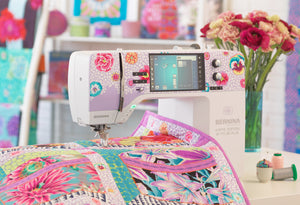

We Love Our Quilting Community
At High Country Quilts we care deeply about community. With our experiences in retail, we know that a store is not only a place to shop but also a place for the community to gather and share. During this busy...


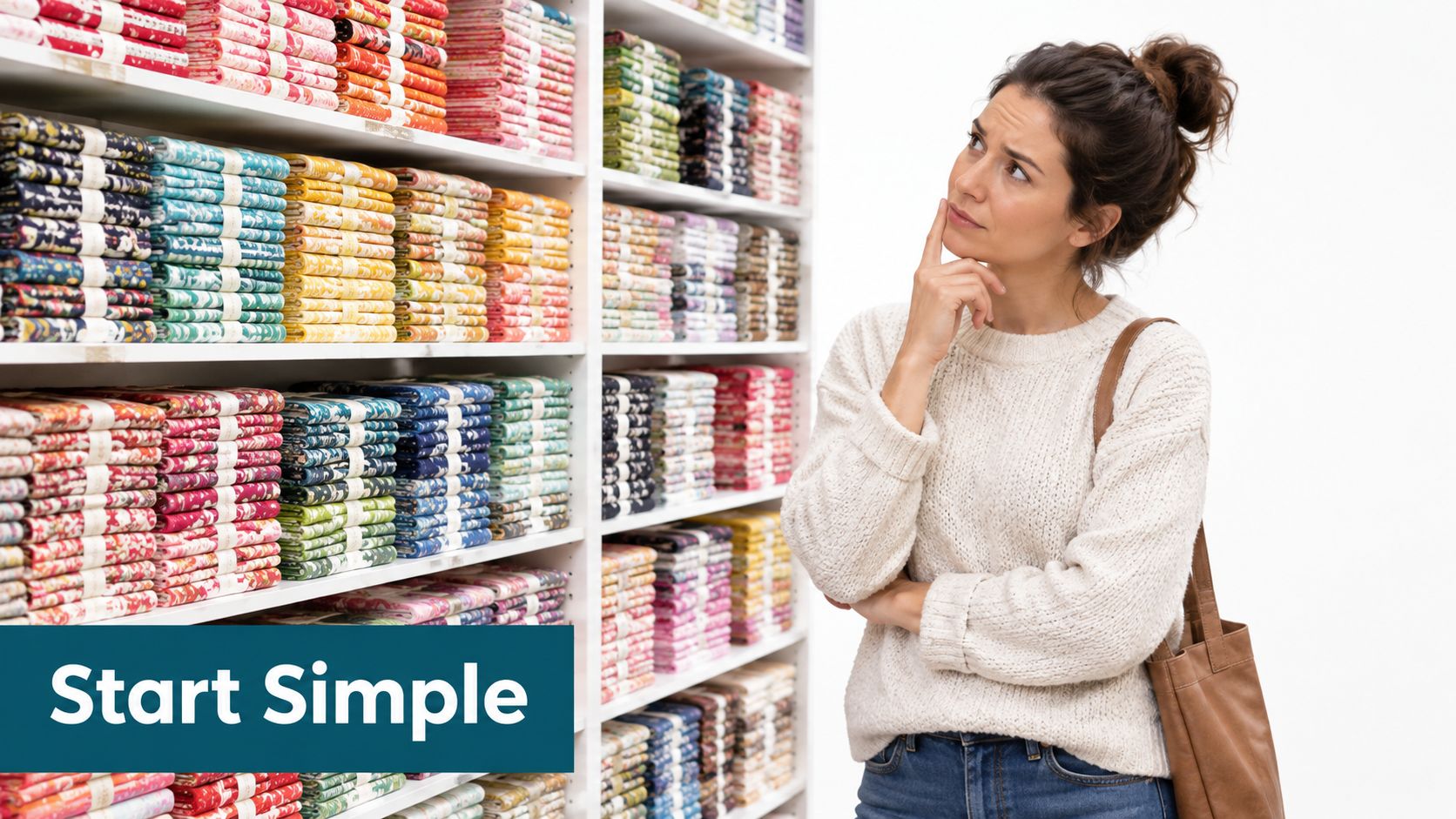
You're standing in front of a wall of colorful fabric bundles, holding a pattern for your first quilt and wondering whether the prettiest pack is also the right one. It's a common beginner problem. A bundle can look perfect on the shelf and still leave you short of fabric, contrast, or the right-size cuts for your project.
The best fat quarter bundles aren't just the ones with the most attractive prints. They're the bundles that match your pattern, finished quilt size, color plan, and sewing confidence. Use the guide below to choose with purpose instead of buying a bundle that sits untouched in your stash.
For comfortable online reading, keep body text in the 45 to 90 character range per line, with about 66 characters as a useful long-form target, as outlined in the U.S. Web Design System typography guidance. Give body copy more line height than headings, keep heading line height between 1 and 1.35, and leave at least one unit of margin between text and the mobile viewport edge.
A fat quarter is a quilting pre-cut made from a quarter yard of fabric, but it isn't cut into the usual long, narrow strip. It typically measures about 18 by 21 inches or 18 by 22 inches, depending on manufacturer trimming and selvage allowances. A standard quarter yard is about 9 by 44 inches, so the fat quarter's squarer shape gives you more useful room for quilt pieces. The fat quarter bundle guide from Shabby Fabrics explains why this format became such an important specialty cut.
That extra width changes what you can cut. A long quarter works well for narrow strips, but it becomes restrictive when a pattern calls for larger squares, rectangles, triangles, appliqué shapes, or foundation paper piecing pieces. One fat quarter can produce practical yields such as four 9-inch squares, eight 6-inch squares, or twelve 4.5-inch squares, depending on the cutting layout and seam allowance. Those examples are detailed in this guide to the pre-cut advantage.
A bundle takes the convenience one step further. Instead of choosing every print separately, you get coordinated fabrics grouped by a designer, collection, theme, or color palette. Small bundles may contain six to ten pieces, many packs contain 18 to 24 pieces, and full-collection sets may include 30 or more prints, according to this fat quarter bundle overview.
Loose fat quarters give you maximum control. They're the right choice when you're matching an exact border, replacing one print, or building a scrappy quilt from your existing stash. The downside is that you have to create the color relationship yourself, and individual cuts may not provide the same collection value as a coordinated pack.
Bundles save decision time and usually give you a more unified palette. They also let you sample a designer's collection without purchasing yardage of every print. Before buying, check the piece count and pattern requirements. A bundle is not automatically a complete quilt kit, and background, binding, borders, and backing often need separate yardage.
Shop rule: Choose the pattern first whenever possible. The right bundle is the one that gives the pattern enough usable variety, not merely the one that catches your eye.
If you're ready to browse a curated starting point, look at High Country Quilts fat quarter options and compare the collection name, piece count, and visual range before adding anything to your cart.
Every bundle category solves a different buying problem. Beginners usually get better results when they choose based on the quilt they want to make, rather than treating all pre-cuts as interchangeable.
A designer line bundle gathers prints from one fabric collection. The fabrics share a planned palette, design language, and production line, so they're the safest choice for a sampler quilt or a first coordinated patchwork project.
This category suits quilters who want color confidence without spending time auditioning every fabric against the next one. It also works well when you want the collection's large-scale prints, small blenders, and conversational designs to appear together. The limitation is that a full designer line may have a fairly consistent value range, so you may still need a darker or lighter fabric to sharpen block definition.
Solids are straightforward, calm, and useful. Blenders add subtle texture without competing with the main design. Together, they make strong backgrounds, sashing, cornerstones, and secondary blocks.
A coordinated solid bundle is a smart choice for a sampler with many different block shapes. It gives the geometry room to show. It's also useful for quilters who already own bold prints and need supporting fabric rather than another collection of competing motifs.
Seasonal bundles are built around a time of year, holiday, or recognizable setting. Christmas, autumn, winter, and coastal themes are common examples. They're excellent for gifts, table runners, wall quilts, and projects with a clear occasion.
Seasonal fabric is more specific than a general designer line, so buy it with a finished use in mind. A holiday bundle may be perfect for a December project but less flexible for an everyday bed quilt. That focus is a strength when the theme matters and a drawback when you want a year-round stash builder.
Value bundles organize fabrics by light, medium, and dark contrast, often within a related color family. This is my first recommendation for patchwork where the block structure needs to read clearly from across the room.
A bundle with mixed values gives the eye somewhere to travel. It helps half-square triangles, stars, chains, and repeating blocks separate from one another. A bundle made from prints that all sit at the same visual intensity may look harmonious in a folded stack but flatten once the pieces are sewn together.
Themed bundles group fabrics by motif, such as florals, geometrics, novelty prints, animals, or travel imagery. They're ideal for a statement quilt with a strong visual idea.
They can also become disjointed quickly. A floral bundle may contain several scales and colors that need a quiet blender to connect them. Novelty prints may compete if every fabric has an equally loud design. Use a theme bundle when you have a clear pattern or layout that can give those motifs structure.
For a beginner, the simplest order of preference is usually designer line for confidence, value bundle for contrast, and solids or blenders for support. Seasonal and themed packs are excellent when the project itself calls for them.
The table below focuses on the decisions that matter at the cutting counter. Because manufacturers and shops assemble packs differently, bundle counts vary widely, from small packs through full-collection sets. The Fat Quarter Shop bundle collection is a useful reminder that the number of pieces, not just the bundle name, affects how much fabric you're buying.
| Bundle Type | Typical Count | Best Project Fit | Skill Level | Standout Strength |
|---|---|---|---|---|
| Designer line | 18 to 24 pieces is common, with larger full-collection sets available | Coordinated sampler quilts and patchwork | Beginner to advanced | Color confidence without building the palette yourself |
| Solids and blenders | Small or medium coordinated packs | Backgrounds, sashing, and supporting blocks | Beginner to advanced | Clean structure and flexible coordination |
| Seasonal | Small through full-collection packs | Holiday quilts, gifts, and occasion projects | Beginner to intermediate | A clear mood with little theme planning |
| Value bundle | Small through larger mixed-value packs | Patchwork, stars, chains, and contrast-driven blocks | Beginner to advanced | Light, medium, and dark separation |
| Themed | Small through larger motif-based packs | Statement quilts and novelty projects | Intermediate, unless pattern-led | Strong personality and recognizable subject matter |
Piece count also changes total yardage. A 24-piece pack contains roughly six yards of fabric in total, while a 42-piece precut pack is common across quilting precuts more broadly and can support larger quilts or sampler projects. Those figures come from the fat quarter bundle explanation at Stitchin' Heaven.
The sharp differentiator: Value bundles win when the quilt needs visual structure. Designer line bundles win when you want coordinated color without doing the planning yourself.
Don't compare bundles only by sticker price. Compare the total fabric, the usable variety, and the amount of extra yardage your pattern requires. Quilters who want a deeper explanation of how sellers structure and compare bundles can compare bundle pricing models, then bring that thinking back to fabric by checking piece count and composition.
A first-time shopper can browse High Country Quilts designer fat quarter selections with this table beside the pattern. If the pattern needs strong contrast, start with value. If the pattern has many scrappy pieces and you don't want to coordinate them yourself, start with a designer line.
Start with the finished project, then work backward to the bundle. A typical fat quarter is about 18 × 22 inches, and the usable yield depends on the pattern's largest cuts, seam allowance, directional prints, and waste. A bundle that works beautifully for small squares may be a poor choice for a pattern built around oversized rectangles.
The clearest published planning benchmarks are useful as a starting point: a throw quilt commonly uses about 12 fat quarters, a twin about 24, a queen about 35, and a king about 56, according to the fat quarter bundle planning guidance from Shabby Fabrics. These are buying benchmarks, not guarantees. Background fabric, borders, binding, and the pattern's cutting method still matter.
A charm-square quilt can stretch a bundle efficiently because the pieces are relatively small. Half-square triangles are also a natural fit, but you'll need to account for trimming and the extra fabric consumed by diagonal cuts. Strip-based designs may work well with fat quarters when the strips fit across the usable width, but a pattern that asks for long continuous strips may require yardage instead.
Foundation paper piecing and appliqué can make a bundle especially useful because the cut shape gives you more contiguous fabric to position under templates. Large directional motifs need extra attention. You may have enough total cloth but not enough correctly oriented fabric after matching the design.
A small bundle can be enough for a wall quilt, table project, or compact patchwork design. A larger pack may support a substantial quilt when the layout uses the cuts efficiently. One cited example estimates that 24 pieces sewn together could yield an 80 × 102 inch quilt, but that result depends on the construction plan and should not replace your pattern's fabric requirements. See the bundle-size and yardage discussion at Stitchin' Heaven before treating any pack as a complete solution.
Common mistakes are easy to avoid:
Before you commit, take the pattern to High Country Quilts project-planning help. A staff member can compare the pattern requirements with the bundle size and help you add coordinating yardage without breaking the palette.
A pretty bundle can still be frustrating to sew. Before you buy, judge the fabric as a working material, not only as a color arrangement.
For quilting cotton, a useful weight benchmark is about 140 to 160 gsm, according to Mrs Quilty's fat quarter selection guidance. Similar weights behave more predictably during pressing, piecing, and quilting. If the pack combines cotton, batik, or cotton-linen blends, check that the hand and weight are compatible before mixing them in one block.
| Filter | What to Look For | Red Flag |
|---|---|---|
| Fabric composition | Quilting cotton or clearly identified compatible fabrics | Unclear fiber content |
| Weight and hand | Similar feel across the entire pack | One piece feels noticeably thin or heavy |
| Value spread | A useful mix of light, medium, and dark prints | Every piece sits at the same visual intensity |
| Color cohesion | A shared palette with enough contrast | Colors look unrelated or muddy together |
| Theme balance | A mix of large, small, and quieter prints | Every print is equally busy |
| Cut quality | Straight, usable pieces with clean edges | Uneven cuts, fraying, or damaged corners |
| Collection information | Designer, collection name, and fabric details | No identifying information |
Value is the filter beginners most often skip. Hold the bundle slightly away from your eyes or take a quick black-and-white photo. If the prints become indistinguishable, the quilt may need a darker, lighter, or quieter fabric to create separation.
Color and theme should work together, but they shouldn't make every piece look identical. The strongest bundles usually include a few fabrics that sit gently beside more expressive prints. That mix gives your blocks rhythm instead of producing a flat wall of similar textures.
Look at the selvage when it's available. The designer and collection information can confirm whether the pieces belong together and make it easier to find a replacement or coordinating yardage. For online shopping, read the product description carefully and ask for clarification if the listing doesn't identify the fabric line.
A screen can show a bundle's arrangement, but it can't show you the full working relationship between the fabrics. In person, you can feel the cotton, inspect the cut edges, separate the light and dark prints, and see whether the colors suit the pattern you brought with you.
That matters most for beginners. A novice may see five shades of blue as a coordinated palette, while an experienced quilter notices that all five have similar value and will blend together in a star block. A shop conversation can catch that problem before the fabric reaches the cutting table.
Bring the pattern, a border swatch, or a fabric from your existing stash. Then compare the bundle against the actual materials you plan to use.
At High Country Quilts, staff can place several bundle options side by side, compare them with your swatch, and help identify coordinating fabric, patterns, and notions. The store also carries precuts and sewing supplies, so a beginner can solve the fabric question and the tool question in the same visit.
The best in-person service isn't someone telling you which fabric is prettiest. It's someone asking what you're making and checking whether the fabric will behave in that design.
Online shopping still has a place. It's useful for finding a particular designer line, checking availability, or returning to a collection you already understand. But a carefully curated local shop gives you a second set of trained eyes, especially when the product photo doesn't reveal value contrast or fabric hand.
That support can prevent the most expensive kind of stash growth, fabric you like in isolation but never use. A short conversation before purchase often saves the return, the replacement order, and the project that stalls because the color plan doesn't work.
For a convenient starting point before visiting, browse High Country Quilts' curated precut collection, then take the pattern and any swatches to the shop for a more precise comparison.
Beginners don't need every kind of bundle at once. Start with the bundle that teaches the skill your first project requires.
Choose a classic designer line when you want a simple patchwork throw with a unified look. The collection has already solved much of the color matching, and you can focus on accurate cutting, quarter-inch seams, pressing, and block assembly.
Look for a line with a clear range of print scales. Large motifs are attractive, but small blenders and calmer prints help the quilt breathe. Browse High Country Quilts designer line bundles to inspect the available collection details and ask whether a matching background is in stock.
A sampler quilt benefits from fabrics that let block shapes take center stage. A coordinated solid or blender pack is a practical choice when you're learning how value affects piecing. It also gives you a flexible foundation for adding prints from your stash later.
Choose a group that includes clear light and dark separation rather than a stack of nearly identical shades. If you're unsure, place the fabrics beside the pattern's sample image and ask whether the blocks will remain readable after quilting.
A value bundle is my strongest recommendation for quilters who want patchwork that reads clearly. Light, medium, and dark prints give you an immediate lesson in placement, contrast, and visual movement.
This is a good stash-building starter because the fabrics can serve multiple block styles. It's less tied to one holiday or motif, so you're more likely to use the leftovers in a later project. You can review High Country Quilts value-focused bundle options and compare the fabrics with your pattern before choosing.
| Bundle Type | Best First Project | Skill Level | Price Tier |
|---|---|---|---|
| Designer line | Coordinated patchwork throw | Beginner | Moderate |
| Solids and blenders | Sampler with clear block shapes | Beginner | Moderate |
| Value bundle | Contrast-driven patchwork | Beginner | Accessible |
| Seasonal | Holiday gift or small themed project | Beginner to intermediate | Varies |
| Themed bundle | Motif-led statement quilt | Intermediate | Varies |
Don't buy a bundle because it's the most exciting fabric in the shop. Buy it because you can name the project, pattern, background, and approximate finished size you want to complete.
A bundle can grow into a full quilt kit when you add compatible background, border, binding, and backing fabric. Ask the staff to pull those additions from the same collection or a closely matched palette. That approach protects the color story while giving you enough material to finish the quilt properly.
High Country Quilts offers curated fat quarter bundles, coordinating fabrics, precuts, patterns, notions, and hands-on quilting support for beginners and experienced makers. Visit High Country Quilts to explore the current selection, then bring your pattern or project idea to the shop for help choosing a bundle that fits.
At High Country Quilts we care deeply about community. With our experiences in retail, we know that a store is not only a place to shop but also a place for the community to gather and share. During this busy...

Hi! We’re Adam and Renee Wheaton, the new owners of High Country Quilts! For more than 40 years, we’ve owned and operated vacuum and sewing businesses. Following in Renee’s father’s footsteps after he retired from All Discount Vacuum and Sewing in Colorado...


Leave a comment