
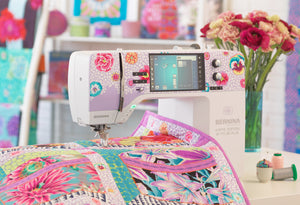

We Love Our Quilting Community
At High Country Quilts we care deeply about community. With our experiences in retail, we know that a store is not only a place to shop but also a place for the community to gather and share. During this busy...


You've probably had that moment already. You're curled up on the sofa, you see a plush throw in a catalog or on a friend's chair, and you think, “I'd love one like that, but I have no idea where to start.”
That's exactly where many good sewing projects begin.
A faux fur throw feels ambitious at first. The fabric looks fancy. The seams seem bulky. You may be worried you'll buy the wrong material, cut it badly, or end up with a lumpy blanket that sheds all over the room. Those are normal beginner worries. They're also fixable when you shop with guidance instead of guessing from a shelf label.
A handmade faux fur throw is one of those projects that gives back immediately. You sew it once, and then you enjoy it on chilly mornings, movie nights, and every time you want a room to feel a little softer and more finished.
That kind of project deserves more than a rushed fabric purchase.
In El Paso County, Colorado, there's a strong local base for specialty retail because the county has over 750,000 residents according to El Paso County. For sewists, that matters more than people realize. A large county supports a real creative community. It means more beginners looking for classes, more experienced quilters looking for dependable tools, and more shoppers who want help choosing the right fabric for the job.
A faux fur throw looks simple from across the room. Up close, it asks you to make several smart choices.
You need to know:
Those aren't big-box questions. They're teaching questions.
Practical rule: If your project includes bulk, texture, or a slippery backing, shop where someone can explain what your hands will feel at the cutting table and what your machine will do at home.
That's why the phrase best fabric shop in El Paso County shouldn't just mean “a place with fabric.” It should mean a shop that helps you finish what you start.
For a project like this, the right shop does more than stock bolts. It helps you connect the project idea to the fabric, then the fabric to the tools, then the tools to a finished result you'll use.
A good quilting and sewing store becomes part classroom, part supply source, part troubleshooting desk. If you've ever stood in front of a fabric wall thinking every option looks nice and none of them looks clearly right, you know why that matters.
And for a first faux fur throw, having that support changes the whole experience. Instead of buying on hope, you buy with a plan.
Faux fur gets called “soft” all the time, but softness is only part of the story. What people usually respond to is the combination of pile, density, and backing. Once you understand those three words, fabric shopping gets much easier.
Pile is the fuzzy surface you can stroke with your hand. It is similar to the nap on velvet, but longer and fuller. Some faux fur has a short, neat pile that looks polished. Some has a longer pile that feels dramatic and fluffy.
Short pile is usually easier for a first project. It's simpler to manage at the seam line, and you can see your edges more clearly while sewing.
Long pile can be beautiful, but it asks for more patience. The fur gets caught in seams more easily, and the bulk can hide your stitching line.
If pile is the hair, density is how closely packed that hair is.
A dense faux fur feels richer and fuller. It often looks more expensive because the backing doesn't show through as easily. A less dense faux fur may still be soft, but it can look flatter once it's spread over a large throw.
Beginners sometimes confuse long pile with luxury. Length alone doesn't create that plush look. Density does a lot of the work.
Run your fingers through the fabric and part the fibers a little. If the backing shows quickly, the fabric may not give you the full, cozy look you want in a throw.
The backing is the base layer that holds the pile in place. On faux fur, the backing often determines how the fabric behaves under the presser foot.
If the backing feels stable and flexible, sewing is usually more predictable. If it feels stretchy or uneven, you may notice shifting, rippling, or seams that don't line up as neatly as you hoped.
For throws, many sewists pair faux fur with a soft backing fabric so the blanket feels inviting on both sides. If you're browsing plush options for the top layer, you can explore Luxe Cuddle® fabrics to compare texture, loft, and finish.
| Pile Type | Typical Length | Look & Feel | Best For |
|---|---|---|---|
| Short pile | Short | Smooth, tidy, easier to control | First throws, baby blankets, pillows |
| Medium pile | Medium | Plush, balanced, cozy without too much bulk | Sofa throws, lap blankets |
| Long pile | Long | Dramatic, fluffy, high texture | Accent throws, decorative pieces |
When beginners shop for faux fur, they often squeeze the fabric and stop there. Touch matters, but it isn't enough. Pick it up. Fold it. Separate the fibers. Look at the backing. Ask yourself how it will behave at the corners and inside the seam allowance.
That's how you stop buying “pretty fabric” and start buying “the right fabric.”
A faux fur throw has one job. It needs to feel wonderful and hold up well in real life. That means your fabric choice should match how the throw will be used.
A blanket for everyday snuggling needs different qualities than a decorative throw that mostly sits at the end of a bed.
Color is fun. It's also the easiest part to get distracted by.
Choose your fabric in this order:

Good faux fur tells you a lot in your hands.
Look for these signs:
If you want a plush option with a soft hand for cozy sewing projects, browse a specific minky-style choice like Shannon Cuddle fabric.
Shoppers often ask whether one fiber is “best.” In practice, the better question is whether the fabric behaves well for your project.
Some faux fur fabrics emphasize softness. Others emphasize visual texture. Some feel lighter and drape more fluidly. Others have more body. For a first throw, reliability matters more than chasing the most dramatic look in the store.
If you also sew decorative accents and want a helpful overview of stable surfaces for stitched embellishment, this guide on choosing ideal embroidery fabrics can help you compare fabric behavior in a practical way.
The U.S. Environmental Protection Agency estimated that 17 million tons of textiles were generated in 2018, equal to 5.8% of total municipal solid waste that year, according to the EPA's textile materials data. For sewists, that's a useful reminder to buy thoughtfully.
A throw you love and keep using is a better choice than a trendy fabric you regret after one season.
The most budget-friendly fabric isn't always the least expensive one on the bolt. It's the one you'll still be happy to use after the project is finished.
If you're standing in the shop and you're torn between two options, ask:
If the answer to most of those questions is yes, you're probably close.
There's a big difference between buying fabric and being guided into the right fabric.
That difference becomes obvious the moment your project gets even slightly technical. Faux fur is technical. Not impossible. Just less forgiving than standard quilting cotton.
A mass retailer can be convenient when you already know exactly what you need. One example is Walmart's fabric counter model, which emphasizes in-store cutting and quick purchase flow rather than consultative selection. That setup works best for shoppers who already know their material and yardage requirements, as shown on the Walmart fabric store page.
That isn't the same as project coaching.
At a specialty store, the conversation starts earlier. You can talk through the pattern idea, the feel you want, the backing options, whether your machine is suited to the thickness, and how to avoid common mistakes before you cut.
A fabric wall can be large and still not be useful.
What helps quilters and sewists is curation. That means fabrics chosen with purpose, not just volume. The value shows up when you need coordinating materials, consistent quality, or advice on matching the right fabric to the right project.
American Fabrics in El Paso publicly promotes a dedicated fabric assortment, while marketplace-style retailers tend to focus on broad availability rather than quilting-specific curation. For quilters, a specialized shop usually performs better when the project depends on matching collections or consistent dye lots, as described by American Fabrics.
With faux fur, mistakes usually happen before the first seam.
A beginner may choose:
A specialty shop helps prevent those errors because the staff understands how the material behaves, not just what aisle it sits in.
A good fabric store doesn't simply hand you yardage. It helps you avoid redoing the project.
New sewists often think they need “confidence.” Usually they need clearer answers.
For this kind of project, the helpful questions are practical:
| Shopping Need | Big-box experience | Specialty shop experience |
|---|---|---|
| Choosing pile length | Limited guidance | Project-based advice |
| Matching backing | Self-directed guesswork | Coordinated recommendations |
| Tool selection | General notions access | Material-specific suggestions |
| Machine questions | Limited sewing support | Better fit for technique questions |
That's why people searching for the best fabric shop in El Paso County often aren't really searching for the nearest bolt of fabric. They're searching for fewer mistakes, better explanations, and a finished project that looks like the one they pictured.
The right tools make faux fur feel manageable. The wrong tools make it feel stubborn.
You don't need a huge pile of gadgets. You do need a few specific items that solve the main challenges: bulk, shifting, hidden seam lines, and trapped fibers.

Here's the short list I'd put in front of any student making a first throw:
If your layers want to crawl out of alignment, a walking foot helps feed bulky fabrics more evenly. This is one reason many sewists look closely at machine capability before taking on plush or layered projects.
If you need basics like clips, thread, marking tools, or replacement needles, a practical place to start is a collection of sewing notions.
Some faux fur throws are simple rectangles, but the seam bulk can still challenge an underpowered setup. A machine with solid feeding, dependable stitch formation, and accessory support makes a noticeable difference.
For sewists comparing equipment for thicker projects, BERNINA sewing machines are one category to consider because they're built for precision sewing and accessory compatibility.
This is the only place I'll mention the store directly in the body: High Country Quilts also carries machines, notions, fabric, and classes in one place, which is useful if you're trying to solve the whole project instead of shopping in pieces.
If you're gathering supplies tonight, put these on the table before you start:
That small setup prevents most first-project delays.
This project is very doable, even if faux fur feels intimidating. Keep the shape simple. Focus on accuracy and handling. Let the fabric do the dramatic part.
To help you see the full sequence first, here's a visual guide.

Choose your finished throw size, then cut your faux fur and backing to match. Keep the shape simple. A rectangle is perfect.
Lay the fabrics flat before cutting. If one layer is creeping or curling, smooth it gently without stretching. Faux fur can look even when it isn't squared, so use a ruler and double-check corners.
This is the first big beginner lesson.
Turn the faux fur wrong side up and cut through the backing only, or as close to that as you can manage. If you slice straight through the pile from the front, you'll chop the fibers and create unnecessary shedding and rough edges.
Use slow, shallow cuts. You're separating the backing, not mowing through the whole fabric thickness.
Put the faux fur and backing with right sides facing each other. If your backing has a directional print or nap, check orientation before clipping.
Clip around the edges and leave an opening large enough for turning. Don't skip the opening plan. Beginners sometimes sew the full perimeter out of momentum, then have to undo more than they expected.
If you enjoy home projects that make a room feel finished without a huge budget, Joey'z Shopping's DIY decor guide has creative ideas for using handmade pieces as part of a larger room update.
Here's the video point that helps many first-timers feel calmer before they start sewing:
Sew around the throw with a steady seam allowance. Don't rush the corners. If the bulk starts building ahead of the presser foot, pause with the needle down, lift the foot, and adjust the layers.
A few things help here:
If your machine sounds strained, stop and reassess. A fresh needle or a slightly slower pace often solves the problem.
Trim the corners and reduce excess seam allowance where needed, but don't clip so aggressively that you weaken the seam.
This step matters because faux fur gets bulky fast. If you leave every corner thick and heavy, the finished throw won't turn crisply and the edges may feel lumpy.
Reach through the opening and pull the throw right side out. Use your hands to ease out the corners. Don't jab sharply with scissors or anything that could poke through the seam.
Once it's turned, lay it flat and smooth the edges. You'll immediately see the project start to look like a real throw instead of two odd layers clipped together on a table.
This is the step students always love because it looks like magic.
Use a small comb or slicker brush to tease trapped fibers out of the seam line. Brush lightly. You're not trying to rough up the fabric. You're helping hidden pile come back to the surface so the seam blends in.
A brushed seam can look much fuller and softer than an untouched one.
Fold the raw edges of the opening inward and clip them in place. Then hand-stitch the opening closed with a ladder stitch or another discreet hand-sewing method.
Take your time here. A careful closing seam gives the whole throw a more polished finish. It's one of those small details that makes a handmade project feel intentional.
If your first pass doesn't look perfect, that's normal. Faux fur has a learning curve.
| Problem | Likely cause | Simple fix |
|---|---|---|
| Seams look flat | Pile caught in stitching | Brush fibers out gently |
| Edges shift while sewing | Layers feeding unevenly | Use more clips and sew slower |
| Corners feel bulky | Too much seam allowance left inside | Trim and grade before turning |
| Fabric sheds while cutting | Cut through pile from front | Cut from backing side next time |
Some people read steps and feel ready. Others want someone nearby the first time they work with a bulky or plush fabric. Both are normal.
If you'd like more guided practice after trying this project, take a look at sewing classes. Learning in person can make tricky materials feel much less mysterious.
Once your throw is finished, the next job is simple. Keep it looking good enough that you'll keep reaching for it.
Faux fur usually stays nicer when you handle it gently and clean it with restraint. Always check the care needs of the specific fabric you chose, especially if your backing fabric has different washing needs.
In everyday use, these habits help:
If a spill happens, spot cleaning right away is often easier than waiting.
When the season changes, don't stack heavy items on top of your throw for long periods. That pressure can leave the pile looking tired.
A breathable storage bag or a shelf where the throw can sit folded without being crushed works better than a packed plastic bin. If it does flatten a bit, a gentle brushing can often revive the surface.
Handmade projects last longer when you treat them like textiles, not like clutter. Give them space to breathe.
A faux fur throw has a lot of visual texture, so let it play that role.
Try one of these placements:
If your room already has busy patterns, choose a calmer faux fur color. If the room is simple, the throw can be the statement piece.
And that's one of my favorite things about this project. It isn't just something you made to practice sewing. It becomes part of how your home feels.
If you're ready to choose fabric, compare tools, or get help with your first faux fur project, visit High Country Quilts. You'll find fabrics, notions, machine support, and classes that can help turn an ambitious idea into a finished throw you'll be proud to use.
At High Country Quilts we care deeply about community. With our experiences in retail, we know that a store is not only a place to shop but also a place for the community to gather and share. During this busy...

Hi! We’re Adam and Renee Wheaton, the new owners of High Country Quilts! For more than 40 years, we’ve owned and operated vacuum and sewing businesses. Following in Renee’s father’s footsteps after he retired from All Discount Vacuum and Sewing in Colorado...


Leave a comment