
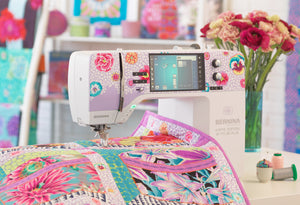

We Love Our Quilting Community
At High Country Quilts we care deeply about community. With our experiences in retail, we know that a store is not only a place to shop but also a place for the community to gather and share. During this busy...


Every great handmade tote starts with the perfect fabric. Finding the best fabric for tote bags is all about striking a balance between strength, style, and how easy it is to sew. For most bags that need to hold up to daily life, you can't go wrong with sturdy materials like canvas, duck, denim, and twill. They have the structure and durability you need.

The right fabric really comes down to what you plan to do with the bag. Are you making a lightweight, foldable tote for groceries? A heavy-duty book bag to haul your latest fabric haul from High Country Quilts? Or maybe a chic accessory for everyday wear? This guide goes beyond a simple list to give you a real-world comparison from one sewist to another.
To pick your fabric with confidence, you need to think about a few key things that will make or break your bag’s structure and lifespan.
As a maker, understanding why a certain fabric works is just as crucial as knowing which one to grab. This knowledge is what will make your next tote bag not just beautiful, but built to last.
In the world of tote bags, cotton is king. It holds over 65% of the material market share and has only gotten more popular with the push for sustainability. For us, this means it’s a reliable and versatile choice. A lightweight 4-6 oz cotton is perfect for a simple market tote, while a sturdy 10 oz canvas can easily carry fabric bolts or your BERNINA accessories home from a class. If you're curious, you can read more about trends in the tote bag industry.
A Crafter's Insight: There's no single "best" fabric—it's all about the job. A pretty quilting cotton, when properly interfaced, makes a gorgeous decorative bag. But for a true workhorse tote that can take a beating, you’ll want a 12 oz duck canvas.
The table below gives you a quick look at the most common choices and what they’re best for. Think of it as a starting point to help you match a material to your vision before we get into the nitty-gritty details.
| Fabric Type | Primary Use Case | Key Characteristic |
|---|---|---|
| Canvas / Duck | Heavy-Duty, Everyday | Unmatched Durability |
| Denim / Twill | Stylish, Sturdy | Strong with a Soft Drape |
| Quilting Cotton | Decorative, Lightweight | Endless Print Variety |
| Home Decor Fabric | Structured, Fashion | Durability & Style |
When you're picking fabric for a tote bag, it's easy to get caught up in a beautiful print or color. But if you want to create a bag that not only looks great but also holds up, you need to look at two key details: the fabric's weight and its weave. Getting these right is the secret to a successful project.
Think of fabric weight as its backbone. It's usually measured in ounces per square yard (oz/yd²) and tells you how dense and sturdy the material is. A higher number means a heavier, more substantial fabric that can handle more stress.
This single measurement is your best clue for how the final bag will behave. A lightweight fabric will result in a soft, foldable tote, whereas a heavyweight fabric will give you a structured bag that can stand up on its own.
The perfect fabric weight really comes down to what you plan to do with your tote. There's no one-size-fits-all answer, just the right choice for the job at hand.
Here’s a little tip from my own experience: match the weight to the load. If you're making a bag to haul your quilting rulers and fabric bolts from a class at High Country Quilts, you'll want something in the 10 oz or higher range. Anything less, and you'll quickly see sagging and strained seams.
While weight gives a fabric its heft, the weave is what provides its underlying strength and texture. For tote bags, you'll mostly run into two types: plain weave and twill weave. Each has its own distinct personality.
A plain weave is the simple over-one, under-one grid pattern you see in fabrics like canvas and duck. This structure creates an incredibly stable and strong material that resists stretching and tearing. It's the workhorse weave, perfect for a durable, no-fuss bag that gets the job done.
On the other hand, a twill weave, found in denim and twill, has a characteristic diagonal rib across the surface. This construction gives the fabric a bit more drape and flexibility than a plain weave of a similar weight. It’s a fantastic choice when you want a bag that feels sturdy but less rigid—a little more fashion-forward.
Walking into a fabric store can be overwhelming. You've got a great tote bag pattern in mind, but the sheer number of bolts—from rugged canvas to delicate cotton prints—can make choosing the right material feel like a huge decision. And it is! The fabric you pick does more than just determine the look of your bag; it dictates its strength, structure, and how it will hold up over time.
Let's break down the most common choices you'll find, looking at them through a practical, sewist's eye. We’ll talk about what works, what doesn't, and how to get the best results for the bag you envision, whether it's a farmers market workhorse or a stylish everyday carryall.
When you need a bag that can take a beating, canvas is the undisputed champion. There’s a reason it has long been the go-to fabric for tote bags, and the numbers back it up. Even in 2026, canvas continues to dominate the market, accounting for a massive 30.3% share globally. This isn't just a trend; it's a testament to its raw strength and durability. The latest tote bag market report confirms its popularity.
A good, sturdy canvas, usually in the 12-18 oz range, is perfect for bags that need to carry serious weight—think textbooks, groceries, or your latest fabric haul from a trip to High Country Quilts.
You'll often see duck canvas mentioned, which is simply a tighter, more densely woven version of plain canvas. This tight weave makes it smoother to the touch and more resistant to water and wind. A #10 duck canvas, for instance, weighs about 14.75 oz and gives you a bag with enough body to stand up on its own, no interfacing required.
For a bag that’s both tough and stylish, look no further than denim. As a twill weave, it has that classic diagonal texture that gives it a bit more drape and softness than canvas, but it’s still incredibly durable. You can find denim in all sorts of weights, from a light 6 oz chambray to a beefy 14 oz raw denim.
I find a 10-12 oz denim is the sweet spot for an everyday tote. It’s strong enough for your laptop and daily essentials but still feels comfortable slung over your shoulder. Twill fabrics offer the same diagonal weave and durability but come in a whole spectrum of colors, giving you more options than just traditional indigo blue.
A Quick Word of Warning: That beautiful twill weave can be a little tricky. If you don't cut your pattern pieces perfectly on the grainline, the diagonal weave can cause the seams to twist after sewing. Always pre-wash your denim! It’s notorious for shrinking and bleeding dye, and you don’t want that happening to your finished bag.
The real difference here is the "hand," or the feel of the fabric. Canvas is stiff and utilitarian from the get-go. Denim and twill, on the other hand, break in beautifully, softening over time and developing a unique, lived-in character that’s hard to replicate.
This flowchart can help you visualize where each fabric type fits based on its core properties.

As you can see, the path to a sturdy bag starts with heavier fabrics like canvas, while lighter materials need some help to get there.
If your goal is a bag that makes a statement, quilting cotton is your playground. The sheer variety of prints, colors, and designer collections is unmatched, allowing you to create a tote that’s a true expression of your personality.
But—and this is a big but—it cannot do the job alone. Quilting cotton is a lightweight fabric, typically weighing just 3-5 oz. Without support, a bag made from it will be a floppy, shapeless mess that won't last.
For a quilting cotton tote, interfacing isn't a suggestion; it's a requirement. Fusing your cotton to a firm interfacing like Pellon Decor Bond (809) or SF101 Shape-Flex is what transforms it from a fragile decorative fabric into something with the substance and strength a bag needs.
Sometimes you just need a quick cheat sheet. This table breaks down the key differences to help you make a confident choice when you're standing in front of the fabric bolts.
| Fabric Type | Common Weight (oz/sq yd) | Key Strengths | Best For | Sewing Difficulty |
|---|---|---|---|---|
| Canvas / Duck | 10-18 oz | Unbeatable durability, holds shape well, rugged. | Heavy-duty grocery bags, work totes, book bags. | Medium to Hard |
| Denim | 8-14 oz | Strong yet soft, stylish, develops character. | Everyday purses, market totes, fashion bags. | Medium |
| Twill | 7-12 oz | Good drape, wrinkle-resistant, durable. | Lighter-duty everyday bags, structured fashion totes. | Easy to Medium |
| Quilting Cotton | 3-5 oz | Limitless print variety, easy to sew. | Decorative bags, linings, kid's totes (with interfacing). | Easy |
Ultimately, choosing the right fabric is all about balancing the bag’s job with your creative vision. A heavy duck canvas is perfect for hauling potatoes but might be overkill for a small purse. Likewise, that gorgeous Tula Pink print will make a stunning bag, but only if you give it the structural support it needs to survive.
By understanding what each fabric brings to the table, you can make a choice that guarantees your finished tote is both beautiful and built for its purpose. For a hands-on feel, come visit us at High Country Quilts in Colorado Springs—we’d love to help you find the perfect materials for your next project.
Once you've gotten the hang of a simple canvas or cotton tote, you're ready for the fun part. It's time to explore the specialty fabrics that can turn a basic bag into something truly special—whether that's a water-resistant beach bag or a structured, stylish accessory that looks like it came from a high-end boutique.
Don't be intimidated by these materials! While they might require a few new tricks, the stunning, professional-looking results are more than worth the learning curve. Getting comfortable with fabrics like vinyl, home decor textiles, and waxed canvas will seriously level up your bag-making game.
If you’re dreaming of a tote that can handle a splash—perfect for a day at the pool, a trip to the beach, or even just carrying leaky groceries—then vinyl and laminated cottons are about to become your new best friends. Laminated cotton is exactly what it sounds like: quilting cotton with a thin, clear waterproof coating on the printed side. This gives you all the fun of a quilting print with a ton of practical function.
Spills and dirt are no match for these fabrics; a quick wipe-down is all it takes to keep them looking fresh. Sewing with them, however, does require a slightly different approach than you'd use for standard cotton.
Take a stroll through the home decor section of a fabric store, and you'll find a goldmine of materials for making incredible tote bags. Designed for things like upholstery and curtains, these fabrics are built to last and often feature the kind of rich textures and gorgeous, large-scale prints you just won't find in the quilting cotton aisles.
These fabrics are typically much heavier than quilting cotton or even standard canvas, giving your bags fantastic structure. Many can even stand up on their own without any interfacing! Here at High Country Quilts, we often steer people toward these fabrics when they want to create a project bag that's as tough as it is beautiful.
Our Pro Tip: Home decor fabric is the secret weapon for a professional-looking tote. Its weight and texture give an instant upgrade. Always check the bolt for cleaning instructions, though—many are dry-clean only, which is an important thing to know before you make a bag you plan to use every day.
You'll find a lot of polyester in these upholstery-grade fabrics, which is a great choice when you need both serious durability and water resistance. While canvas currently holds a 30.3% market share in the tote world, polyester's role in heavy-duty bags of 450+ GSM or more gives it exceptional strength. This makes it perfect for totes that have to survive Colorado's unpredictable weather, as you can read more about in this helpful guide to fabric weights and quality.
If you want to create a bag with character—one that tells a story—nothing beats waxed canvas. This is a classic cotton canvas that's been treated with paraffin or beeswax, making it highly water-resistant. It was one of the original performance fabrics, used for centuries to make gear that could stand up to anything.
What really makes waxed canvas special is the beautiful patina it develops with use. Every single fold, crease, and scuff mark shows up, creating a rugged, broken-in look that's completely unique to you. It's the perfect choice for a heritage-style tote that only looks better the more you use it.
Just keep a few things in mind when you're working with it:

Ever wonder what takes a tote from looking homemade to truly handmade and professional? The answer is almost always what’s on the inside. The right lining and interfacing provide shape, add strength, and give you that clean, polished interior. These hidden elements are what turn a simple fabric shell into a functional bag that will hold up for years.
Choosing the best fabric for tote bags is just the first step; supporting that fabric is where the magic really happens. A good lining protects the main fabric from keys, pens, and spills, while also neatly concealing all your raw seams. Plus, it’s the perfect place to add pockets.
A lining needs to be tough enough for the job but not so heavy that it makes your bag bulky or cumbersome. You want it to complement the outer fabric, not compete with it.
Don't forget to add pockets to your lining before sewing it all together! This is one of the easiest ways to level up your tote’s functionality. You can use the same lining fabric for simple slip pockets or a sturdier material for a zippered pocket to keep small items secure.
Think of interfacing as the unsung hero of bag making. It's a separate material you apply to your fabric to give it more body and stability. Choosing the right one is absolutely essential, especially if you're using a lighter fabric like quilting cotton for your tote's exterior.
You'll mainly find two types: fusible (iron-on) and sew-in. For tote bags, I almost always recommend a fusible interfacing. It’s quicker to apply and gives you a smooth, even result without any shifting.
A Sewer's Advice: Please don't skip the interfacing if your outer fabric is under 10 oz! A lightweight tote made without any interfacing will be a floppy, shapeless bag that just won't be satisfying to use. Interfacing is what gives it that proper bag structure.
Getting the right type and weight of interfacing will make or break your project. It directly affects the final look and feel of your bag.
Lightweight Interfacing (like Pellon SF101 Shape-Flex): This is a woven cotton fusible that feels more like fabric than a stiffener. It adds just enough stability to prevent stretching without making your material rigid. It’s the perfect partner for quilting cotton when you want to give it more substance but keep a soft, flexible drape.
Medium-to-Heavy Interfacing (like Pellon Decor Bond): When you want a bag with serious structure that can stand up on its own, this is your stuff. It’s a firm, non-woven fusible that creates a very crisp, almost rigid body. This is what you'll use to turn quilting cotton or a mid-weight canvas into a structured, boxy tote.
Foam Interfacing (like Pellon Flex-Foam): For a bag that has a soft, cushioned shape, foam interfacing is brilliant. It creates a high-end, padded feel that’s perfect for protecting electronics like a laptop or tablet. It gives the bag body without the stiffness of other interfacings.
Here at High Country Quilts, we carry a wide range of interfacings and can help you find the perfect one for your project. Swing by our shop in Colorado Springs or, better yet, sign up for one of our tote bag workshops to get some hands-on practice with these materials. A little bit of structure goes a long way in creating a bag you’ll be proud of.
So, you’ve picked out the perfect fabric for your tote bag. That’s a fantastic start! But even the most rugged canvas will let you down if the seams and handles aren't built to last. The real difference between a homemade bag and a handmade, professional-quality one comes down to a few key construction techniques.
Let's talk about turning that beautiful fabric into a tote that can handle anything you throw in it. We'll focus on the areas that take the most abuse—the handles, the corners, and those thick seams that can make any sewing machine complain.
Handles are almost always the first thing to fail on a well-loved tote bag. All the weight you carry gets concentrated right where the straps meet the bag body, so a single line of stitching is just asking for trouble.
For a truly secure handle, the box-and-X stitch is your best friend. You simply stitch a square at the base of each handle attachment point, then sew a large "X" inside the box from corner to corner. This simple step distributes all that weight over a much larger area, preventing the fabric from tearing under strain.
Want to take it a step further? Use bar tacks. A bar tack is just a very dense, tight series of zigzag stitches that creates an incredibly strong point of reinforcement. Many modern sewing machines have a built-in bar tack function, which is perfect for locking down the tops of your handles for good.
That flat bottom that lets a tote bag stand up on its own isn't just for looks; it makes the bag so much more functional. This is done with boxed corners, a clever little trick that adds professional, 3D structure to your project. It's a surprisingly easy technique that makes a world of difference.
Once you’ve sewn the main side and bottom seams of your bag, just pinch one of the bottom corners. You want to line up the side seam with the bottom seam, which will form a triangle. Measure down from the tip of that triangle, draw a straight line across, and sew right on that line. Trim the excess, and you've got a sturdy, flat base.
Sewist's Tip: The width of the line you draw determines the depth of your bag. For most everyday totes, a line that’s 3-4 inches wide gives you a great, stable base that isn’t too bulky.
We’ve all been there: you get to a spot where multiple layers of heavy fabric meet, and your sewing machine starts to groan. Pushing through thick sections can lead to skipped stitches, uneven seams, or even broken needles. A few smart choices here make all the difference.
Needle and Thread Selection:
When you approach a really thick intersection, don’t be afraid to slow down and use your machine’s handwheel to "walk" the needle through the first couple of stitches. This gives you total control and prevents the needle from getting forced out of place.
Once you've mastered these construction methods and your tote is built to last, you'll want to show it off! To get that perfect, filled-out shape for photos, many makers use a Ghost Mannequin Service to showcase their work professionally. After all, a bag this well-made deserves to be seen.
As you get ready to sew, you might have a few lingering questions about picking the right materials. We get these all the time in the shop, so I've put together some straightforward advice to help you get started on the right foot.
When you need pure, brute strength, nothing beats a heavyweight duck canvas. If you find a canvas that's 12 oz or heavier, you've got a real workhorse on your hands. Its tight weave is incredibly tough against rips and scrapes, which is exactly what you want for a bag that will be hauling groceries, library books, or even tools.
For that same level of durability with a bit of weather protection, you could also look into waxed canvas or a tough synthetic like Cordura.
You absolutely can, and you should if you want to show off a gorgeous print! Quilting cotton has the best and biggest variety of designs, period. But, and this is a big one, it has zero structure on its own.
A tote made only from quilting cotton will be a limp, saggy mess. To make it work, you must use a sturdy interfacing. Something like Pellon Decor Bond is perfect—it fuses to the back of the cotton and gives it the body and strength it needs for a beautiful and functional bag.
A Pro Tip From the Cutting Table: Think of interfacing as the skeleton for your quilting cotton. Without it, the fabric simply can't stand up to being a bag. It’s not an optional add-on; it’s a required ingredient.
Working with heavy-duty fabrics like canvas or denim demands the right tools. Your standard thread and needle just won't cut it. Grab a spool of all-purpose polyester thread for its superior strength and a specialty needle.
Look for a "Jeans/Denim" or "Heavy Duty" needle in a size 100/16 or 110/18. These needles are built to punch through dense layers without breaking, bending, or skipping stitches. This combo is the secret to clean, strong seams, especially where you’re attaching handles or sewing through multiple folds.
The key here is all in how you reinforce the attachment points. The classic and most reliable method is to sew an "X" inside a box right where the strap meets the bag body. This simple technique spreads the load's stress across a much wider area, making it far less likely to tear.
If you're building a truly heavy-duty bag, take it a step further. You can construct the straps from one continuous piece of webbing that runs down one side of the bag, across the bottom, and up the other side. This integrates the handles into the bag's foundation, creating a seriously strong and unified support system.
Feeling inspired to start your next tote? High Country Quilts has a fantastic selection of canvas, denim, and designer quilting cottons that are perfect for any project you can dream up. Stop by our Colorado Springs store to see them in person or browse the collection online!
At High Country Quilts we care deeply about community. With our experiences in retail, we know that a store is not only a place to shop but also a place for the community to gather and share. During this busy...

Hi! We’re Adam and Renee Wheaton, the new owners of High Country Quilts! For more than 40 years, we’ve owned and operated vacuum and sewing businesses. Following in Renee’s father’s footsteps after he retired from All Discount Vacuum and Sewing in Colorado...


Leave a comment