
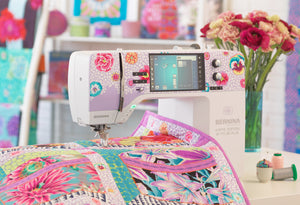

We Love Our Quilting Community
At High Country Quilts we care deeply about community. With our experiences in retail, we know that a store is not only a place to shop but also a place for the community to gather and share. During this busy...


A customer once brought in a thrifted wool coat and said she wanted to turn it into a cloche hat that looked like it had stepped out of an old black-and-white film. That's the kind of project that starts with romance, then quickly becomes about fabric behavior, stitch control, and having the right machine beside you.
The cloche hat has a shape that feels instantly recognizable. It sits low, frames the face, and turns even a simple outfit into a statement. When you see one paired with a sleek coat, a strand of pearls, or a softly waved bob, it carries the mood of another era without feeling trapped there.

For modern sewists, the appeal is practical as much as visual. A cloche is small enough to feel achievable, but detailed enough to teach real skills. You're not just sewing a circle and calling it done. You're shaping a crown, managing structure, and learning how material responds to steam, stitching, and handling.
Some projects are beautiful but intimidating. The cloche hat lands in a sweet spot.
That last point matters. Many people think historical sewing only belongs at costume events. A cloche proves otherwise. Make one in charcoal felt with clean topstitching, and it looks sharp with a modern wool jacket. Make one in textured tweed, and it reads classic rather than theatrical.
A good beginner project doesn't have to be easy. It has to be small enough that you'll actually finish it and rich enough that you'll learn something real.
If you've been searching for a BERNINA sewing machine dealer Colorado makers can visit for guidance, this kind of project shows why local support matters. Hat sewing asks for more than a machine in a box. It asks for help choosing tools, matching fabric to technique, and understanding why one setup works better than another.
A cloche hat did more than finish an outfit. It framed a new kind of womanhood.
In the 1920s, fashion shifted toward shorter hair, straighter silhouettes, and clothing made for movement. The cloche fit that change perfectly. Its bell-shaped crown sat low on the head, often skimming the brow, which gave the wearer a composed, forward-looking air. It felt modern because it matched real life. Women were commuting, working, studying, traveling, and appearing in public with a new sense of independence.
Earlier hats often relied on height, width, and decoration to signal status. The cloche spoke a different language. It kept close to the head, stayed practical in motion, and let line do the work that excess trimming once did. For a sewist, that makes the design especially interesting. A small shift in curve or fit changes the whole expression, much like a slight adjustment in a sleeve cap can change the posture of a jacket.
Its silhouette carried meaning, even before ribbon or trim entered the picture.
| Feature | What it communicated |
|---|---|
| Low crown | Attention drawn to the face |
| Close fit | Readiness for movement and daily life |
| Small brim | Practicality with polish |
| Trim and ribbon | Personal style without overload |
That economy of design still appeals now. A cloche asks you to be deliberate. Because the form is restrained, the details become louder. Clean topstitching, a graceful side fold, or a neatly applied band can change the hat from soft and romantic to crisp and architectural.
Decoration mattered in the 1920s, but often in a controlled way. A narrow ribbon at the side, a stitched motif, or a small applique could suggest taste, mood, or even social confidence without turning the hat into a spectacle. Fashion history is full of these quiet signals. The cloche is a good teacher because it makes them easy to see.
Historical insight: The accessories people remember from the 1920s were often the ones with the clearest line and the most disciplined finishing.
That lesson carries straight into the sewing room. On a compact project like a hat, every wobble shows. Bulky seams, uneven edge stitching, or poor handling around a curve stand out fast. A cloche is small, but it is not forgiving.
That is one reason serious sewists often care so much about machine quality and dealer support. BERNINA's history reflects that long-view approach. According to BERNINA's company history, the company began in Switzerland in 1899 and remains family-owned by the fourth generation of the Herzog family. For a project rooted in 1920s design, that continuity feels fitting. You are using a modern machine to make a piece with historical character, and the best experience comes from having both precision at the machine and knowledgeable local help when questions come up.
A cloche can walk out of a 1920s photograph and into a Colorado winter wardrobe without looking stranded in costume. That is part of its charm. The shape is simple, close to the head, and clean in profile, so it reads as intentional even when the rest of the outfit is thoroughly modern.
Fashion history works a little like pattern drafting. The base shape stays recognizable, then each generation adjusts proportion, fabric, and styling to suit its own taste. The cloche has survived because that base shape is strong. It frames the face beautifully, offers practical coverage, and gives a sewist plenty of room to express mood through material and finish.
Its return also makes sense for a modern maker. Ready-made accessories often blur together, while a cloche has character at first glance. Film, museum exhibitions, vintage revivals, and social media have all helped more sewists see that a period silhouette can live comfortably in an everyday closet.
The cloche adapts well because it asks for balance, not reenactment. A few pairings make that easy:
Restraint does the work here. If the hat carries the history, the rest of the outfit can stay clean and simple.
The making process has changed just as much as the styling. A sewist may first fall in love with the cloche through a film still or museum image, then compare patterns, test interfacing ideas, and sit down at a machine that can handle careful topstitching and smooth curves without a fight. That path from inspiration to finished piece matters.
It also explains why machine buying is rarely just a transaction. Many sewists want to try the controls, hear how the machine sounds at speed, and ask practical questions about accessories, maintenance, and the kinds of projects they sew. A local Colorado dealer becomes part of the project at that point, not just the place where the box came from.
That is one reason the cloche makes such a useful gateway project. It is small enough to feel approachable, but refined enough to reveal what a good machine and knowledgeable support can add. You begin with Gatsby-era inspiration and end with a hat that fits your own wardrobe, built with modern tools that make precise sewing feel attainable.
A cloche begins with touch. Before a needle ever drops, the fabric has already decided how the hat will sit, how the brim will behave, and whether the finished piece feels like a graceful 1920s reference or a frustrating craft experiment. Fabric for a cloche works much like the foundation of a dress. If the base has the wrong body, every beautiful detail above it has to fight.

The first question is simple. Do you want sculpted structure, distinct texture, or soft glamour? Once you answer that, the fabric choices become much clearer.
Wool felt is the classic starting point, and for good reason. It accepts shaping well, responds to steam, and holds that close, face-framing silhouette that gives the cloche its identity. New hat makers often do well with felt because it forgives minor handling mistakes better than fabrics with shine or a visible weave.
Tweed offers a more refined mood. It feels rooted in cold-weather dressing and has the same kind of quiet authority you see in smart 1920s daywear. It can be excellent for a modern cloche, especially if you want the hat to pair naturally with coats, jackets, or trousers. The challenge is thickness. Bulky seam intersections need planning, a sharp needle, and a machine that feeds evenly instead of chewing through layers.
Velvet changes the mood at once. It brings eveningwear energy, depth of color, and that rich light-catching surface associated with vintage glamour. It also asks more of the maker. Nap direction matters, pin marks can linger, and every pass under the presser foot needs patience.
Use this quick guide before you cut.
| If you want... | Start with... | Watch for... |
|---|---|---|
| Traditional structure | Wool felt | Heat and steam control |
| Tailored texture | Tweed | Bulk at seams |
| Dressy finish | Velvet | Nap direction and marking |
Practical rule: Choose the fabric that can hold the shape first. Then choose the one you love to look at.
Many sewists fall for color or surface texture before they test behavior. A fabric can look perfect on the bolt and still resist the project. Soft wool may slump at the brim. Tweed may grow stubborn where several seams meet. Velvet may look spectacular and still be a difficult first cloche.
Handling real samples helps. So does sewing a few test curves before committing to the full hat. This is often the point where a good local dealer becomes part of the creative process. You are not only choosing cloth. You are matching fabric, needle, presser foot, stitch settings, and project goals into one workable plan. On a BERNINA, that kind of precision matters because hat sewing asks for clean curves, steady feeding, and dependable control on small pieces.
Ownership questions often show up here too, not after the purchase. A sewist comparing BERNINA dealers in Colorado may need answers about machine setup, classes, maintenance, and repairs before deciding which model makes sense for projects like this. The Presser Foot's dealer support discussion reflects that broader concern. Buying the machine is only one step. Learning how to use it well, and having support close by when you are ready for your next ambitious project, is what turns a moment of inspiration into years of confident making.
The first cloche often surprises people. It looks like a simple little hat from the outside, yet it asks for the same discipline as a well-cut collar or a shaped sleeve. Every curve has a job. The crown must hug the head without collapsing, and the brim must frame the face without turning stiff or awkward.

Start with the crown, because it sets the whole personality of the hat. A true cloche has depth and a close fit. Too shallow, and it loses that soft, face-framing 1920s line. Too tall, and the silhouette starts to feel theatrical instead of wearable.
For felt or other structured fabrics, steam helps the fibers relax so you can mold them gradually. Work in small passes. Let the fabric cool and hold its shape before pushing farther. If your pattern uses several crown pieces, accurate notch matching matters more than beginners expect. A difference of a few millimeters on one curved seam can travel all the way around the hat, much like setting one stair at the wrong angle changes the whole staircase.
A BERNINA earns its keep here through control. Curved seams on compact pieces ask for even feeding, clear visibility, and precise needle placement. You notice those advantages quickly on hat work, because small distortions are easy to spot.
Here's a visual walkthrough of construction in motion:
The brim is usually modest, sometimes asymmetrical, and often the part that reveals whether the maker stayed patient. A cloche brim works like the frame around a portrait. If the curve wobbles, the eye goes straight to it.
Stabilize only where the fabric needs support. Clip curves carefully so the seam can spread and settle. Then press in stages. One careful press after stitching, another after grading or trimming, and a final press once the brim is attached will usually give a cleaner result than trying to force the shape all at once.
Dense fabrics reward a machine that stays steady under load. On projects like felt, wool blends, or tweed, smooth stitch formation and consistent feeding matter more than raw speed.
The last steps are where a handmade cloche starts to look polished instead of homemade.
One more practical point matters for modern makers who plan to share their finished work. Clear photos of shaping, trims, and inside finishing help you document progress, and PostClaw's social media insights offer useful ideas for showing handmade projects online.
Dense hat fabrics reward steady hands, clean seam preparation, and a machine that responds accurately on small, curved pieces. That is why cloche construction becomes such a useful test project when you are comparing sewing machines and dealer support. It shows you very quickly whether your setup can carry you from inspiration to a polished result.
A beautiful project can start with a photograph from the 1920s, but it becomes real when you sit down at a machine and know what to do next. That's where a local dealer matters. If you're looking for a BERNINA sewing machine dealer Colorado sewists can learn from, the true value isn't just access to machines. It's access to onboarding, classes, and support that help you grow into them.
BERNINA's own U.S. catalog separates machines for beginners from advanced embroidery models and notes that advanced models are supported through local dealers with training and classes. For Colorado buyers, that means a dealer can help match machine class to your actual use case and provide instruction for more complex features, as shown on the BERNINA USA machine catalog. That kind of support reduces guesswork when you move from basic sewing into projects that require more precision.
Not every shopping experience answers the same questions. For a project-focused sewist, these matter most:
Colorado makers also benefit from local creative community. Classes, in-store conversations, and even seeing what other people are making can shape better buying decisions. If you're a small creative business or an independent maker trying to share that work online too, PostClaw's social media insights offer useful ideas on showing process, finished pieces, and the story behind handmade work.
High Country Quilts in Colorado Springs is an authorized BERNINA dealer and full-service sewing and quilting shop where customers can compare machines, ask project-specific questions, and learn through classes and ongoing support.
See current BERNINA machine pages and compare your options
If you're ready to turn 1920s inspiration into a project you can wear, visit High Country Quilts to explore BERNINA machines, ask about classes, and get help choosing the right setup for your next cloche hat or sewing project.
At High Country Quilts we care deeply about community. With our experiences in retail, we know that a store is not only a place to shop but also a place for the community to gather and share. During this busy...

Hi! We’re Adam and Renee Wheaton, the new owners of High Country Quilts! For more than 40 years, we’ve owned and operated vacuum and sewing businesses. Following in Renee’s father’s footsteps after he retired from All Discount Vacuum and Sewing in Colorado...


Leave a comment