
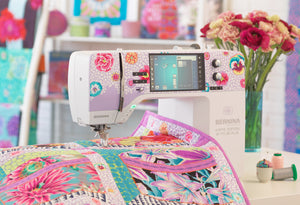

We Love Our Quilting Community
At High Country Quilts we care deeply about community. With our experiences in retail, we know that a store is not only a place to shop but also a place for the community to gather and share. During this busy...


You've probably stood in front of a bolt of faux fur, run your hand across the pile, and thought two things at once. First, this would make the most gorgeous coat. Second, there's no way I'm putting that under my sewing machine.
That hesitation makes sense. Faux fur looks glamorous, but it can feel unruly the minute you start planning seams, cutting layouts, and bulk at the collar. The good news is that a beautiful result doesn't come from wrestling the fabric into submission. It comes from using the right machine setup, the right foot, and a sequence that respects how faux fur behaves.
A strong BERNINA presser feet guide matters here because faux fur asks more of your tools than a simple cotton project. The feed has to stay even. The pile has to stay out of the seam. The finish has to look smooth from the outside and comfortable from the inside. Once you understand which BERNINA feet help with those jobs, the project becomes far less intimidating and much more enjoyable.
A faux fur coat usually starts as inspiration. You spot one in a shop window, or on a chilly morning you wish for a layer that feels dramatic and cozy at the same time. Then the practical questions arrive. Will the seams get bulky? Will the fur shed everywhere? Will the coat end up looking homemade in the wrong way?
Those are the same questions I hear in workshops from sewists who already know how to make quilts, pajamas, or simple jackets. Faux fur feels different because it doesn't behave politely. It shifts, it hides seam lines, and it can quickly become thick at joins and hems.
That's exactly why this project is such a satisfying skill-builder. A faux fur cardigan coat teaches you how to slow down, make smart cutting decisions, and use your machine features with intention.
Faux fur rewards control, not speed. When your tools are doing their job, the fabric suddenly feels much less mysterious.
Transformation happens when you stop treating presser feet as accessories and start treating them as problem-solvers. On a BERNINA machine, the right foot can help manage movement, keep layers aligned, and produce a cleaner finish on a fabric that loves to misbehave. That's where boutique-looking results begin.
A beautiful faux fur coat is won or lost before you thread the machine. If the fur backing is unstable, the lining clings, or the pattern has too many fussy pieces, even a strong BERNINA setup has to work harder than necessary. Choose materials that cooperate, and the sewing becomes calmer, cleaner, and far more professional looking.

Faux fur varies more than many sewists expect. Some options have a neat, brushed pile with a stable knit backing. Others look glamorous on the bolt but behave like a moving blanket once you start cutting and seaming. For a first cardigan coat, aim for fur that gives you texture without fighting every step.
Start by flipping the fabric to the back. The backing tells you a great deal. A good coating fur has enough body to support seam lines, yet it still bends easily in your hands. If it stretches a lot, tunnels, or looks loosely knitted, the pieces can shift off grain and the finished coat may sag in places where you want crisp shape.
Then stroke the pile in both directions. It should lie smoothly one way and resist slightly the other way. That directional nap is part of what makes faux fur look rich, so every pattern piece needs to respect it.
Use this quick guide at the cutting counter:
| Fabric choice | What to look for | Why it matters |
|---|---|---|
| Short-pile faux fur | Smooth surface, controlled nap, stable backing | Easier seam matching and less bulk |
| Medium-pile faux fur | Plush hand with visible direction | Good balance of texture and manageability |
| Long-pile faux fur | Dramatic loft and longer hairs | Best for statement coats, but needs more careful trimming and seam prep |
One small test can save a lot of frustration. Rub the cut edge gently between your fingers. A little shedding is normal. A cloud of fluff from light handling means more cleanup, thicker seam allowances, and more brushing out after stitching.
The lining acts like the inside structure of the coat. It affects warmth, comfort, and how polished the garment feels when it slides over your clothes. Faux fur may be the star, but lining is what helps the coat wear well.
Good options include:
Here is the pairing I recommend in class. If your outer fur is bulky and lofty, keep the lining smooth and obedient. If your outer fabric is softer and drapier, you can use a slightly more substantial lining without making the coat feel stiff. The goal is balance.
If you're sketching silhouettes before buying yardage, it can help to explore garment creation tools so you can compare proportions and design details before cutting into expensive fabric.
Workshop note: Boutique results often come from restraint. A plush outer layer, a calm lining, and strategic interfacing usually look better than adding weight everywhere.
Simple pattern lines tend to look the most expensive in faux fur. The fabric already brings texture, depth, and volume, so the pattern does not need to work overtime.
Choose shapes with clean, confident lines:
If you are between sizes, fit the shoulders and upper chest first. You can add room through the body more easily than you can fix a coat that collapses or pulls across the top. Faux fur already adds visual fullness, so extra ease should be purposeful, not automatic.
A final instructor tip. Read the finished garment measurements, not just the body measurement chart. For outerwear, that little habit makes better decisions and fewer disappointments. On a project like this, smart material choices set up every BERNINA foot and feature to do its best work later.
A faux fur coat can look beautifully expensive or unmistakably homemade before you sew a single seam. The difference often starts at the cutting table. Cut the pile carelessly, and you create blunt, choppy edges that shed more, bulk up the seams, and make every later step harder for you and your BERNINA.

Cut faux fur from the wrong side so you slice only the backing. That preserves the pile along the cut edge, which gives the finished coat a fuller, more boutique look.
It helps to treat faux fur less like woven coating and more like a fabric with a hidden foundation. The backing is your target. The fur itself should be disturbed as little as possible. A sharp blade glides under the fibers and separates the base cleanly, while scissors tend to chop right through everything in their path.
Use this method for cleaner pieces and calmer sewing later:
A fresh blade matters. Dull tools drag, skip, and tug the backing, which leaves you with ragged edges that are harder to match accurately at the machine.
Nap is the direction the fur naturally lies. If the body runs downward and a sleeve runs upward, the coat can look mismatched even when the stitching is accurate. Light reflects differently across the surface, so the eye catches that inconsistency right away.
Before you place a single pattern piece, smooth the fur with your hand and choose the direction you want the pile to fall. For most coats, downward nap looks natural and polished. Mark that direction on every pattern piece, especially if you are cutting over more than one session.
Here is a workshop habit that saves disappointment. Stand back and look at the fabric from a few angles under good light before cutting. Faux fur can change appearance quickly as you turn it, and that preview tells you how the finished garment will read in motion.
Brush the pile in one direction before layout. You will see the backing lines more clearly and catch a flipped pattern piece before it becomes a problem.
Faux fur sheds. That part is normal. The goal is to keep the fibers contained so they do not spread across your sewing space or work down into your machine bed.
A cleaner workflow makes a real difference:
If your seam allowances feel thick, trim the pile from the seam allowance only. Leave the garment surface untouched. That small preparation step works like grading in tailoring. It removes hidden bulk where you need control, while the outside keeps its lush, full appearance.
Done well, this prep sets up every later step for better results, from more accurate feeding under the presser foot to smoother, less bulky seams that look polished on the finished coat.
You sit down with a beautiful cut of faux fur, lower the presser foot, and the fabric suddenly develops a personality. One layer creeps ahead. Another drags behind. The stitches may look acceptable at first, but the seam can still twist, ripple, or feel bulky. On faux fur, boutique-quality results come from choosing the foot that solves the specific problem in front of you.

Let's clear up the labels first, because this confuses many capable sewists. BERNINA feet are matched to machine width and feeding features. A foot marked #1 fits 5.5mm machines. A C suffix, such as #1C, is for 9mm machines. A D suffix, such as #1D, is for machines with Dual Feed. The BERNINA presser foot compatibility guide shows these versions side by side, which makes the system much easier to read.
That matters more on faux fur than it does on a plain woven cotton. Fur has loft, drag, and thickness changes. If the foot and machine are not matched properly, you can lose stitch control, feeding accuracy, or both. A useful BERNINA presser feet guide helps you understand this.
Here is the quick workshop version:
| Foot marking | Best match | What it means for sewing |
|---|---|---|
| #1 | 5.5mm machines | Standard width compatibility |
| #1C | 9mm machines | Built for wider stitch capability |
| #1D | Dual Feed models | Designed to work with integrated Dual Feed |
For general construction, Reverse Pattern Foot #1, #1C, or #1D is often the starting point. It is steady, familiar, and easy to control. I use it for test seams, lining work, and many straight construction seams where the fabric stack is not fighting me.
On faux fur, that last part is important. You are not choosing a foot by habit alone. You are choosing it by behavior. If the backing is feeding evenly and the seam is staying true, Reverse Pattern Foot is a strong choice. If your machine has Dual Feed, #1D gives you even more control when you are combining fur with a slippery lining or a facing that wants to shift.
BERNINA educators also commonly treat the #1 family as the reliable all-purpose option, with #1D especially helpful when extra thickness or layered construction enters the picture, as described in BERNINA all-purpose foot characteristics.
If faux fur starts behaving like two fabrics with two separate agendas, switch to Walking Foot #50. It feeds the top layer and bottom layer together more evenly, which helps prevent that slow, sneaky shifting that shows up halfway down a seam.
Walking Foot #50 is especially useful for:
Here is my classroom rule. If you have already pinned or clipped carefully and the layers still will not behave, change the foot. Do that before changing your pattern, your seam allowance, or your confidence.
A few other BERNINA feet can rescue a tricky step.
This is how I teach foot selection in class. Reverse Pattern Foot handles the everyday seams. Walking Foot manages movement. The specialty feet step in when surface drag, edge accuracy, or sudden thickness becomes the issue.
If you're also evaluating needle choices for dense layers, this guide to sewing machine needles is a useful companion read. Needle choice and presser foot choice work together, especially when faux fur backing, lining, and interfacing meet in one seam.
Use this sequence at the machine:
Presser feet are small tools, but on faux fur they act like precision attachments. The right one helps you feed bulky layers cleanly, keep the nap from fighting the seam, and finish with the kind of polish that makes a handmade coat look custom rather than homemade.
You have your cut pieces stacked beside the machine, the fur is shedding a little, and the coat suddenly looks much bigger than it did on the pattern tissue. This is the point where a clear order matters. Faux fur rewards calm, methodical sewing.

Treat the project as two coordinated garments. Build the faux fur shell first. Build the lining second. Then join them so the coat feels beautiful every time it goes on and off.
Before each major seam, sweep the pile out of the seam allowance with a stiletto, awl, or small brush. You are not trying to strip the seam bare. You are clearing enough fur that the backing can meet backing instead of forcing a thick tufted ridge into the seam.
Align the cut backing edges, not the fluffy surface. On faux fur, the backing is your ruler. The pile can make a perfect match look crooked, and a crooked match look right.
If your machine uses modern BERNINA feet, confirm the foot type before you begin. New-style feet have red markings and a squared shank shape with a rear notch. On compatible machines, the correct C or D foot lets the machine recognize the foot properly and apply the settings it was designed to use. That extra accuracy matters on faux fur, where a small mismatch in feed or pressure can show up quickly in the seam.
I teach students to build the outer coat in stages that keep the bulk manageable and let you test your setup before the heaviest seams:
Start with a straight stitch and test it on the exact layer stack from your coat. Faux fur outer, interfacing, and any edge support can behave very differently from a single scrap of backing.
If a seam feels hard or corded between your fingers, pause before changing needles or tension. Open the seam allowance and tease out any trapped pile with a pin or awl. Many faux fur seams look better after that one correction.
This is the stage that makes many sewists hesitate. Armholes combine curve, bulk, and gravity all at once.
A few habits keep the process under control. Keep the garment spread on the table so its weight does not pull against the needle. Shape the sleeve cap with your fingers before it reaches the presser foot. Clip the backing only where the curve needs release, and keep those clips shallow. Sew slowly over seam intersections, stopping with the needle down whenever you need to lift, smooth, and continue.
If your machine has Dual Feed and you are using a D foot, use it here. Dual Feed works like an extra set of steady hands on the top layer, which is especially helpful when the sleeve cap backing wants to creep while the fur surface drags.
The lining is usually the easygoing partner in this project. It gives you a chance to sew more quickly, confirm the coat shape, and prepare for a clean finish inside.
Assemble it in the same sequence as the outer shell:
| Lining step | Why this order helps |
|---|---|
| Shoulders first | Establishes the garment frame |
| Neckline or facing area | Keeps front edges organized |
| Sleeves | Easier to handle before side seams close fully |
| Side seams | Finishes the lining shell efficiently |
Use the opening your pattern recommends for turning. In many cardigan coat patterns, that opening sits in a lining seam or near the hem. Mark it clearly so you do not close it by habit.
Place the outer coat and lining right sides together, then match the front edges, neckline, and any facing sections your pattern includes. Sew with care where the smooth lining meets the plush outer layer. That combination can feed unevenly if you rush it.
After stitching, trim and grade the seam allowances where the pattern allows. This is one of the simplest ways to reduce bulk without changing the look of the coat. Turn the coat right side out, then gently roll the seam from the inside with your fingers so the lining stays hidden and the fur side remains full at the edge.
Corners and front edges deserve patience. Faux fur prefers soft, rounded shape. If you force a knife-sharp point, the backing may crease and the pile can separate awkwardly at the turn.
Before hemming, let the coat hang for a bit if the fabric seems to relax under its own weight. Then measure again. Faux fur can settle slightly, especially on longer cardigan styles.
Many of the best-looking faux fur coats have hems finished by hand because the edge stays soft and the pile is not crushed by a visible machine line. The same principle applies at sleeve hems. You want the eye to notice the fur, the shape, and the drape, not a heavy stitched ridge.
Professional results come from small choices repeated all the way through the project. Choose the right foot for the seam in front of you, support the weight of the coat, and keep the pile out of the stitching path. That is how faux fur goes from bulky and unpredictable to polished and boutique-worthy.
You slip the coat on for the first full try-on, turn toward the mirror, and the shape is there. Now the last decisions determine whether it reads handmade in the best way or polished enough to pass for boutique ready. On faux fur, finishing is quiet work. The best results are often the ones no one notices because the hem sits softly, the front closes cleanly, and the pile looks full all the way to the edge.
A hand-sewn hem is usually the nicest choice on faux fur. It keeps the edge flexible and avoids the flattened track that machine stitching can leave on thick pile. If your coat has any weight to it, that soft finish also helps the garment hang better.
Keep the hem allowance modest. Too much turn-up creates a rope of bulk at the edge, especially on sleeves. If the pattern gives a deep hem and your fabric is dense, trim that allowance down to a width the fur can support comfortably.
Then work from the inside, catching only the backing or inner layer with small hand stitches. Check the right side every few inches. If you can spot where the hem is attached, your needle is reaching too far through the fabric.
Sleeve hems follow the same rule. Soft edges suit faux fur.
One pro tip from the workroom. Before you commit to the final hem depth, put the coat on and let your arms bend naturally. Sleeve length that looked perfect on the table can shorten visually once the sleeve rounds over the arm.
On faux fur, a good hem disappears. Your eye should stay on the silhouette and the richness of the fabric.
Closures need to support the coat without fighting the pile. Fur hooks and eyes are often the cleanest option because they hold securely and stay visually quiet. Large buttons can work on some styles, but they tend to interrupt the surface unless the design is asking for that statement.
Place each closure where the fronts want to meet on the body. Do not pull the coat into position and then sew the hook there. That is how rippling starts. Let the garment hang, overlap the fronts naturally, and mark the points of least strain.
Sew hooks and eyes through the backing, facing, or another stable layer. Loose pile will not hold. I like to stitch each piece down, test it while wearing the coat over a sweater, then reinforce if needed. Faux fur coats often behave differently once there is a layer underneath.
If your pattern uses a zipper or a lapped opening, the right BERNINA foot gives you better control near a bulky edge. Zipper Foot with Non-Stick Sole #54 is especially useful when the surface wants to drag. Zipper Foot #4D is excellent for guided, close stitching along a fold or zipper tape. Pair the foot with your machine's Dual Feed, if your model has it, and the layers stay much more cooperative.
Shoulder support is a style decision, not a rule. A relaxed cardigan coat may look best with no pad at all. A more structured shape often benefits from a light shoulder pad that fills the upper line without making it stiff. The goal is support, not armor.
After all the construction is done, spend time grooming the seams. This is one of the biggest differences between an acceptable finish and a beautiful one. Use a blunt tapestry needle, an awl, or a pin to lift trapped hairs out of the stitching line. Work slowly, a few fibers at a time, and brush the pile in its natural direction as you go.
That little bit of seam rescue matters. It blends the join so the fur reads as one continuous surface instead of two cut edges stitched together.
Faux fur lasts longer when you treat it like a special piece in your closet.
Keep these habits in mind:
If the pile looks tired after wearing, give the coat time on a hanger before you judge it. Faux fur often recovers once the backing relaxes and the fibers have room to spring back. That patience, along with careful finishing, is what gives your handmade coat that refined, high-end look.
At High Country Quilts we care deeply about community. With our experiences in retail, we know that a store is not only a place to shop but also a place for the community to gather and share. During this busy...

Hi! We’re Adam and Renee Wheaton, the new owners of High Country Quilts! For more than 40 years, we’ve owned and operated vacuum and sewing businesses. Following in Renee’s father’s footsteps after he retired from All Discount Vacuum and Sewing in Colorado...


Leave a comment