

We Love Our Quilting Community
At High Country Quilts we care deeply about community. With our experiences in retail, we know that a store is not only a place to shop but also a place for the community to gather and share. During this busy...


You're probably looking at a piece of faux fur right now and wondering whether it's going to become a beautiful vest or a lint-covered regret. That's a normal place to start. Faux fur is bulky, slippery, and messy, and reversible garments raise the stakes because the inside has to look as clean as the outside.
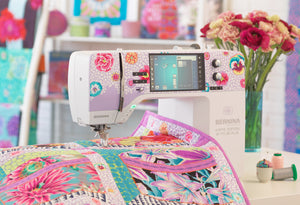
This is exactly the kind of project where BERNINA 880 Plus features stop being abstract and start earning their place. A machine with generous workspace, precise stitch control, and fabric-handling support gives you room to manage thick layers without fighting them at every seam. For a vest that needs smooth feeding, clean edges, and polished finishing, those details matter.
You clip the first faux-fur panel, lower the presser foot, and feel the project get real. Thick fabric shifts under its own weight, the pile tries to creep into the seamline, and every choice matters more because both sides of the vest will be visible when it is finished.
That is why the BERNINA 880 Plus fits this project so well. On a reversible faux-fur vest, the biggest advantage is not a flashy stitch menu. It is control. The machine gives you the space and stitch precision to keep bulky pieces supported while you sew, which is what helps shoulder seams stay matched and long front edges stay clean.

A vest like this exposes weak habits fast. If the fabric drags off the table, the seam can stretch. If the layers feed unevenly, the lining grows longer than the shell. If you rush thick areas, the vest looks homemade in the wrong way.
The 880 Plus helps you avoid those problems because it handles large garment sections calmly. The extra room around the needle matters when you are supporting a full back panel or rotating a bulky armhole curve. Strong feeding and precise settings matter when you move from flat seams to high-bulk joins at the shoulder and side seam intersections.
Use the machine for what it does best:
One trade-off is worth stating clearly. A powerful machine does not remove the need for restraint. On faux fur, slower stitching usually produces the better result because you have time to brush pile out of the seam allowance, keep the backing flat, and check that the lining has not shifted underneath.
I tell students at High Country Quilts to treat this kind of project like upholstery with garment-level finishing. That mindset keeps your work neat. You stop forcing the fabric, start supporting it, and get a vest that turns cleanly and wears well on both sides.
It also helps to understand construction beyond the machine itself. If you like studying how stitches hold fabric together, these manual sewing methods offer useful perspective, especially for corners, closures, and areas that benefit from hand finishing.
A reversible faux fur vest is decided long before the first seam. Fabric weight, pile length, and pattern shape determine whether the finished piece feels luxurious or heavy and stubborn. On the BERNINA 880 Plus, you can fine-tune stitching for bulky layers, but smart material choices still do most of the work.
Choose supplies that help the machine handle thickness cleanly.
For a first version, use a short-pile faux fur. It gives you clearer seam lines, less trapped bulk at the edges, and fewer surprises when you turn the vest right side out. Long pile has presence, but it also hides markings, crowds seam allowances, and makes a reversible finish harder to control.
Build your kit with function in mind:

One sourcing guideline matters here. Buy the shell and lining only after handling both together. A beautiful faux fur paired with a lining that is too slick or too limp will fight you through the whole reversible construction process.
This project needs ease in the right places. The vest has to accommodate the fur, the lining, and the turn of cloth created by reversible construction. If the pattern is too close to the body, the layers compete for space and the hem and front edges tend to pull.
The most reliable patterns share a few traits:
At High Country Quilts, I usually steer students toward a slightly relaxed silhouette for this kind of vest. You can always refine the look with proportion and finishing details. Fixing a vest that is too tight after cutting faux fur is much harder.
If a commercial pattern looks trim in the envelope photo, add ease before cutting your final fabric. Bulk needs space, even when the style looks simple.
A homemade pattern works well here if you keep it clean and practical. Start with a vest or roomy sleeveless top that already fits comfortably over layers. Trace the outline, then simplify it. Mark the front opening, shoulder, side seam, neckline, and armhole clearly so both shell and lining pieces stay consistent.
Make a test version in a stable, inexpensive fabric. That step saves time, not wastes it. You can check shoulder width, front hang, and armhole comfort before the faux fur hides problems that are much easier to correct on a mock-up.
Before cutting the final pieces, place the shell pattern over the lining pattern and confirm that every major edge matches. Progress shows up here. When both layers agree at the pattern stage, the reversible finish comes together with far fewer corrections later.
A faux-fur vest can go wrong on the table long before it reaches the machine. If the pile gets chopped at the cut edge or the layers are prepared casually, the BERNINA 880 Plus ends up fighting preventable problems instead of helping you sew accurately. Good prep keeps this project manageable.
Cut faux fur from the backing side whenever possible. Trace clearly, then use a craft knife or razor to cut only the backing layer. That keeps the pile long at the edges, so the seam line disappears more naturally once the vest is turned and finished. On a reversible garment, that matters more because both sides are expected to look intentional.
Keep the work flat, and keep the blade shallow. The goal is separation, not hacking through a thick fabric sandwich.
A few habits save time later:
Check nap direction before cutting the second piece. Students often match shapes correctly and still end up with one side reflecting light differently from the other. On a vest, that mismatch is easy to spot.
The 880 Plus has power to spare. The better question is how to use that power without flattening the fur, stretching the lining, or creating a stiff seam that will not turn cleanly.
For this project, I set the machine for control first. A fresh needle, a longer test stitch, and even feeding matter more than sewing fast. The walking foot is especially useful where bulky faux-fur backing meets a smoother lining because the two layers rarely feed at the same rate on their own. Tear-away stabilizer also earns its place under any area that wants to ripple, tunnel, or distort during stitching.
| Setting | Recommendation | Reason |
|---|---|---|
| Needle | Start with a fresh needle suited to heavier or bulky fabric | Thick backing dulls a needle quickly, and a worn point causes skipped stitches and rough penetration |
| Presser foot | Use Walking Foot #50 on layered seams and bulky joins | It helps both layers advance together and reduces creeping |
| Stitch length | Begin slightly longer than for standard garment sewing, then test | Dense, short stitches can lock up thick seams and make them harder to turn |
| Tension | Start at the normal setting and adjust from a layered sample | Faux fur backing, lining, and stabilizer behave differently as a stack than they do alone |
| Stabilizer | Place tear-away underneath areas prone to puckering | It supports the stitch line without adding permanent bulk |
| Speed | Sew at a steady medium pace | Thick sections need guidance from your hands and time for the feed system to work evenly |
| Pinpoint Placement | Use it only where visible stitching or embellishment must land precisely | Precision helps on a reversible piece because any crooked decorative work reads immediately |
Pinpoint Placement is not the star of construction here. It becomes useful if you add a decorative motif, label, or exact topstitching detail that has to sit squarely on a finished edge. For basic assembly, stable feeding and a tested stitch setup do more for your result.
Decorative stitches on soft, bulky fabric need support underneath. Test them on the same layers you will sew in the vest, or the stitching can pucker and disappear into the pile.
Do not test on a random scrap of lining alone. Build a sample that matches your actual project. Include faux fur, lining, and any interfacing or stabilizer you expect to use. Then sew a straight seam, a curved seam, and one bulky crossing point such as a shoulder or hem junction.
That sample tells you what the machine needs. If the seam tunnels, add support. If the fur pushes forward and the lining lags, switch to the walking foot. If the stitches sink too excessively into the backing, increase stitch length slightly and test again.
What usually helps:
What usually causes trouble:
At High Country Quilts, I see the same pattern with ambitious first-time fur projects. Careful cutting and a serious test sample shorten the learning curve. The 880 Plus can handle this vest well, but it rewards setup that matches the fabric in front of you.
The shell and lining should be built as two separate garments first. That sounds simple, but at this stage students often rush and create trouble for themselves later. If one layer twists, stretches, or finishes at a different shape, the final reversible assembly becomes awkward.
Treat the shell as a precision job, not a rough outer layer.
Start with the shoulder seams on the faux fur pieces. Place right sides together, then use your fingers, an awl, or a blunt point turner to sweep the pile away from the seam allowance so it doesn't get trapped in the stitching. Clip generously if needed, especially if the fur is thick.
Sew slowly and support the piece so its weight stays level with the bed of the machine. After stitching, turn the seam to the right side and gently pull any caught fibers out of the seam line with a pin.

Then sew the side seams the same way. Don't stretch the fabric to make edges match. If pieces seem slightly uneven, check whether the pile is bunching at the seam edge before assuming the cut is wrong.
The lining often feels easier, so people relax too soon. Keep the same seam order and the same attention to accuracy. Shoulder seams first. Side seams second. Press lightly if the lining allows it, but always test heat and use a press cloth when needed.
A few lining habits improve the final garment:
A reversible garment only looks polished if both layers were sewn as finished garments from the beginning.
Faux fur doesn't want to be ironed into obedience, and trying to press it like quilting cotton can damage the pile. Finger pressing, steam held slightly above the fabric, and gentle seam shaping usually work better than direct pressure.
For thick joins, this sequence helps:
If your machine setup includes the BERNINA integrated fabric-feeding support you prefer for layered work, use it consistently. Thick shell pieces feed best when both layers move together instead of dragging against each other. That's especially true near front edges, where mismatched feeding creates visible distortion.
By the time both the shell and lining are complete, lay them one on top of the other and verify that all key points still match. Front corners, shoulders, armholes, and hem should line up without force. If they don't, correct it now. The next step encloses edges, which makes late fixes much harder.
A reversible faux-fur vest can look expensive or awkward at this stage. The difference usually comes down to how accurately you bag it out, and how well you control bulk while the shell and lining are still trapped together.
Place the fur shell and lining right sides together and match the shoulders, front edges, neckline, and hem first. Then fill in the spaces between with clips or pins so the layers stay aligned. On lofty fur, I prefer more clips than I think I need, because the pile can shift under the presser foot even when the cut pieces started out perfectly matched.

Sew one continuous path from the front hem, up the first front edge, around the neckline, down the second front edge, and across the lower edge. That order keeps the visible edges connected in one clean line, which matters on a reversible garment where any ripple or mismatch shows on both sides.
The side seam opening in the lining stays open. That is your turning point later, so do not close it out of habit.
On the BERNINA 880 Plus, this step is easier to manage because the machine gives you steady control at slow speed. Use needle down on curves and corners, and pivot a little at a time instead of trying to swing the whole vest around in one motion. With bulky fabric, accuracy beats speed every time.
Here's a helpful visual reference for the motion of the process:
Before turning, inspect the seam allowance with the vest still inside out. Trim back only the areas that need it, usually corners, curved neckline sections, and any place where fur, backing, and lining all stack together. Clip curves so they can spread and lie flat after turning, but keep enough seam allowance to protect the seam line.
This is one of those trade-offs students often miss. Trim too little, and the edge looks rounded and heavy. Trim too much, and the seam loses strength right where the vest gets handled most.
Turn the vest through the lining opening slowly, pulling one section through at a time. Keep your hands open and support the fabric as it comes through. Faux fur can tolerate persuasion, but not rough handling.
Once the vest is right side out, shape the neckline, hem, and front edges with your fingers or a blunt point turner. Roll each seam slightly so the edge sits cleanly without the lining creeping to the fur side or the fur wrapping to the lining side. If an area refuses to sit flat, check the seam allowance before blaming the fabric. On this kind of project, the problem is usually hidden bulk rather than poor stitching.
A reversible faux-fur vest looks expensive or amateur in the last 10 percent of the work. The difference is usually edge control, restrained detail, and closures that suit the fabric instead of fighting it.
Close the lining opening by hand with a slip stitch. Catch only a few threads from each folded edge and keep the stitches evenly spaced. If you pull too hard, the lining will pucker and telegraph through the finished garment. On a project this plush, quiet handwork often gives a better result than trying to force one more machine pass into a bulky area.
Then carefully assess the perimeter. Some faux fur needs no visible stitching at all because the pile hides the edge and keeps it soft. Other versions, especially those with a flatter backing or a slippery lining, benefit from a light edge treatment to keep the layers in place.
The BERNINA 880 Plus gives you plenty of stitch choices and clear on-screen control, but more options do not automatically mean a better vest. On this project, decorative work earns its place only if it improves stability, visibility, or wear.
Good places to use those features include:
Test every decorative stitch on scraps that include the same layers and interfacing. Dense patterns can tunnel, pucker, or stiffen the edge, especially near the front opening. If the sample feels boardy in your hand, it will feel worse when worn. I usually advise students to choose one controlled detail and do it well rather than scattering decoration across a fabric that already has a strong visual presence.
For closures, fur hooks and eyes are usually the cleanest choice. They sit inside the front edge, hold securely, and do not interrupt the line of the vest. Sew them into the backing or seam allowance area so the attachment stays discreet from the outside. If the front edge wants to sag, add a small square of stabilizing fabric behind the closure point before sewing it on.
Care affects the finish as much as construction. Store the vest where the pile can breathe, avoid crushing heat, and refresh the fur with gentle brushing instead of pressing. If the nap gets flattened, a little patience restores more texture than aggressive handling ever will.
A few styling choices also help the garment do its job:
Clean hand stitching, stable edges, and a closure that lies flat are the details people notice, even if they cannot name them. On a demanding fabric and a machine as capable as the 880 Plus, that final polish comes from choosing the features that serve the project, not from using every feature available.
You've done more than sew a vest. You've handled thick fabric thoughtfully, managed a reversible build, and used the machine's strengths where they matter most. That's real progress, and it's the kind that carries into every future garment project.
A faux-fur vest asks for patience. It also rewards it immediately. The first time you turn that bagged-out shell right side out and see a clean finished edge, the work makes sense. The first time you wear it and someone assumes it came from a boutique, you'll know exactly why each careful step mattered.
The value of strong BERNINA 880 Plus features isn't just power. It's control, consistency, and enough precision to let you take on a project that would feel intimidating on a lesser setup. That's why ambitious sewing gets easier as your technique and your machine start working together.
High Country Quilts in Colorado Springs carries BERNINA machines, fabrics, and sewing supplies, and it also supports makers who want practical guidance along the way. If you're ready for your next project, visit High Country Quilts to browse materials, explore machine options, or get expert help choosing the right tools.
At High Country Quilts we care deeply about community. With our experiences in retail, we know that a store is not only a place to shop but also a place for the community to gather and share. During this busy...

Hi! We’re Adam and Renee Wheaton, the new owners of High Country Quilts! For more than 40 years, we’ve owned and operated vacuum and sewing businesses. Following in Renee’s father’s footsteps after he retired from All Discount Vacuum and Sewing in Colorado...


Leave a comment