
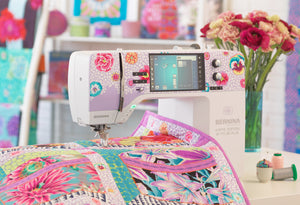

We Love Our Quilting Community
At High Country Quilts we care deeply about community. With our experiences in retail, we know that a store is not only a place to shop but also a place for the community to gather and share. During this busy...


There's something incredibly special about hand quilting. It’s more than just a way to stitch fabric together; it's a slow, meditative art form that lets you create something beautiful and functional with your own two hands. To get started on this rewarding journey, all you really need are the basics: a needle, some thread, fabric, and a hoop.
From there, you're not just making a quilt—you're connecting with a rich tradition while also putting your own creative spin on it.
In our fast-paced, digital world, the deliberate, rhythmic process of hand quilting feels like a breath of fresh air. It’s a chance to unplug and get lost in a tactile experience, focusing on the simple act of pulling a needle and thread through fabric. This grounding practice is drawing a whole new generation of makers to a craft that’s been around for centuries.

And this isn't just some passing fad. The real appeal of hand quilting is its unique mix of history, creativity, and mindfulness. Every single stitch is a personal touch, a tiny monument to the time and care you've poured into your project.
When you hand quilt, you’re joining a long line of creators. The practice dates back thousands of years and became a true cornerstone of American craft in the 19th century, when an estimated 70% of households owned a hand-quilted bedcover. The craft is still going strong today, with newcomers making up about 18% of the quilting community, bringing fresh ideas to time-honored techniques. This passion is fueling a global market that’s projected to hit $5 billion by 2027.
It’s easy to see why. The benefits of focused, creative activities are huge. Many people dive into hand quilting to find calm, fun, and connection, much like they do with other hands-on hobbies.
The real beauty of starting hand quilting is that it's not about being perfect. It's about the process—the quiet rhythm of the needle, the feel of the fabric, and the deep satisfaction of creating something with your own two hands.
While the techniques themselves might be historic, the way we use them is anything but old-fashioned. Modern quilters are constantly pushing the envelope, using hand stitching to add incredible texture and detail to contemporary designs. And the good news? You don't have to start with a king-sized bed quilt.
Here are a few great ways to dip your toes in:
This guide is here to give you a clear, encouraging start and show you that anyone—including you—can master this beautiful skill.

Before you make that first stitch, let's talk about tools. Walking into a craft store can be overwhelming with aisles of gadgets, but you really only need a handful of key items to get started with hand quilting.
Think of it this way: choosing the right gear is your first creative step. The right needle or thread doesn't just make the process easier; it directly affects how your stitches look and feel. A thoughtfully chosen toolkit is the best foundation for a wonderful quilting experience.
Your needle is easily the most important tool you'll pick. Sure, any needle can get thread through fabric, but quilting needles are built for the job. You'll hear quilters talk about "betweens," and for good reason.
Betweens are shorter than your average sewing needle, which gives you much better control for making those tiny, even stitches we're aiming for. They’re also sharp and strong, designed to glide through the quilt sandwich (your top fabric, batting, and backing) without a fight. If you're just starting out, grab a pack of size 8 or 9 betweens. They're the perfect sweet spot—sturdy enough to handle but fine enough for beautiful results.
Next up is thread. Your main choices will be cotton or polyester. For quilting, 100% cotton thread is the classic for a reason. It has a soft, matte finish that blends into the fabric beautifully and, more importantly, it wears down at the same rate as cotton fabric, so it won't slice through your quilt over the decades.
You'll see thread "weight" listed on spools, like 40wt or 50wt. Just remember: the higher the number, the finer the thread. A good 40wt or 50wt cotton is the perfect all-rounder for a beginner.
Comfort is key to happy quilting. Pushing a needle through fabric for hours can be tough on your fingers, and keeping your layers smooth is a constant battle. This is where a few more essentials come into play.
A thimble is your finger's best friend. This little cap, worn on your middle finger, does the hard work of pushing the needle through, saving you from a lot of soreness. They come in metal, plastic, or leather. Try a few if you can, but I find that a snug leather thimble offers the best mix of protection and feel for someone new to quilting.
To keep your work from puckering, you’ll want a quilting hoop. It holds all three layers of your quilt sandwich taut, making it so much easier to produce neat, consistent stitches. A 14-inch round hoop is a fantastic, versatile size that gives you plenty of room to work without being a pain to hold in your lap.
Before we dive into the specifics, here is a quick-glance table to help you build your shopping list.
| Tool | Recommended Type for Beginners | Why It's a Good Choice | Pro Tip From Experienced Quilters |
|---|---|---|---|
| Needles | "Betweens" (size 8 or 9) | Their short shank gives you superior control for making small, even stitches. | Buy a variety pack! This lets you find the size that feels most comfortable in your hand. |
| Thread | 40wt or 50wt 100% Cotton | It's strong yet gentle on cotton fabrics and has a classic, non-shiny finish. | A neutral color like cream, gray, or beige will blend beautifully with almost any project. |
| Thimble | Leather or a comfortable metal one | Protects your finger without feeling too bulky, allowing for better needle control. | Wear it around the house for a bit to get used to the feeling before you even start sewing. |
| Quilting Hoop | 14-inch round wooden hoop | Provides a large, stable work surface without being too heavy or awkward to manage. | Wrap the inner ring with cotton twill tape for a better, non-slip grip on your fabric. |
| Marking Tool | Water-soluble pen or chalk pencil | These markers are easy to see while you work and wash out completely when you're done. | Always test your marking tool on a scrap of your project fabric first to ensure it vanishes! |
| Scissors | Fabric shears and small snips | A sharp pair of shears for cutting fabric and tiny snips for trimming threads keeps things neat. | Never, ever use your fabric scissors on paper. It's the fastest way to dull them. |
With these tools on hand, you’re well-equipped for your first project.
Remember, the goal isn't to buy the most expensive tools, but the right tools for you. Comfort and usability are far more important than a high price tag when you're just starting out.
Many of the basics, like pins, a seam ripper, and measuring tape, can often be found in a good beginner's sewing kit, which is a great starting point. Gathering your supplies is such a satisfying part of the process—it’s the moment your quilting journey truly begins.
A truly beautiful hand-quilted finish starts long before you thread your needle. It's all built on a solid foundation. Two crucial steps—basting the quilt sandwich and marking your design—are what set you up for success. Getting these right is the secret to avoiding those frustrating fabric shifts and ensuring your stitches look even and professional.
Think of this prep phase as creating the perfect canvas for your art. A quilt that's poorly basted will inevitably get puckers and pleats on the back, and it won't matter how perfect your stitches are. In the same way, a clearly marked design is your roadmap; it guides your needle and keeps your patterns looking sharp and consistent. My best advice for anyone beginning hand quilting is to take your time here. It’s a habit that pays off big time.
Your "quilt sandwich" is just what it sounds like: three layers. You have the decorative quilt top you worked so hard on, the fluffy batting in the middle, and the fabric backing. Basting is simply the process of temporarily holding these three layers together so they behave as one piece of fabric while you work.
For hand quilting, you need a method that’s secure but still lets you easily maneuver a quilting hoop. Let's look at the two best options for beginners.
This is easily the fastest way to get your quilt ready. You’ll use special curved safety pins to secure the layers, working from the center of the quilt out to the edges. It's straightforward and effective.
Here’s how I do it:
Those curved safety pins are a game-changer. Their shape makes it so much easier to scoop through the fabric layers and close the pin with one hand.
Pin basting is my go-to when I'm short on time. The biggest plus is how quickly you can do it and how easy it is to remove pins as you quilt into a new area. The only real downside is that the pins can sometimes feel a bit bulky under a quilting hoop.
Now, thread basting takes a bit more time, but many seasoned hand quilters (myself included) swear by it. You use a long needle and thread to make big, temporary stitches that hold the layers together. The result is a much softer, more flexible hold that is an absolute dream to quilt on.
I love this method because it completely eliminates the hard bumps you get from pins, which means your quilting hoop can sit perfectly flat against the fabric.
With your quilt sandwich basted and secure, it's time for the fun part: marking your quilting pattern! If you're just beginning hand quilting, I highly recommend starting with simple geometric designs. Think straight lines, grids, or gentle, sweeping curves. They look incredibly elegant and are fantastic for practicing stitch consistency.
The tool you use will depend on your fabric and what you feel comfortable with.
Not all marking tools are created equal, and the last thing you want is a permanent line on your finished quilt. The golden rule of marking is to always test your tool on a scrap piece of your project fabric first. Make sure the marks come out completely before you commit.
Here’s a quick rundown of my favorite options:
| Marking Tool | Best For | Removal Method | Potential Downside |
|---|---|---|---|
| Water-Soluble Pen | Light-colored fabrics | Wipes away with a damp cloth or a spritz of water. | The marks can sometimes reappear in cold weather. |
| Chalk Pencil | Dark and medium-toned fabrics | Brushes away easily or washes out with water. | Can smudge or fade before you're done quilting. |
| Hera Marker | Any fabric color | Creates a temporary crease in the fabric; no ink or chalk. | The crease can be subtle and sometimes fades. |
For a first project, you can't go wrong with a water-soluble pen or a good old-fashioned chalk pencil. They give you a bold, clear line to follow, which is a huge confidence booster. A Hera marker is a fantastic tool once you get the hang of things, but following that subtle crease can be a bit tricky for new eyes.
Your quilt is now basted and thoughtfully marked. You are officially ready for the most exciting part—making those first beautiful stitches.
This is it. This is where your beautiful fabric, thread, and creative vision start to become a quilt. We're going to walk through the classic hand quilting stitch, which you'll often hear called the “rocking stitch.” The idea isn't to be perfect from the get-go, but to build that muscle memory through a gentle, flowing motion.
Don't let the idea of a "perfect stitch" intimidate you. Honestly, this is more about finding a comfortable rhythm than it is about some complex, hard-to-learn skill. Once you get the hang of the hand position and movement, you'll be surprised how quickly you can create those lovely, even stitches. Let’s start at the very beginning.
Every line of quilting needs a secure start. That’s where the quilter's knot comes in—it’s small enough to pull through the top fabric layer and nestle right into the batting, completely hidden. This little trick is what keeps your quilt top and back free of messy knots.
Making one is simple. Thread your needle, leaving a tail of about four inches. Lay the end of the thread across the needle's point and wrap it around three or four times. Pinch those wraps between your thumb and forefinger, then slide them all the way down the needle and off the thread. A tiny, tidy knot will form right at the end.
Now, for that first stitch:
That little "pop" is one of the most satisfying parts of beginning hand quilting. It’s your signal that you’ve started a clean, professional-looking line of stitches.
The infographic below gives you a bird's-eye view of how to prep your quilt before you even get to this point.

It’s a great reminder that great stitching starts with careful layering, basting, and marking.
The rocking stitch is the heart and soul of hand quilting. It’s an efficient movement that lets you load several stitches onto your needle at once, which is what creates that traditional, dimpled texture we all love. The secret is getting your hands to work together.
Your non-dominant hand goes under the quilt (inside your hoop), with your thimble-clad finger positioned right below where you're stitching. Think of this finger as your guide; it feels for the needle tip and keeps you from poking all the way through to your leg.
Your dominant hand stays on top, holding the needle. Keeping the needle almost parallel to the fabric, use your thimble to push it down through all three layers until you feel a little tap against your finger underneath. The moment you feel it, rock the needle back up to complete the stitch.
Think of your needle like a tiny seesaw. It goes down, it comes up. The "rocking" motion is less about brute force and more about pivoting the needle with your thimble.
Here's the key to efficiency: instead of pulling the thread through after one stitch, repeat that rocking motion two or three more times. By loading a few stitches onto the needle at once, you’ll build both speed and consistency.
Before you dive into your actual project, make a small practice "sandwich" from a couple of fabric scraps and a piece of batting. This is your no-pressure training ground where mistakes are welcome.
The only goal here is to find your rhythm. Don't even think about how long your stitches are at first.
This kind of focused practice is incredibly valuable. It’s so much better to work out the kinks on a piece of scrap than to find yourself picking out stitches on your real quilt. Many seasoned quilters at shops like High Country Quilts tell every beginner to do a warm-up like this. You’re building muscle memory, so by the time you start on your project, your hands will already know what to do.
Finishing your quilt is, hands down, the most satisfying part of the whole journey. This is the moment where all your hours of careful stitching and creative choices finally come together into a single, beautiful piece. These last few techniques are what will transform your project from a work-in-progress into a polished, durable heirloom ready for a lifetime of cuddles.

We'll focus on the essential steps that give a quilt that professional look, ensuring your hard work is framed beautifully and will last for years. From a perfectly seamless binding to hiding those last pesky threads, these are the details that truly make a difference.
The binding is simply that fabric border that wraps around the raw edges of your quilt, giving it a clean, sturdy finish. While you can certainly do it all by machine, hand-sewing the binding to the back of the quilt creates an invisible stitch that is a true hallmark of high-quality, traditional quilting. It’s a beautifully calm and rhythmic way to finish.
The process is a hybrid of machine and handwork. First, you’ll attach your binding strips to the front of the quilt with your sewing machine. Then, the magic happens: you'll wrap that binding around to the back and secure it with a neat little hand stitch. The slip stitch, sometimes called a ladder stitch, is perfect for this.
Here’s the basic motion:
Hand binding is the perfect way to finish a hand-quilted project. It honors the slow, deliberate nature of your work and adds a final touch of handmade artistry that a machine just can't replicate.
Just like you buried your starting knots in the batting, you need a clean way to end each line of quilting. The goal is always to secure the thread without leaving a visible knot on either side of your quilt. The good news is the technique is nearly identical to how you started.
When you have about 3-4 inches of thread left, make your last quilting stitch, bringing the needle up through the quilt top. Create a small knot right up against the fabric. Then, pop your needle back into the very same hole it just came out of, run it through the batting for an inch or so, and bring it back up. Give the thread a gentle tug, and you'll feel the knot "pop" into the batting, just as it did when you started. Snip the thread flush with the fabric, and it vanishes.
This simple trick is fundamental to beginning hand quilting and is the key to making your finished work look clean and professional from every angle.
Your quilt is finished—now what? That first wash is a big deal. It’s what helps all the cotton fibers relax and shrink just a tiny bit, creating that classic soft, crinkled texture (we call it "cuddle factor") that makes quilts so inviting.
For the best results, stick to these guidelines:
Proper care ensures your quilt will last for generations, becoming softer and more cherished with every single wash.
The very last touch, and one you should never skip, is adding a quilt label. Think of it as your signature—a small piece of history that tells the story of your creation. A simple fabric label sewn onto a back corner can turn your project from a beautiful blanket into a documented family heirloom.
At a minimum, your label should include:
You can hand-embroider this information, write it carefully with a permanent fabric pen like a Pigma Micron, or even have a custom label printed. Attaching this small record ensures that years from now, someone will know the hands and the heart that went into making it.
Every quilter I’ve ever met, myself included, has run into a few hitches along the way. When you're new to the craft, it's so easy to see a little pucker or a wobbly stitch line and think you've failed. But I promise you, these moments are where the real learning happens.
Think of this as a conversation with a quilting friend who's seen it all. We're going to walk through the most common bumps in the road for beginners and talk about simple, practical ways to smooth them out. Viewing these little frustrations as part of the process will make you a much more confident and capable quilter.
The quest for perfectly even stitches is one every hand quilter embarks on. Seeing a line of stitches that looks more like Morse code than a neat little row is a universal first-time experience, so please don't let it get you down. It usually boils down to just a couple of things.
First, take a look at your tools and how you're holding them. Are you using a true quilting needle, often called a "between"? That short, sturdy shank isn't just for show—it gives you way more control. Also, be honest: is your thimble really doing the pushing, or are your bare fingers trying to do the job? A consistent push from a well-fitted thimble is the secret to consistent stitches.
Most of all, you just need to be patient with yourself. Perfect stitches come from muscle memory, and the only way to build that is through repetition. Nobody's first quilt looks like an award winner.
Here's a little secret from my own journey: stop staring at the length of each stitch. Instead, focus on finding a comfortable, steady rhythm. A smooth, rocking motion will naturally create more uniform stitches over time than if you try to micromanage every single one.
You've been stitching away, feeling great, and then you flip your quilt over to find little puckers and pleats on the back. It’s so frustrating! But the good news is, this is almost always a basting problem, not a stitching one. It just means your three layers—the quilt sandwich—weren't quite secure and shifted while you worked.
The fix starts before you even thread your quilting needle. You have to build a solid, stable foundation.
Just when you get into a good groove, your thread decides to tie itself into a bird's nest. It’s enough to make you want to throw your project across the room! Luckily, a few small adjustments can prevent this from happening so often.
For starters, work with shorter lengths of thread. A piece stretching from your fingertips to your elbow (roughly 18 inches) is ideal. It might seem less efficient than using a super long piece, but trust me, a long thread is far more likely to twist on itself and create knots.
You might also want to try conditioning your thread. Simply pulling it through a small cake of beeswax or a product like Thread Heaven gives it a smooth coating. This helps it glide through the cotton and batting with much less friction, which means fewer tangles. And a final quick tip: every five or six stitches, just let your needle and thread dangle for a second. This allows any twist that has built up in the thread to unwind itself.
At High Country Quilts, we truly believe that every challenge is just another step on your creative journey. Our amazing staff and welcoming community are here to help you through every single stitch. Stop by for the best supplies, BERNINA machine support, and classes that will make you fall in love with quilting. Explore our shop and class schedule today!
At High Country Quilts we care deeply about community. With our experiences in retail, we know that a store is not only a place to shop but also a place for the community to gather and share. During this busy...

Hi! We’re Adam and Renee Wheaton, the new owners of High Country Quilts! For more than 40 years, we’ve owned and operated vacuum and sewing businesses. Following in Renee’s father’s footsteps after he retired from All Discount Vacuum and Sewing in Colorado...


Leave a comment