

We Love Our Quilting Community
At High Country Quilts we care deeply about community. With our experiences in retail, we know that a store is not only a place to shop but also a place for the community to gather and share. During this busy...


If you've ever snuggled under a quilt, you know there's more to it than just the pretty fabric on the top and bottom. That "more" is the batting—the unsung hero sandwiched in the middle. It’s the essential layer that provides the warmth, the weight, and that delightful texture that makes a quilt, well, a quilt.
Think of it as the soul of your quilt. It’s the hidden ingredient that transforms two flat pieces of fabric into a cozy, three-dimensional piece of art. The type of batting you choose will completely change how your finished quilt looks and feels, from how it hangs over the side of a bed to how puffy your quilting stitches appear.
Welcome to the most important layer you’ll likely never see. While your carefully chosen fabrics and intricate piecing get all the attention, it’s the batting that truly defines the quilt’s character. It’s the heart of the project, determining whether you end up with a flat, modern wall hanging or a plush, comforting bedspread you can sink into.
Walking into a shop and seeing all the different rolls of batting can feel a bit overwhelming, I know. But once you understand the fundamentals, choosing the right one stops being a chore and becomes just another fun, creative part of the process. This guide will walk you through the options, helping you get this crucial step right from your very first stitch.
Picking the right batting really boils down to matching its specific qualities to what you want your final quilt to do. Are you making a summer throw or a winter duvet? A showpiece or something for the kids to drag around?
Here’s what you’re really deciding when you choose a batting:
Quilting is absolutely booming right now. It's not just a feeling; the global quilting fabric market is expected to jump from USD 3.5 billion to USD 5.7 billion by 2032. That’s a whole lot of people discovering the joy of creating with fabric, thread, and, of course, the perfect batting. You can read more about the quilting market's impressive growth on dataintelo.com.
Let's dive in and figure out how to navigate all these choices so you can bring your unique vision to life.
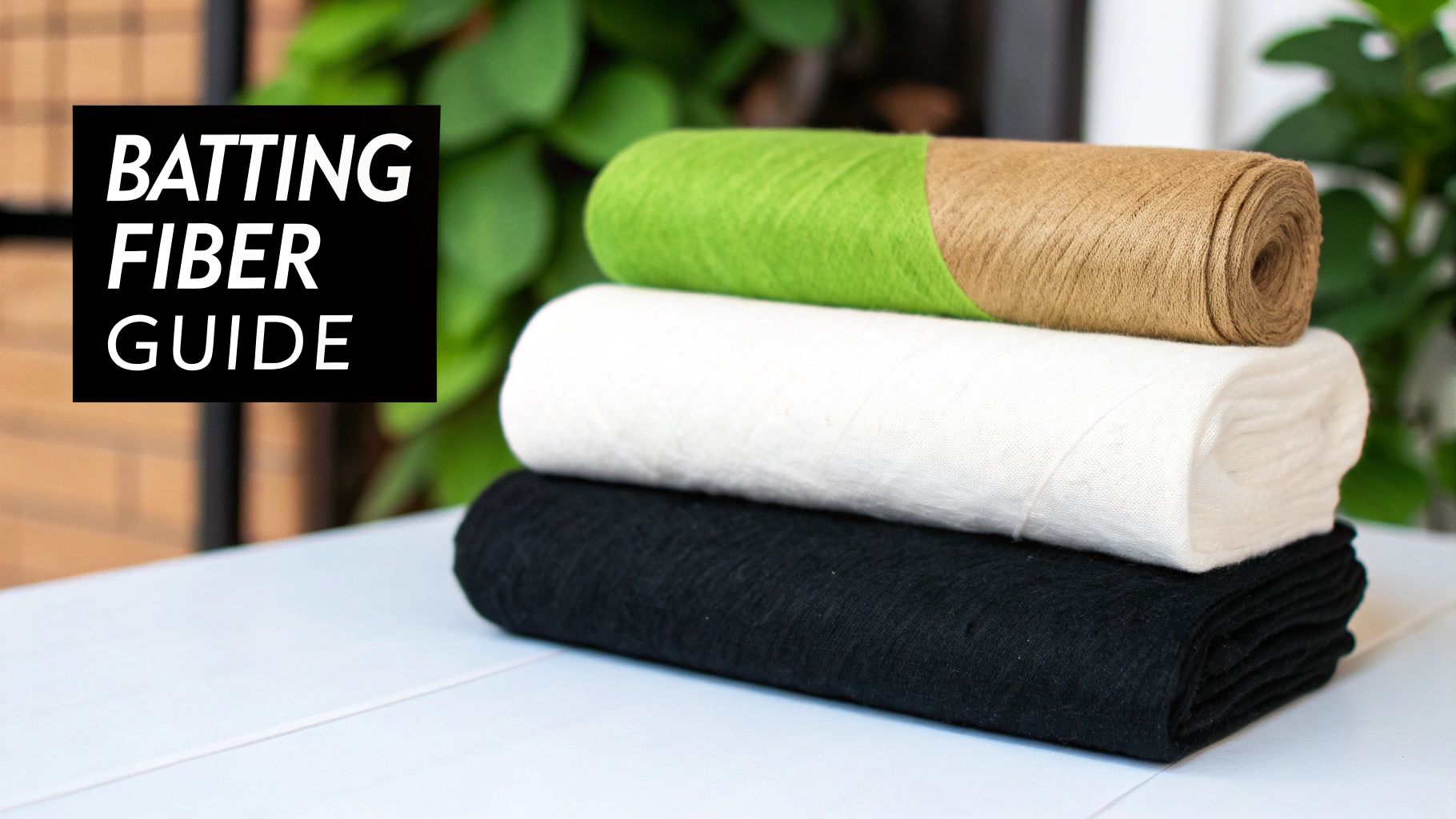
Picking the right batting fiber is a bit like casting the lead actor in your quilt's story. Each material has its own distinct personality, shaping everything from how the quilt hangs to how warm it feels. Let's get to know the main contenders on the shelf so you can find the perfect one for your next project.
Cotton batting is the tried-and-true workhorse of the quilting world. As a natural, breathable fiber, it feels a lot like a thick, dense sheet of flannel. This density gives quilts a satisfying weight and the classic, flat drape that quilters have adored for generations.
One of cotton's most cherished qualities is how it settles in over time. It shrinks just a little after that first wash—typically 3-5%—which gently pulls the quilt top and backing together. This creates that soft, crinkled texture we all associate with well-loved vintage quilts. If you're chasing that antique, lived-in look, 100% cotton batting is absolutely the way to go.
Key Takeaway: Choose cotton for a traditional, flat quilt with that beautiful vintage crinkle. It’s breathable, softens with every wash, and is a fantastic partner for machine quilting.
If you’re dreaming of a quilt that’s puffy, warm, and surprisingly light, polyester is your answer. This synthetic fiber gives you incredible loft without the weight of cotton, making it the perfect choice for creating quilts that look and feel more like plush comforters.
Polyester batting is also known for being durable, budget-friendly, and resistant to mold and mildew. Because it doesn’t shrink, it’s a great option if you want your quilt to stay perfectly smooth and flat, wash after wash. And don't worry—modern polyester battings have come a long way, significantly reducing old problems like "bearding," where fibers would poke through the fabric.
For the ultimate in cozy luxury, look no further than wool. It's an amazing natural insulator, providing exceptional warmth without feeling heavy. The fibers create tiny air pockets, which allows it to breathe beautifully, keeping you comfortable in both cool and even warmer conditions.
Wool also has a wonderful natural springiness that resists creases and gives your quilting stitches fantastic definition, making them really pop. It’s a long-time favorite for show quilts and hand quilting because a needle glides through it so effortlessly. Plus, it’s a renewable and sustainable fiber, which is always a bonus.
The batting world has grown, and now we have some fantastic sustainable options that bring their own unique benefits to the table.
To help you keep it all straight, here's a quick look at how these fibers stack up against each other.
| Fiber Type | Key Characteristics | Best For | Things to Consider |
|---|---|---|---|
| Cotton | Natural, breathable, low loft, shrinks 3-5% creating a classic crinkle. | Traditional quilts, wall hangings, table runners, machine quilting. | Can be heavy. Shrinkage might not be desired for some modern quilt styles. |
| Polyester | Synthetic, lightweight, high loft, no shrinkage, resists mold. | Bed quilts meant to be puffy like comforters, tied quilts, kids' quilts. | Can sometimes "beard" (fibers poke through fabric), though modern versions are better. |
| Wool | Natural insulator, warm but light, breathable, great stitch definition, resists creases. | Show quilts, hand quilting, luxurious heirloom quilts. | Higher price point. Requires gentle washing to prevent felting. |
| Bamboo/Cotton Blend | Silky soft, beautiful drape, breathable, lightweight, naturally antibacterial. | Baby quilts, summer quilts, garments, projects needing a soft drape. | Can be slightly more expensive than standard cotton or polyester. |
| Cotton/Poly Blend | "Best of both worlds," soft like cotton with less shrinkage and more loft from polyester. | All-purpose quilting, beginners, bed quilts, charity quilts. | Less "vintage" crinkle than 100% cotton, but more than 100% polyester. |
Choosing a fiber is the first major decision in shaping your quilt's final look and feel. Think about who the quilt is for and how it will be used, and you’ll have no trouble picking the perfect foundation.
Once you’ve got a handle on fibers, the next two words you need to know are loft and drape. Getting these two concepts down is what really separates the beginners from the pros. It’s how you gain total creative control over the final look and feel of your quilt before you even thread your needle.
Think of loft as the batting’s "puffiness." It’s a measure of its thickness and density. While you might see it measured in ounces per square foot, it’s much easier to just think of it as either low or high.
So, how does loft connect to drape? Drape is simply how the quilt hangs and moves. It's about its flexibility and how it feels when you wrap it around you. While loft is about thickness, drape is all about the flow. The two are absolutely linked, but the fiber you choose is the third crucial piece of the puzzle.
For example, a quilt with high-loft polyester batting will be wonderfully puffy and warm, but it’ll also feel surprisingly light and have an airy drape. On the other hand, a low-loft 100% cotton batting creates a quilt that feels heavier and more substantial—it has that classic, blanket-like drape that just hugs you.
A quilt's final personality is born from the interplay between loft and drape. One determines the visual texture and puff, while the other defines its physical feel and flow.
Understanding this dynamic lets you make truly intentional choices.
Let's say you're making a wall hanging. A stable, low-loft cotton batting is your best bet. It’ll keep the quilt flat against the wall and prevent it from sagging over time. But if you’re dreaming of a luxurious bed quilt for cold winter nights? A high-loft wool batting will deliver incredible warmth and gorgeous stitch definition without feeling like a lead blanket.
This is the kind of control that makes quilting so satisfying. The quilting market in North America is a massive, mature industry valued at $4.5 billion, and it supports millions of passionate quilters like us. With more and more newcomers joining the fold, mastering these foundational concepts is key. By simply choosing your batting with loft and drape in mind, you can make sure the finished quilt in your hands matches the vision you had in your head.
Okay, now that we’ve covered the fundamentals of fiber, loft, and drape, we can get to the fun part: picking the perfect batting for your next project. Think of it like cooking—you wouldn't use the same spices for every dish. Choosing the right batting from the start is the key ingredient to getting the result you've envisioned.
Every quilt has a different job to do, whether it's keeping someone warm, decorating a wall, or being snuggled by a baby. Let's walk through some common projects and find the best batting for each one.
A bed quilt has a tough job. It’s meant to be used and loved every single night, which means it needs to stand up to frequent washing, tugging, and maybe even a wrestling match with the family dog. For a quilt like this, you need batting that’s both durable and easy to care for.
This is where an 80/20 cotton/polyester blend really shines. It’s a quilter’s favorite for a reason. You get the soft, breathable comfort of cotton, but the polyester adds strength, stability, and keeps shrinkage to a minimum. It’s the best of both worlds, creating a quilt that feels great and holds its shape for years.
When you’re quilting for a little one, your priorities shift. Everything needs to be incredibly soft, breathable, and above all, safe. You want something gentle on sensitive skin that can be thrown in the wash over and over again.
For baby quilts, I almost always reach for bamboo or 100% organic cotton. Bamboo batting is just heavenly—it’s silky-soft, lightweight, and even has some natural antibacterial qualities. Organic cotton is another fantastic choice; it’s hypoallergenic and breathes beautifully, so you don't have to worry about the baby getting too warm. Both of these will give you a quilt with a lovely, soft drape that’s perfect for snuggling.
This handy little chart can help you decide based on the look you're going for.
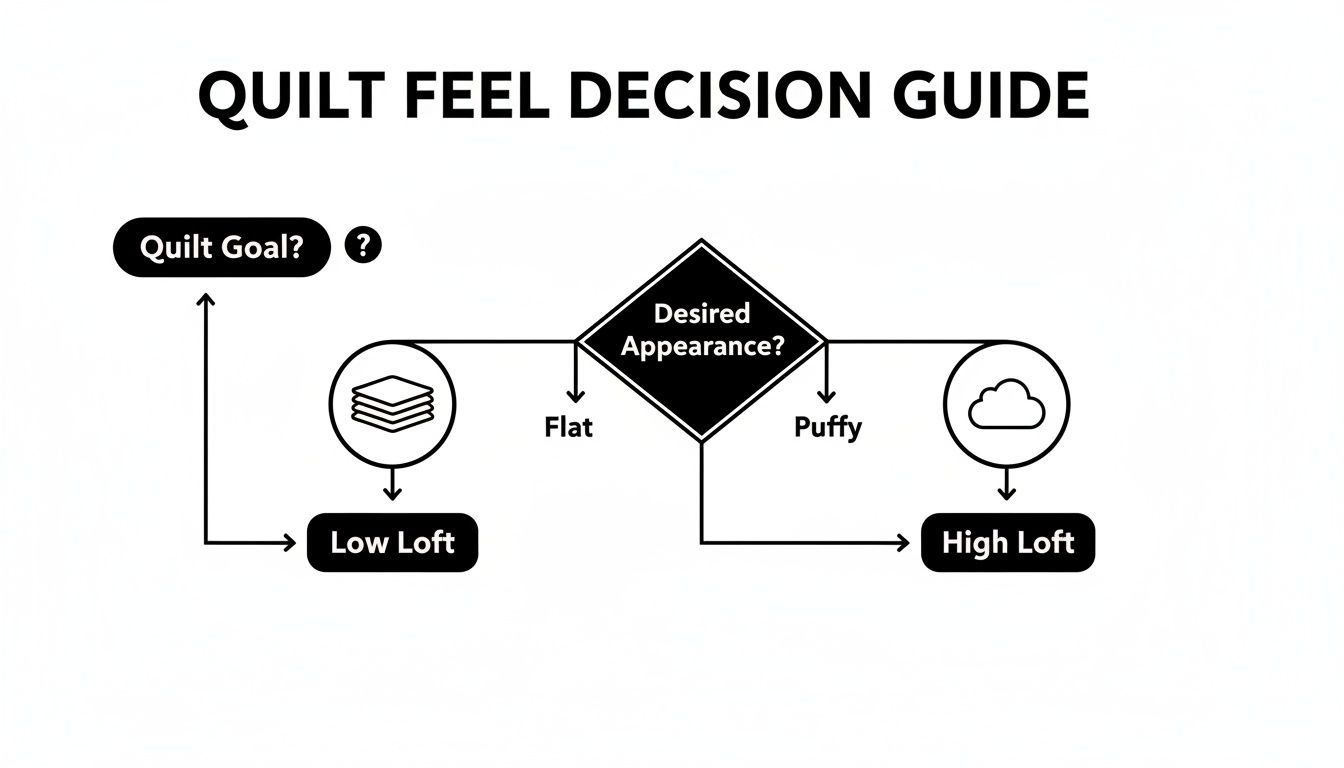
As you can see, if you want that flat, modern look, you’ll want a low-loft batting. But if you’re dreaming of a puffy, cloud-like quilt, high-loft is the way to go.
Quilts meant for display are a whole different animal. Here, softness and warmth take a backseat to stability and stitch definition. The main goal is to create a piece that hangs perfectly flat, without any sagging or stretching over time.
For any kind of wall art, a low-loft cotton batting is your best friend, especially if it has a scrim. That scrim acts as a stabilizer, preventing the fibers from shifting and keeping your quilt top from distorting. This firm, thin foundation makes your detailed piecing and intricate quilting stitches the star of the show, giving you a crisp, gallery-worthy finish.
Pro Tip: If you're making smaller items like placemats or table runners that might have a hot dish placed on them, always stick with 100% cotton batting. Polyester fibers can melt under high heat, so cotton is the only truly heat-resistant and safe choice for kitchen projects.
By thoughtfully pairing the batting to the project, you’re setting your quilt up for success. It won't just look beautiful—it will perform exactly the way you need it to.
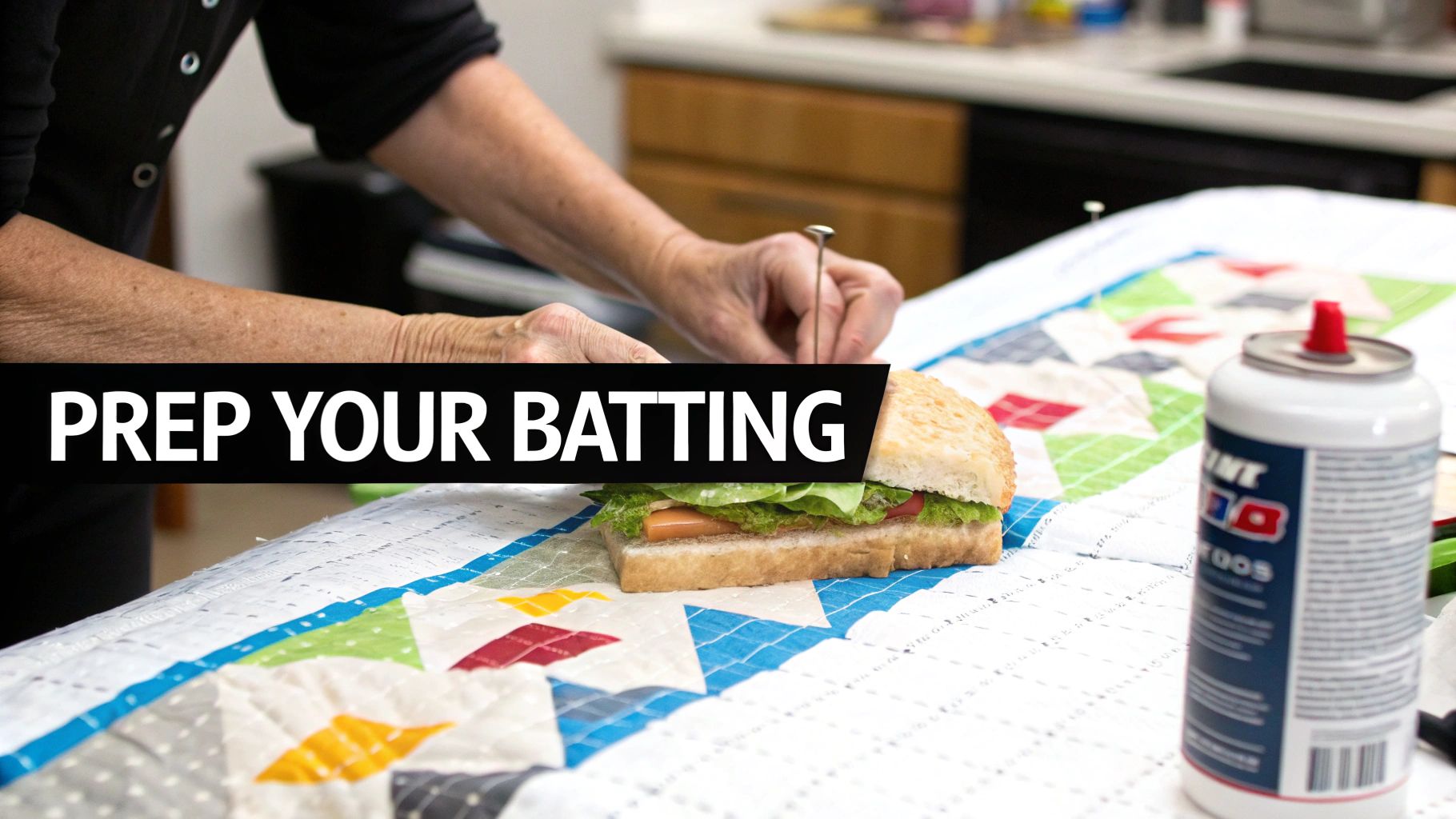
You've picked the perfect batting—now what? A little bit of prep work at this stage can save you a world of headaches later. This is where we turn those three separate pieces (your top, batting, and back) into a single, stitch-ready "quilt sandwich."
One of the first decisions you'll make is whether or not to pre-wash your batting. The right answer really comes down to the final look you're going for. If you dream of that soft, crinkly, well-loved vintage vibe, then do not pre-wash your cotton batting. The magic happens after you’ve quilted it; washing causes the cotton to shrink just a little (around 3-5%), gently pulling the fabric with it to create that classic, puckered texture we all love.
On the other hand, if you're aiming for a sleek, modern quilt that lies perfectly flat, pre-washing is your friend. This gets all the shrinkage out of the way before you quilt. Just soak the batting in cool water, gently squeeze the excess out (don't wring it!), and then either lay it flat to air dry or tumble dry on the lowest heat setting.
Basting is just a fancy word for temporarily sticking your quilt top, batting, and backing together. A smooth, secure quilt sandwich is the secret to getting beautiful, pucker-free quilting stitches. Quilters generally rely on one of three trusted methods.
A golden rule of basting, no matter which method you use: Always start in the center and work your way out. Smoothing from the middle to the edges pushes any wrinkles or excess fabric outward, so you don't get frustrating bubbles trapped under your needle.
Once your quilt is basted, it’s time for the fun part—the actual quilting! But before you start stitching, grab the packaging your batting came in and look for one critical piece of information: the recommended quilting distance.
This number is the manufacturer's guideline for the maximum space you can leave between your lines of stitching. If you go too far apart, the batting can sag, shift, or even start to break down inside the quilt over time, especially after a few washes. For instance, if the package says "quilt up to 8 inches apart," it means no spot on your quilt should be more than an 8-inch square without any stitches holding it down.
Following this rule is essential for the durability of your quilt. It’s what ensures your hard work will hold up to years of snuggling and use. As quilting continues to grow in popularity—the global quilt market was valued at USD 695.84 million and is expected to reach USD 1.15 billion by 2030—creating quilts that are built to last is more important than ever. You can discover more insights about the quilt market growth on researchandmarkets.com.
Even after you've got a handle on the different fibers and lofts, a few practical questions always come up when you’re standing in the quilt shop, batting package in hand. Let's tackle some of the most common ones I hear from quilters.
If you’re just starting out, my hands-down recommendation is an 80/20 cotton/polyester blend. Seriously, you can’t go wrong with it.
This blend is the best of both worlds and just so forgiving to work with. You get the soft, natural feel of cotton, but the polyester adds a little stability and loft that makes it easier to handle. It doesn't bunch up or shift around as much when you're basting, it quilts up beautifully by hand or machine, and it holds up great in the wash. It’s a reliable, no-fuss choice that lets you focus on your piecing and quilting.
Yes, absolutely! Never, ever throw away those leftover batting pieces. Piecing them together is a thrifty, time-honored trick among quilters to reduce waste and get the most out of your materials.
The key is to create a seam that’s as flat as possible. Here’s how:
You’ll end up with a single, smooth piece of batting that’s ready for your quilt sandwich.
You’ll sometimes spot the word scrim on a batting label, and it's a great feature to understand. Scrim is a very thin, lightweight stabilizer that’s needle-punched into the batting itself.
Think of it as a fine, hidden mesh that gives the cotton fibers extra strength and keeps them from pulling apart or stretching. This is a huge help for machine quilters, especially if you're using a longarm, because it means you can place your quilting lines farther apart without worrying about the batting shifting or bearding (poking through the fabric).
A Quick Heads-Up: That extra stability from the scrim can make the batting a bit denser and tougher to needle by hand. If you're a dedicated hand-quilter, you might prefer a batting without scrim for an easier time.
Ah, the great pre-washing debate! The answer really comes down to the final look you’re going for with your quilt. It’s all about shrinkage.
Cotton batting is known to shrink a bit, usually around 3-5%, the first time it’s washed. If you use it straight out of the package (without pre-washing your fabric either), the batting and fabric will shrink up together after the quilt is finished and washed. This creates that wonderfully soft, crinkly, vintage texture that so many of us love.
On the other hand, if you want your quilt to lie perfectly flat and modern-looking, with no puckering at all, you’ll want to pre-wash everything—your fabric and your batting—to get the shrinkage out of the way first. Most polyester and wool battings have very little shrinkage, so pre-washing isn't necessary, but always double-check the manufacturer’s instructions just to be sure.
At High Country Quilts, we know that the right batting is what turns a quilt top into a treasured heirloom. Our team is always here to help you navigate the options and answer your questions. Explore our wide selection of high-quality fabrics, notions, and BERNINA machines to bring your next quilting project to life. Visit us in-store or online at https://hcquilts.com to find everything you need.
At High Country Quilts we care deeply about community. With our experiences in retail, we know that a store is not only a place to shop but also a place for the community to gather and share. During this busy...

Hi! We’re Adam and Renee Wheaton, the new owners of High Country Quilts! For more than 40 years, we’ve owned and operated vacuum and sewing businesses. Following in Renee’s father’s footsteps after he retired from All Discount Vacuum and Sewing in Colorado...


Leave a comment