

We Love Our Quilting Community
At High Country Quilts we care deeply about community. With our experiences in retail, we know that a store is not only a place to shop but also a place for the community to gather and share. During this busy...


While there’s no official rulebook for baby quilt dimensions, experienced quilters know that most quilts fall into a few common size ranges. It’s all about the quilt's job. Are you making something small and portable for the stroller, or a larger quilt to fit a standard crib mattress?
Think of it this way: a tiny quilt around 30" x 40" is perfect for tucking around a baby in a stroller, but a proper crib quilt needs to be bigger, usually closer to 36" x 52". Getting these basic sizes right is the first step toward making a quilt that’s not just beautiful, but genuinely useful.
It's one thing to read the numbers, but it's another to see how they actually work in real life. A quilt that’s the perfect size for tummy time on the living room floor would be way too bulky and unsafe in a car seat. A tiny "lovey" meant for cuddling won't provide any real warmth in a crib.
The whole game is about matching the quilt's footprint to its main purpose. This ensures the final piece is practical, safe, and just right for the baby.
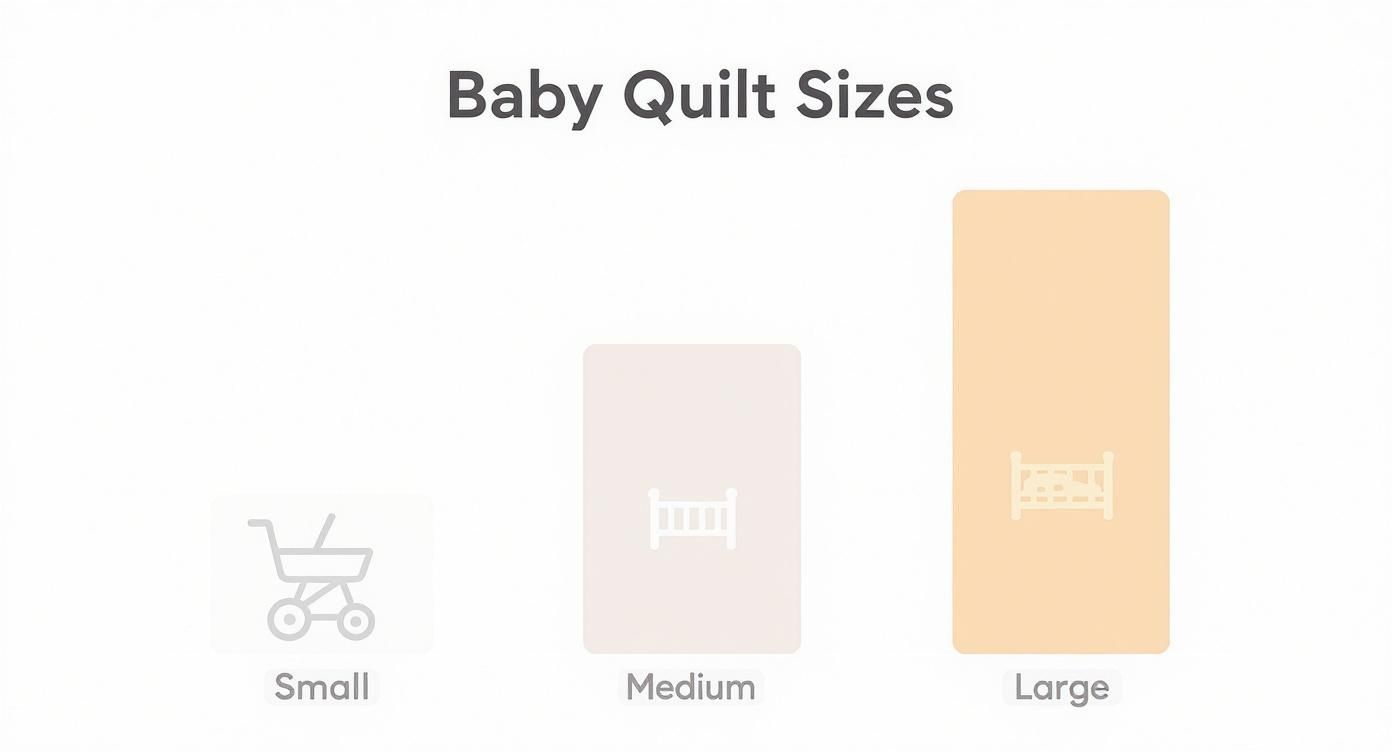
As you can see, the jump in size from a stroller quilt to a crib quilt and then to a toddler bed quilt is pretty significant. Each size is designed to meet the needs of a growing child.
Let's dive a little deeper into the most popular categories you'll come across. Each size has a specific job, from providing a bit of comfort on the go to serving as full-fledged nursery bedding. Knowing the difference will help you pick the perfect dimensions for your next project.
Lovey or Security Quilt (12" x 12"): This is the smallest of the bunch. It's less of a blanket and more of a portable comfort object, perfectly sized for tiny hands to grab and hold.
Stroller or Car Seat Quilt (30" x 40"): This is an incredibly versatile and popular size. It’s big enough to provide real warmth on a walk or in the car but small enough that you're not dealing with tons of dangerous, excess fabric.
Crib Quilt (36" x 52"): Sized to fit a standard crib mattress, this is what most people picture when they think of a baby quilt. It’s great for floor time and often serves as a beautiful nursery decoration until the baby is old enough to use a blanket safely for sleeping. Many first-time quilters tackle this size, often using a simple 6" x 6" square template to create a classic patchwork design.
When you're picking out a baby quilt, it's easy to get caught up in the cute patterns and soft fabrics. But the dimensions are more than just a detail—they're a critical part of your baby's comfort and, most importantly, their safety. A quilt that's too big can create a hazardous pile of loose fabric in the crib. On the other hand, one that's too small just won't do its job of keeping your little one warm and snug.
The sweet spot is a quilt that lays flat and smooth. It should be just right for supervised tummy time on the floor or for tucking in a toddler at night. A perfectly sized quilt is practical, easy to manage, and helps create a secure and cozy space for your baby.
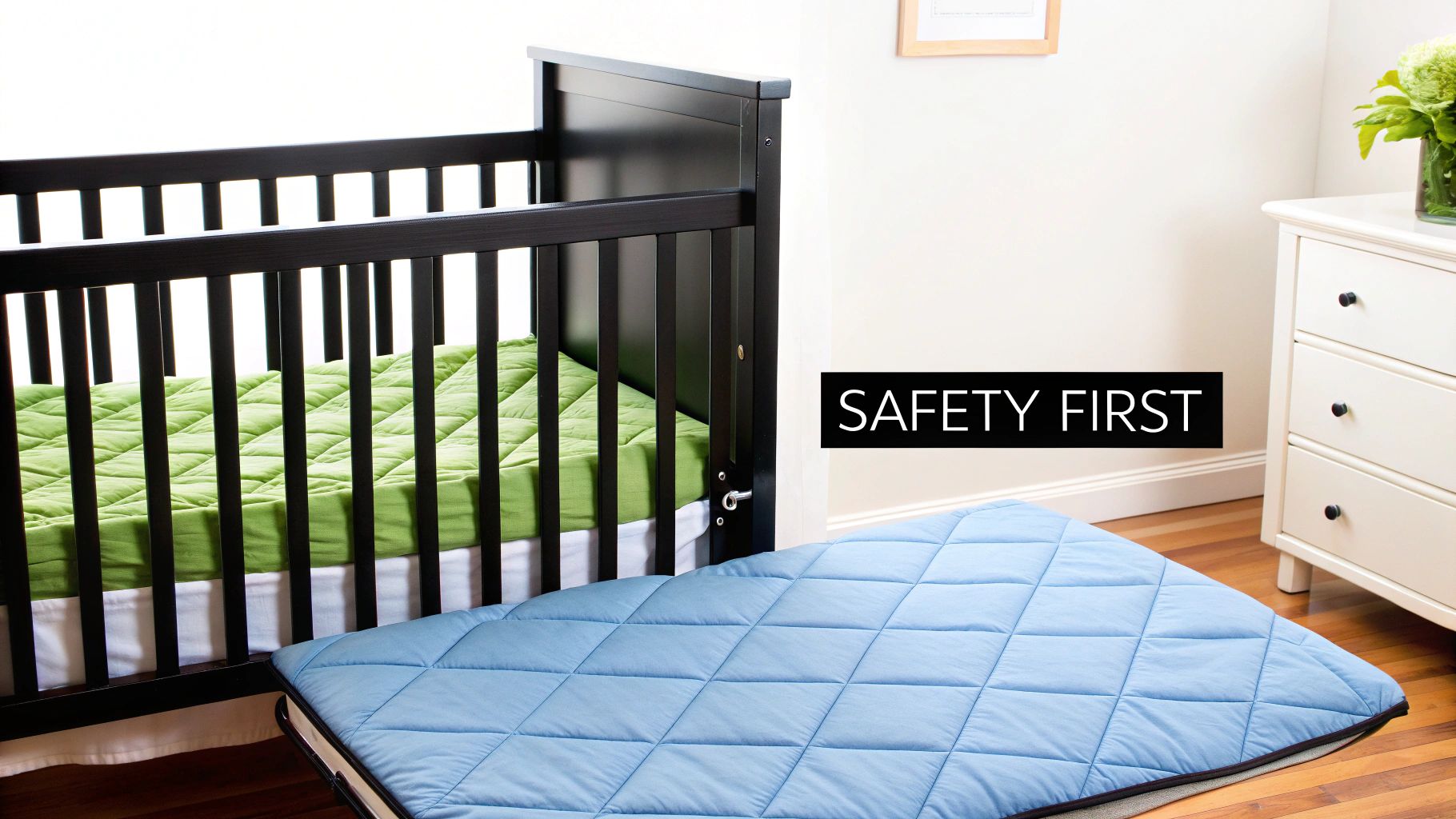
When we talk about baby quilts, safety always comes first. Pediatricians and sleep experts are very clear: to reduce risks, you should keep loose bedding out of the crib for infants under one year old.
This advice has really changed how we use baby quilts today. They’ve become beautiful decorative pieces, cozy mats for tummy time, or warm layers for stroller rides. For infants, any use in the crib should be supervised. Once a child is over 12 months old, a quilt can become a cherished part of their bedtime routine. Still, a 2015 study found that nearly half of American infants were sleeping with bedding that could be unsafe, so it’s a message that bears repeating.
Think of a baby quilt like a fitted sheet—it needs to fit the space it's used in. Too much bunched-up fabric isn't just messy; it can be dangerous. The right dimensions ensure the quilt provides warmth and comfort without introducing unnecessary risks.
Beyond the critical safety aspect, getting the size right just makes the quilt so much more useful. A well-proportioned quilt is easier to fold, pack in a diaper bag, or drape over a car seat without it dragging on the ground.
It all starts with a safe foundation. Knowing your baby's bed measurements, which you can learn about in this helpful guide to the best crib mattresses for newborns, is the first step to making sure everything fits together properly. For those of us making the quilts, choosing the right materials, like a quality fusible batting package, is just as important. It helps the quilt lay flat and hold its shape, wash after wash.
Once you've wrapped your head around why matching a quilt's size to its job is so important, it's time for the fun part: exploring the actual numbers. Baby quilts aren't a one-size-fits-all deal. Each category, from the tiniest security blanket to a toddler-bed-ready quilt, has dimensions that have been perfected over time.
Think about it—a stroller quilt has to be small enough to tuck around a baby without dragging on the wheels. On the other hand, a crib quilt is measured specifically to fit a standard mattress. Getting these little details right is what separates a good quilt from a great one.
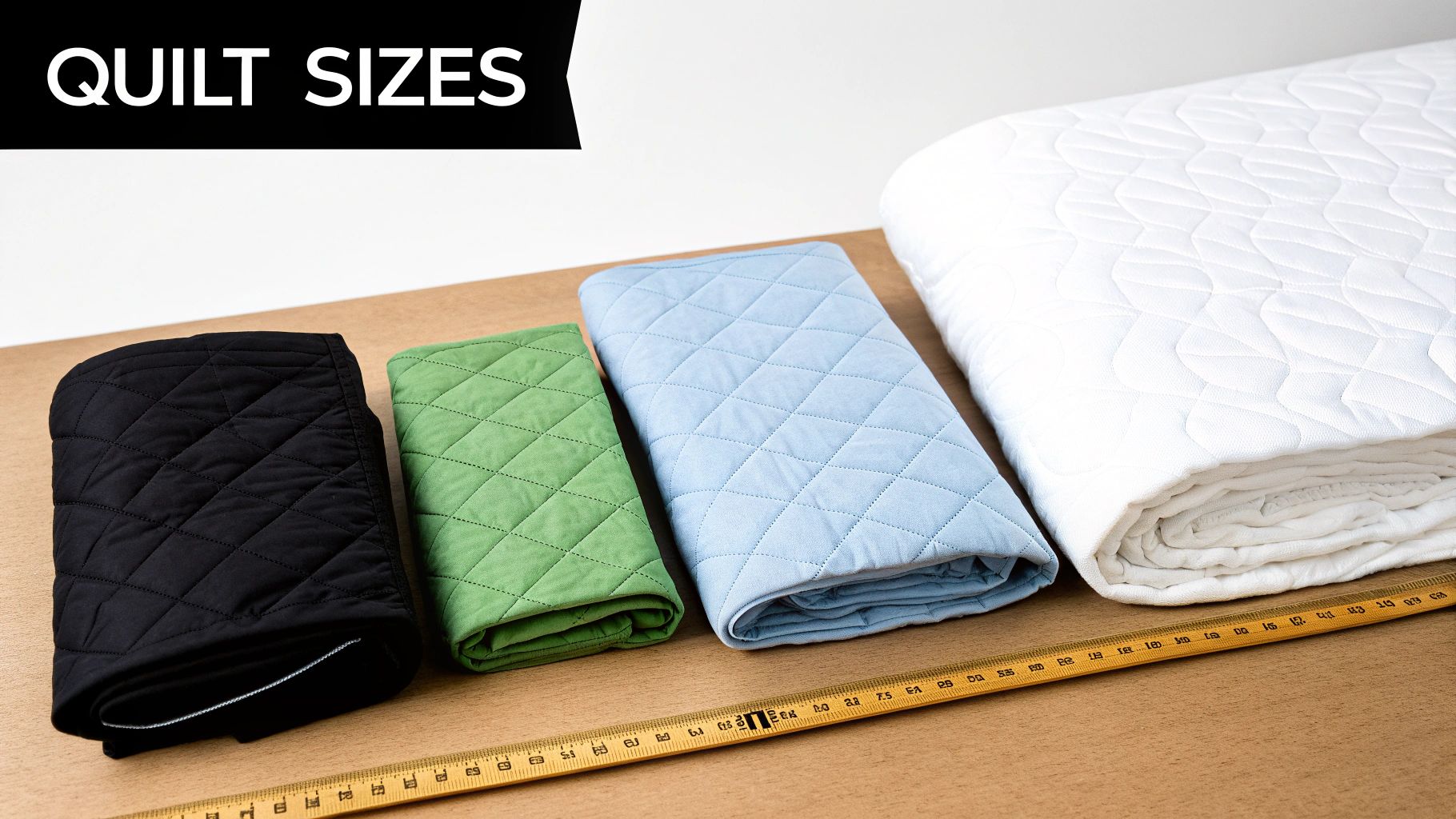
Let's break down the common sizes so you can confidently pick or plan your next project.
Let’s get into the specifics. The right size isn’t just about aesthetics; it’s about function. A well-sized quilt can be a travel companion, a soft spot for tummy time, or a beautiful nursery accent. Here’s how the different types stack up.
Lovey or Security Quilt (12” x 12” to 18” x 18”): This isn't really a blanket—it's more of a portable comfort object. Its small size is perfect for little hands to clutch, making it a safe and soothing friend for car seat rides without the bulk of a larger blanket.
Stroller Quilt (Approx. 30” x 40”): This is probably one of the most popular and versatile sizes you'll come across. It’s just right for covering a baby in a stroller or car seat, offering plenty of warmth without getting tangled up or dragging on the ground.
Crib Quilt (36” x 52”): Designed to complement a standard crib mattress (which is typically 28" x 52"), this quilt is a nursery classic. It's the perfect size for supervised tummy time on the floor and later becomes a favorite blanket once the baby is old enough to use one safely in their crib.
A truly great quilt is planned with its whole life in mind. The materials you choose—from the fabric to the batting inside—will directly affect the final size, feel, and how well it holds up after countless washes. For quilters, this is where the real magic happens.
That fluffy stuff in the middle, the batting, is especially critical. If you're looking to dive deeper into choosing the right materials, this Hobbs batting recommendation and use chart is an excellent resource with fantastic tips for every skill level.
To give you a clearer picture, I've put together a table that breaks down the most common baby quilt sizes and what they're best used for. This should help you pinpoint exactly what you need.
| Quilt Type | Dimension Range (Inches) | Best For | Notes for Quilters |
|---|---|---|---|
| Lovey/Security | 12" x 12" to 18" x 18" | Comfort object for travel, soothing | A great project for using up fabric scraps. Keep it simple and free of small, detachable parts. |
| Stroller/Car Seat | 28" x 36" to 30" x 40" | On-the-go warmth, travel | This is a very giftable size. It's large enough to be useful but small enough to finish quickly. |
| Receiving Blanket | 30" x 30" to 40" x 40" | Swaddling newborns, multi-purpose | Often made from flannel or muslin. If quilting, choose a very low-loft batting for flexibility. |
| Crib Quilt | 36" x 52" | Tummy time, nursery decor, toddler use | Standard size for cribs. Plan for shrinkage after washing when cutting your fabric and batting. |
| Toddler Bed | 40" x 60" | Transitioning from crib to toddler bed | Provides extra drape over the sides of a standard crib mattress, making it easy to tuck in. |
This guide is a solid starting point, but remember that these are just guidelines! Don't be afraid to adjust a few inches here or there to perfectly suit your pattern or purpose.
When a little one graduates from their crib, their quilt needs to grow with them. A bigger quilt is essential for keeping an active, squirmy toddler covered and cozy all night.
Toddler Bed Quilt (40” x 60”): This size is the perfect next step. Since most toddler beds use the same mattress as a crib, this quilt's extra length and width give you plenty of fabric to drape over the sides. It's much easier to tuck in, ensuring your little one stays warm even when they're dreaming and wiggling.
Sometimes, the standard sizes just don't cut it. You might have an antique cradle, a uniquely shaped bassinet, or a specific design in mind that requires a quilt that fits just right. The good news is that creating a custom-sized baby quilt isn't nearly as complicated as it sounds—it all comes down to a little bit of planning and a few simple measurements.
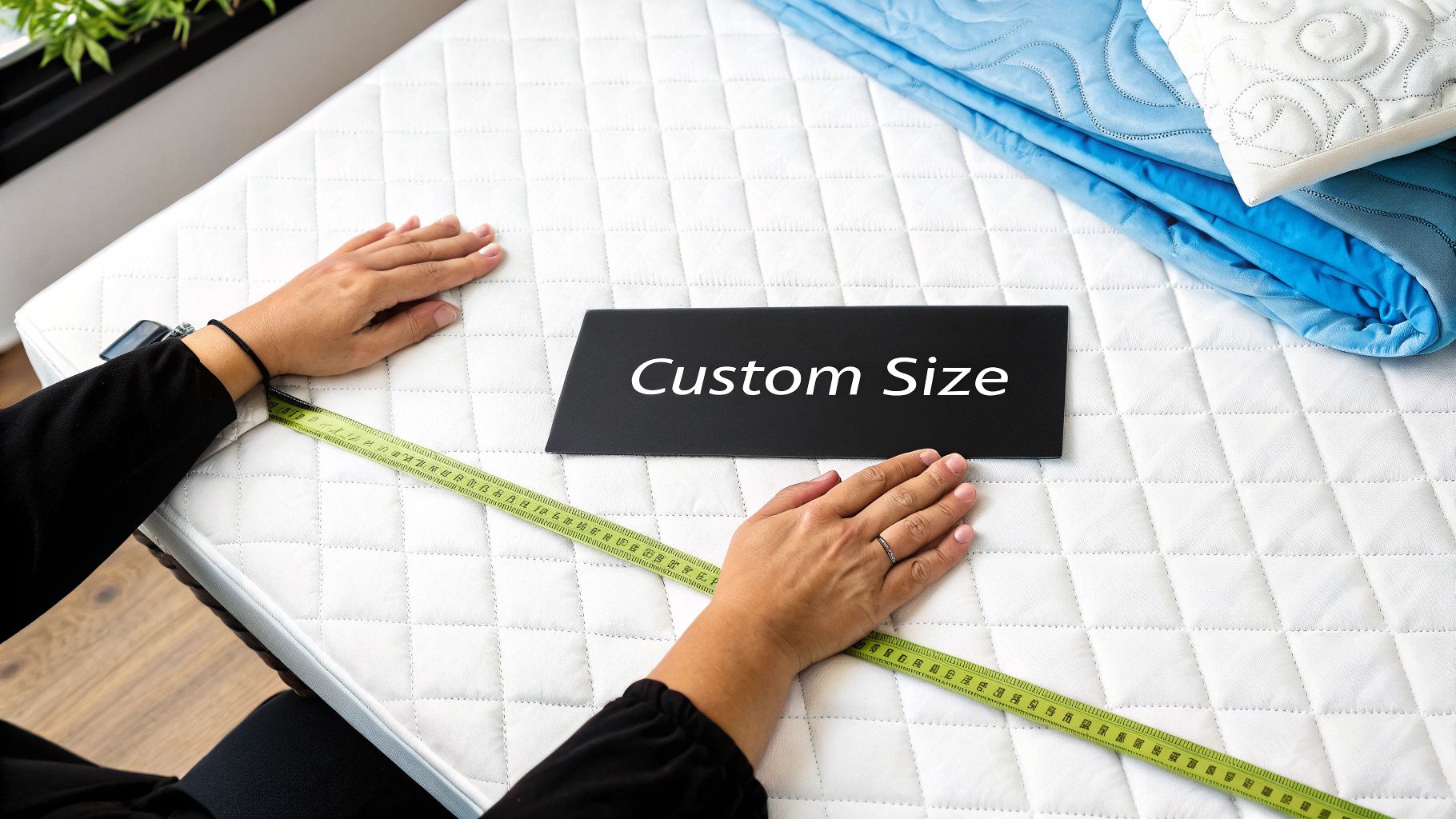
Your starting point for any custom quilt is always the mattress. Getting this measurement right is the single most important step and the foundation for everything that follows.
Once you have your mattress measurements, figuring out your ideal baby quilt dimensions is a matter of simple math. The goal is to calculate a size that covers the top of the mattress and hangs over the sides just how you want it.
Here's the basic formula to follow:
Let's walk through an example. Say your crib mattress is 28 inches wide and 52 inches long. You decide you want a 4-inch drape on both sides. Your quilt width would be 36 inches (28 + 4 + 4). For the length, if the crib is against a wall, you'll only need a drape at the foot. A 4-inch drape at the foot would make your total quilt length 56 inches (52 + 4).
What exactly is "drape"? It's just the amount of fabric you want hanging over the edge of the mattress. For a light, decorative touch, 3-4 inches is perfect. If you want enough fabric to tuck in securely, you might aim for a longer drape of 6-8 inches.
This simple approach takes all the guesswork out of the process, ensuring your finished quilt will look like it was made for the space—because it was! If you're just getting started and want to build up your skills, taking a look at some free sewing lessons is a great way to boost your confidence before diving into a custom project.
Picking the right size for a baby quilt isn't just about covering the crib anymore. Today, it's a huge part of the nursery's overall design. With so many parents leaning into minimalist or highly personalized themes, the quilt often becomes the artistic centerpiece of the room. This shift has really changed how we all—parents and quilters alike—think about dimensions and fabric choices.
One of the biggest trends right now is the move toward organic cotton and other sustainable fabrics. These natural materials are wonderful, but they can sometimes behave a little differently than synthetics, especially when it comes to shrinkage. Experienced quilters often account for this, cutting their fabric a little larger to make sure the quilt is the perfect size after its first wash.
And for that extra touch of luxury and comfort, nothing beats an ivory cuddle minky fabric for the backing. It adds an unbelievably soft feel that’s right in line with creating a cozy, welcoming space for the baby.
The way we shop has completely changed the game. Online marketplaces have opened up a whole new world, making it simple to find independent artisans who create beautiful, custom-sized quilts. This means you’re no longer limited to the standard sizes you’d find in a big-box store.
It's no surprise that online channels are now the go-to place for finding that perfect baby quilt. In fact, the U.S. National Retail Federation reported a 20% increase in online sales for baby products just last year. This boom is making it easier for small-scale makers to offer unique, non-standard sizes to parents everywhere. You can find more details about the growing baby quilt market at Verified Market Reports.
A quilt is often the finishing touch that ties a nursery's theme together. Whether it's a bold graphic design or a soft, neutral piece, its size and placement can define the room's entire atmosphere.
As you think about how a quilt will fit into your vision, there are tons of helpful ideas for decorating your baby’s room that can guide you in balancing colors, furniture, and textiles to create a truly peaceful nursery.
Even with size charts in hand, you might still have a few lingering questions before you start cutting fabric. That's completely normal! Getting these details sorted out is the final step to making sure your quilt turns out just right. Let's walk through some of the most common questions quilters ask.
If you're only going to make one quilt, make it a crib quilt. Hands down, it's the most practical and long-lasting size you can choose.
A typical crib quilt measures around 36 x 52 inches. This size is fantastic because it's big enough for tummy time on the floor but still fits perfectly in a standard crib. Later on, it becomes a favorite lap blanket for story time or a cozy throw on a toddler bed, giving it years of use.
Yes, a thousand times yes! Pre-washing your fabric is a step you just can't skip if you want your baby quilt dimensions to be accurate. Most quilting cotton has a tendency to shrink the first time it hits the water.
Think of it as getting all the shrinkage out of the way before you start cutting and sewing. This simple step prevents your seams from puckering later and ensures the finished quilt is the exact size you planned for.
When it comes to overhang, you want just enough to look tidy but not so much that it creates a safety hazard. A good rule of thumb is to aim for 4 to 6 inches of "drape" on the three sides of the quilt that aren't against the headboard.
For a standard 28 x 52 inch crib mattress, a quilt that's about 36 inches wide gives you that perfect amount of coverage. It looks neat and tucked-in without a lot of extra, bulky fabric in the crib.
At Famcut.com, we have all the high-quality fabrics, batting, and tools you need to create the perfect baby quilt. Explore our collection and start your next project today.
At High Country Quilts we care deeply about community. With our experiences in retail, we know that a store is not only a place to shop but also a place for the community to gather and share. During this busy...

Hi! We’re Adam and Renee Wheaton, the new owners of High Country Quilts! For more than 40 years, we’ve owned and operated vacuum and sewing businesses. Following in Renee’s father’s footsteps after he retired from All Discount Vacuum and Sewing in Colorado...


Leave a comment