
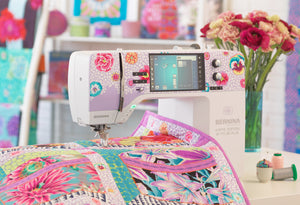

We Love Our Quilting Community
At High Country Quilts we care deeply about community. With our experiences in retail, we know that a store is not only a place to shop but also a place for the community to gather and share. During this busy...


You've probably stood in front of a shelf of sweet baby prints and felt two things at once. First, pure excitement. Second, a little panic.
That reaction makes sense. A baby boy project sounds simple until you start asking real questions. Should you buy quilting cotton or knit? Is that soft print breathable? Will the blanket wash well? Can that adorable fat quarter bundle become a wearable item, or is it only good for a quilt top?
Most beginners get stuck right there. Many guides recommend natural cottons but don't explain that stretch and moisture-wicking matter for an active baby's movement and temperature regulation, and standard quilting cotton often doesn't provide either, as noted by Contrado's discussion of baby fabric performance. That's why sewists so often end up guessing whether a cute print is also the right fabric.
A handmade baby gift carries a different kind of love. You choose every fabric, press every seam, and imagine the little one wrapped in something made just for him. That's the joy of sewing for a new arrival.
The confusion starts when “baby boy fabrics” gets treated like a color category instead of a performance choice. A pale blue star print may be charming, but if you're sewing a burp cloth, a sleep sack, or anything that needs softness against tender skin, the print is only half the decision. The other half is how the fabric behaves in real use.
Softness at the bolt doesn't always mean comfort during a nap, a stroller ride, or a squirmy diaper change.
A practical way to think about baby boy fabrics is to use one simple pillar:
That order helps when you're deciding between two fabrics you love. If one is prettier but stiffer, and the other is softer and easier to live with, pick the one that serves the baby first.
New sewists also tend to buy fabric by collection instead of by project. That works beautifully for quilts. It's less reliable for clothing, bibs, or fitted nursery pieces. Once you start matching the fabric type to the actual job it needs to do, shopping gets much easier and sewing gets more satisfying.
A customer walks up to the cutting table with the sweetest little rocket print in hand and asks, “Would this work for a baby blanket?” My first question is never about the print. I ask where the fabric will touch the baby, how often it will be washed, and whether the project needs to bend, breathe, or absorb. That is the essential difference between fabric that looks baby-boy cute on the bolt and fabric that feels good through naps, tummy time, stroller rides, and wiggly diaper changes.
Babies are active little testers. They rub their cheeks, kick their legs, grab corners, and spend long stretches bundled up. A fabric can be charming and still be the wrong tool for the job, much like using a winter coat fabric for a summer shirt. Softness, airflow, stretch, and easy care matter just as much as color.
Dr. Berry recommends 100% cotton and modal as safe base fabrics for babies because they help with temperature regulation, and Forbes notes that heat-trapping synthetics can raise irritation concerns for infants in some situations, according to Forbes' coverage of baby clothing fabric guidance.
Shop-table rule: If the fabric will sit against a baby's skin for hours, start with breathable fibers first. Then choose the print.
Some fabrics are easier to sew and easier for babies to live with.
| Baby Boy Fabric Comparison | Best For | Feel & Weight | Sewing Difficulty |
|---|---|---|---|
| 100% quilting cotton | Quilts, burp cloth fronts, bibs, simple accessories | Smooth, light to medium weight | Easy |
| Organic cotton | Quilts, blankets, simple clothing, soft nursery items | Soft, breathable, light to medium weight | Easy |
| Cotton flannel | Receiving blankets, burp cloth backs, cozy quilt backs | Brushed, warm, soft | Easy to moderate |
| Double gauze or muslin | Lightweight blankets, swaddles, airy baby accessories | Crinkly, light, breathable | Moderate |
| Minky | Quilt backs, play mats, cuddle blankets | Plush, warm, slippery | Moderate |
| Stretch knits | Onesies, hats, pants, fitted baby items | Soft, stretchy, flexible | Moderate to challenging |
Here's the short version of how I'd choose them:
High Country Quilts carries baby-appropriate fibers such as organic cotton and minky, and seeing them in person can help you compare drape, loft, and breathability before you cut.
Comfort does not come from fiber alone. Construction plays a big part too.
Current baby clothing direction for 2026 emphasizes sensory-soft adaptive construction. This includes tagless designs, magnetic closures, and temperature-regulating materials like bamboo and climate-adaptive blends to reduce irritation risk, according to Tobimax Textiles' review of functional baby clothing trends. Quilters can use the same idea even in very simple projects.
For a quilted baby item, sensory-soft usually means choosing details that stay quiet against the skin:
Many baby-boy fabric choices become easier. The print sets the mood, but the fabric type does the work.
For a crib or receiving quilt, quilting cotton on the front with flannel on the back gives you structure on one side and softness on the other. For a summer blanket, double gauze with cotton makes a light, breathable pairing. For a onesie or sleep gown, use a knit or modal blend so the fabric can stretch with the baby instead of fighting every kick and wiggle.
Analysts at Maximize Market Research report growing interest in organic baby clothing in their organic baby clothing market report. That lines up with what many of us see at the shop counter. Parents are asking for fabric that feels gentle, washes well, and works for real life, not just fabric that matches a nursery palette.
You pick up a bolt with little sailboats or bears in suspenders, and it certainly looks "baby boy." Then you picture the finished blanket or outfit in real life. Will it still feel soft after washing? Will the print still look sweet once it is pieced with practical fabrics that breathe, stretch, or hold up to daily use? That question matters more than ever in 2026.
For 2026, many baby boy palettes center on sage green, dusty blue, cream, oatmeal, and clay. Blue still has a place, especially in watery, misty, or sky-inspired prints, but it is usually softer and less bright than older nursery palettes. Forest motifs are also showing up often. Leaves, small trees, acorns, hills, and quiet animal prints feel current without locking you into a cartoon look.

The nicest modern baby projects usually do one simple thing well. They let the color set the mood, and they let the fabric type handle comfort.
A sage-and-cream quilt feels fresh and calm. Dusty blue with soft gray or oatmeal reads classic, but not stiff or overly themed. Clay surprises many beginners. Used in small doses with ivory or a small-scale print, it adds warmth the same way a wooden crib or woven basket does in a nursery.
Texture helps, too. A flat novelty print can look charming on the bolt and disappointing in the finished project if every fabric around it is also busy. Pairing a small woodland print with a solid, a subtle stripe, or a soft blender gives the eye a place to rest. It also makes it easier to combine pretty prints with the more practical fabrics an active baby needs.
That balance is the part many new sewists miss.
A baby who squirms, kicks, drools, naps hot, and gets carried from car seat to stroller does not care whether the fox print matches the nursery wall. He notices softness, airflow, and whether a fabric moves with him or bunches up. At the shop counter, that usually means helping someone choose a print they love, then matching it with backing, lining, or companion fabrics that make the project feel good in use.
A simple three-part mix works well for quilts, bibs, burp cloths, and gift sets:
This works like furnishing a room. One piece carries the personality, one supports it, and one keeps the whole space from feeling crowded.
Small-scale prints usually age better than oversized novelty motifs. They survive more washing, more folding, and more years of use without feeling babyish too quickly. If you are sewing for a very active little one, calmer prints also hide puckering and wear better than large directional designs that need perfect placement.
If you are unsure where to start, ask for a bundle that mixes one sweet print with two or three practical coordinates. A local quilt shop can help you choose colors that look current and fabrics that suit the job, so the project is not only adorable on day one, but comfortable and useful long after the gift bag is opened.
A baby quilt bundle can be adorable on the shelf and still be the wrong tool for the job. That is where many new sewists get stuck. They pick prints that look like "baby boy" fabrics, then discover too late that a sleep sack, stretchy pants, or a fitted bib needs fabric that bends, breathes, and washes well.

Many beginners buy a cute, coordinated fat quarter bundle and then try to turn it into a onesie or sleep sack. This mismatch is common because coordinated precuts are usually designed for flat quilt projects. They usually do not include the stretch or moisture-friendly fabric that wearable baby items need.
The simplest way to sort it out is to ask one question first. Is this project flat, or does it need to fit around a moving baby? Flat projects, such as quilts and burp cloth fronts, work well with precuts. Fitted or flexible projects usually need yardage from the bolt, especially if you need knits, flannel, or a larger uninterrupted piece.
Here is the quick shop-counter version:
Precuts are like a box of matching tiles. They are wonderful for building a flat design. Yardage is closer to buying lumber for a custom shelf. You can cut what you need, in the size and shape your project requires.
| Project | Good Fabric Choice | Buying Method |
|---|---|---|
| Receiving blanket | Flannel, double gauze, or soft cotton pairings | Yardage |
| Crib quilt | Quilting cotton top, cotton or minky back | Precuts plus yardage |
| Burp cloth set | Quilting cotton front, flannel or absorbent back | Fat quarters plus yardage |
A quick video can help if fabric cuts still feel abstract:
Precuts save time and take some of the guesswork out of color matching. They are especially handy for:
They are less useful for anything that depends on stretch, drape, or a comfortable fit. A woven cotton fat quarter will not behave like a knit, even if the print has bears, trucks, or little moons on it.
If you are standing in the shop holding a sweet bundle and wondering whether it is enough, pause and match the cut to the job before you match the print to the nursery. That small choice saves money, frustration, and a lot of seam-ripping later.
The prettiest baby boy print is only half the decision. A fabric still has to hold up to spit-up, stroller naps, floor time, and frequent washing. That is why simple projects usually make the best gifts for a new baby. They put comfort first and give those sweet prints a job they can do.

A patchwork receiving blanket is an excellent first project because it teaches cutting, straight seams, pressing, and finishing without requiring fitted sewing. If you want a blanket that feels soft but not heavy, pair a cotton patchwork front with a flannel back. It is easy to fold, easy to wash, and useful from day one.
A minky-backed play mat is a good choice for babies who spend plenty of time stretching, rolling, and kicking. Keep the top simple so the fabrics can do the work. Quilting cotton gives you structure on top, while minky adds cushion underneath. The main trick is control. Baste well, use clips generously, and sew slowly so the layers do not shift.
A contoured burp cloth may be the project parents reach for most. It is small, quick to finish, and practical in a way that fancy nursery decor rarely is. A woven cotton front keeps the shape neat, and a soft absorbent backing handles the mess. If you want a clear step-by-step example, Bornbir's burp cloth tutorial is a helpful reference.
The best baby gift is usually the one that gets washed, used, and grabbed again tomorrow.
Good pairings come from function first.
If you are tempted by a very cute print on a stiff fabric, pause for a moment. Active babies need fabrics that bend, breathe, and wash well. A charming motif does not help much if the finished piece feels scratchy or bunches after one trip through the laundry.
A coordinated baby quilt kit can still be a useful starting point, especially if choosing prints feels overwhelming. The helpful question is whether the fabric type matches the project, not just whether the colors look right together.
Pre-washing gives you fewer surprises later. Some fabrics shrink. Some soften a lot. Some release extra dye. It is much better to learn that before your seams are sewn and your corners are finished.
A safe routine is simple:
For baby sewing, durability often comes from plain choices. Strong seams, careful pressing, rounded corners that turn neatly, and fabrics that can handle repeated washing will serve a family better than extra trim or delicate add-ons. Safety and comfort always come first. If a detail feels fussy, stiff, or hard to clean, leave it out.
There's a reason new sewists do better when they can talk to a real person before they cut. Fabric names sound simple online, but feel, drape, stretch, and thickness are easier to understand in your hands.

The baby boy apparel market was valued at $87.4 billion in 2025, according to Fortune Business Insights' baby apparel market overview. In a market that large, there are endless choices, and expert guidance matters. Local quilt shops help narrow those choices to what's safe, workable, and suited to the project you want to make.
A local shop can help you answer the questions that online filters can't.
If you're adding practical gifts to a quilt, a clear tutorial like Bornbir's burp cloth tutorial can be a helpful companion resource for simple sewing.
That's the value of shopping smart and local. You're not just buying baby boy fabrics. You're getting help making something gentle, useful, and made to last.
If you're choosing fabric for a new baby boy project, visit High Country Quilts to explore fabric collections, precuts, kits, and sewing supplies, or stop by the Colorado Springs shop and ask for help matching the right fabric to the project you want to make.
At High Country Quilts we care deeply about community. With our experiences in retail, we know that a store is not only a place to shop but also a place for the community to gather and share. During this busy...

Hi! We’re Adam and Renee Wheaton, the new owners of High Country Quilts! For more than 40 years, we’ve owned and operated vacuum and sewing businesses. Following in Renee’s father’s footsteps after he retired from All Discount Vacuum and Sewing in Colorado...


Leave a comment