

We Love Our Quilting Community
At High Country Quilts we care deeply about community. With our experiences in retail, we know that a store is not only a place to shop but also a place for the community to gather and share. During this busy...


Quilting cotton is a 100% cotton, plain-weave fabric engineered for stability and accurate piecing rather than drape, typically featuring a 60x60 to 78x78 thread count. Its firm, low-stretch structure helps beginners cut clean shapes, sew reliable seams, and build quilt tops without fighting fabric distortion.
You may be standing in front of a wall of colorful bolts, or scrolling through an online fabric shop with dozens of prints that all look similar. The labels say “quilting cotton,” but one fabric feels crisp and substantial while another seems soft, thin, or surprisingly loose. You may also be wondering whether the same cotton could become a dress, a tote bag, and a quilt backing.
The short answer is that quilting cotton is made for structure. Once you understand its weave, weight, shrinkage, and drape, you can choose fabric with much more confidence and avoid the most common beginner mistakes.
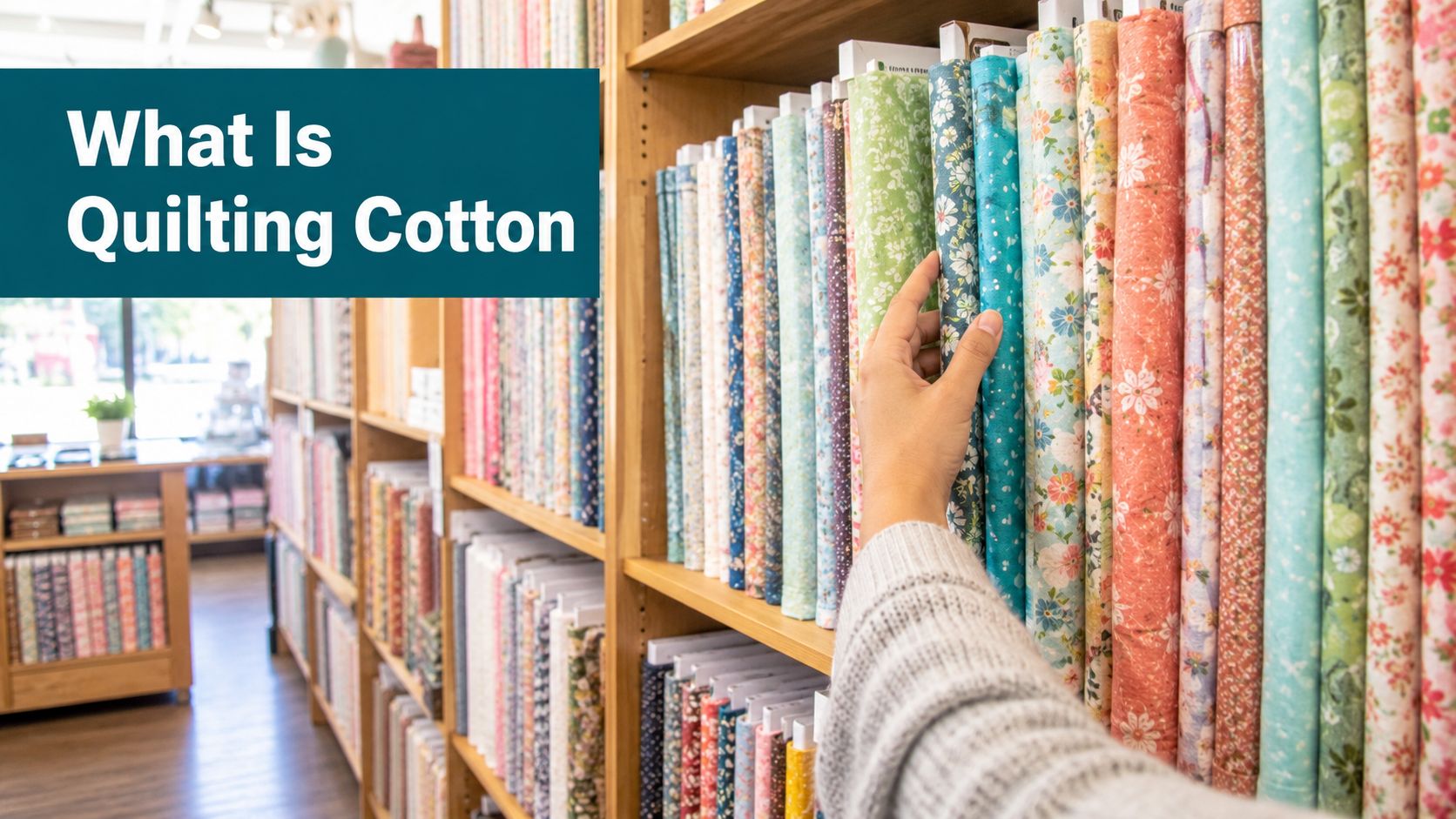
You are standing beside a wall of colorful fabric bolts. Several labels say “quilting cotton,” yet one cloth feels crisp and firm while another feels thin, soft, or loosely woven. The difference becomes important when you need accurate quilt blocks, because fabrics with similar fiber content can behave very differently.
Quilting cotton fabric is generally a 100% cotton, plain-weave textile made for patchwork, quilt tops, appliqué, and projects that need a stable surface. In a plain weave, lengthwise and crosswise threads pass over and under one another in an alternating pattern. This grid gives the fabric body and keeps stretch low.
The lengthwise threads are the warp; the crosswise threads are the weft. Their balanced arrangement helps the cloth stay close to the shape you cut. A rotary cutter can follow a ruler more accurately, and seams are less likely to ripple when the fabric is moved during sewing. A technical overview of quilting cotton also describes its plain weave as stable and low stretch.
Use your hands and eyes before committing to yardage:
That firm structure helps beginners sew quarter-inch seams, match points, and press units without stretching them out of shape. It also keeps small florals, geometrics, and directional motifs relatively clear across a block.
Practical rule: If a candidate fabric feels loose, slippery, or overly stretchy, test it before buying more. Cut two 5-inch squares and fold each over a ruler before you commit to yardage.
The same cotton may suit a tote bag or quilt top while making a flowing garment feel stiff. Choose by structure and intended use, not fiber content alone. For print and yardage comparisons, browse the quilting cotton fabric selection.
Thread count records how many threads run through a set length of fabric in the warp and weft directions. It does not rank fabric by itself. Instead, it helps explain why one cotton feels smooth and steady while another feels open, rough, or easily distorted.
Quilting cotton commonly falls within approximately 60 to 80 threads per inch in both directions, and many references describe constructions around 68 by 68 threads per square inch. Some higher-end quilting cottons can reach roughly 200 threads per inch. This quilting discussion of thread count links a tighter weave with greater body and cleaner piecing, while noting that looser cotton may stretch, ravel, or let batting show through more readily.
A woven fabric works like a window screen. A dense screen has smaller openings and keeps its shape more reliably. A loose screen has larger openings, so the edges can distort more easily during cutting, sewing, and pressing. Dense construction may also keep printed details sharper. Very firm cloth, however, can feel less comfortable during hand sewing.
Fabric weight describes how much cloth occupies a standard area. Industry guides commonly place quilting cotton around 4.0 to 5.5 ounces per square yard, or approximately 110 to 160 GSM, with typical widths of 42 to 44 inches. This guide to quilting cotton construction explains why this medium weight suits quilt tops but is less suitable for projects that need fluid movement.
Weight and weave work together. A lightweight fabric may feel soft, yet shift during piecing, fray sooner, or allow batting to show. Heavier cloth can provide more body, but it may create bulky intersections and make hand quilting tiring. It also changes how a finished quilt folds, how seams press, and how several layers move beneath a presser foot.
| Metric | Standard Range | Impact on Quilting |
|---|---|---|
| Fiber content | 100% cotton | Provides a familiar natural-fiber pairing for quilt tops, piecing, and layered construction. |
| Weave | Plain weave | Offers low stretch and a stable surface for rotary cutting and seam alignment. |
| Thread count | Approximately 60 to 80 threads per inch in warp and weft | A relatively dense weave supports edge stability, clear prints, and crisp seams. Thread-count guidance explains how density affects handling. |
| Fabric weight | Approximately 4.0 to 5.5 ounces per square yard, or 110 to 160 GSM | Adds body without making ordinary quilt-top construction unnecessarily bulky. |
| Typical width | 42 to 44 inches | Helps estimate yardage for borders, blocks, and backing. |
The ruler-under-the-fold check adds information that a label cannot provide. Lay a small fold over a ruler and look across the edge for unusually large openings or visible gaps. This is not a laboratory measurement, but it can reveal an obviously open construction. It also shows whether the fabric forms a defined fold or collapses around the ruler, giving you a practical clue about body before you cut.
Online, use the listed fiber content, width, and weight as starting points, then confirm the fabric's behavior with a sample whenever possible. For a first quilt, choose cloth that stays orderly during handling. You should be able to align a seam and press a unit without constantly correcting movement.
A small test scrap can prevent a large cutting mistake. Wash it using the care method you expect for the finished quilt, let it dry, and compare its size and surface with an untreated piece. Press it against a white cloth to check for dye transfer. Shrinkage and colorfastness are separate from thread count, yet both determine whether the fabric will remain dependable after construction.
For print and yardage comparisons, High Country Quilts presents structured quilting cotton options. Check the listed fiber content and width, then use a sample to judge the actual fabric before ordering the full amount.
You find a beautiful cotton print for a blouse, then discover that it stands away from the body instead of falling softly. The fiber label did not mislead you. It did not describe the fabric's full behavior. Fiber content tells you what the material is made from. Weave, finishing, weight, and construction tell you how it will behave.
Quilting cotton generally has more body and less drape than fabric designed for clothing. Apparel cotton is often made for comfort against the skin, movement, and a softer fall. Lawn and voile feel lighter and move more freely than standard quilting cotton. A cotton-polyester blend may wrinkle less or withstand more wear, yet it may press and shrink differently from a 100% cotton quilt fabric.
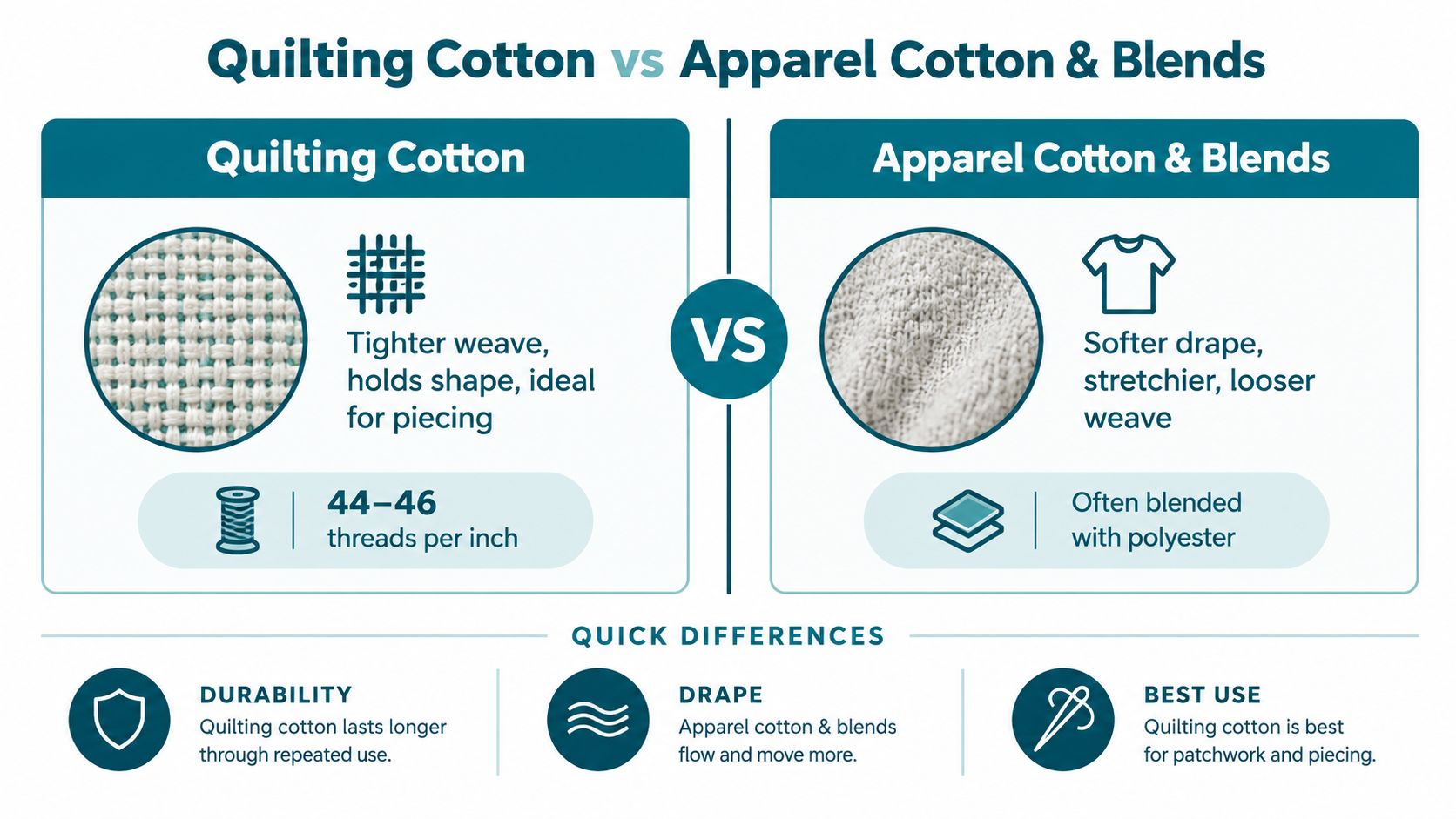
Drape is the way fabric falls and moves. Body is the resistance that helps fabric hold its shape. A summer blouse usually needs drape, while a quilt block benefits from body. Neither quality is automatically better. The right choice depends on the project.
Use a small sample before cutting. Hold it from one corner, let it hang over your hand, scrunch it gently, and fold it over a ruler or table edge. Compare what you see with this guide:
| Fabric | Drape | Body | Typical behavior |
|---|---|---|---|
| Quilting cotton | Low to moderate | Noticeable | Forms clearer folds, stays orderly during cutting, and supports accurate patchwork |
| Lawn | Moderate to high | Light | Falls softly and may need more careful handling during piecing |
| Cotton-polyester blend | Varies | Varies | May resist wrinkles, but heat, pressing, and washing can affect it differently |
The comparison is useful because a fabric name does not guarantee the same hand from every manufacturer. Independent sewing guidance also explains why quilting cotton can work for some garments while still feeling firmer than apparel cloth. This comparison of quilting cotton for clothing offers examples of that distinction.
Before committing to yardage, wash a scrap using the care method planned for the finished item. Compare it with an unwashed piece for size, surface, and stiffness. Press the washed scrap against a white cloth to check for dye transfer. Shrinkage and colorfastness are separate from drape and thread construction, but they can determine whether fabrics remain compatible after the quilt is made.
Choose quilting cotton for accurate patchwork, structured bags and organizers, simple aprons, some linings, clear printed designs, and a predictable quilt top. Its stable surface supports cutting, pinning, chain piecing, and pressing. Its body also works well with batting and backing in a layered construction.
Choose lawn, voile, or a softer apparel cotton when a skirt, blouse, or loose dress needs movement and a gentle hand. Lightweight fabric can reduce bulk, though it may shift more during piecing. Fabric with elastic content suits a pattern that depends on stretch and recovery.
Poly-blends can be practical where abrasion resistance, reduced wrinkling, or color retention matters. Test them before combining them with quilting cotton, because mixed fibers may respond differently to heat and washing. For structured sewing examples, cotton fabrics for structured sewing projects can provide another point of comparison.
Watch the comparison video below for a visual introduction to differences between cotton fabrics and their common uses.
If a pattern calls for firm fabric, choose cloth that holds its shape during handling and pressing. Choose apparel cotton for its softer drape only when that behavior supports the design, not just because the bolt says “cotton.”
Quilting traditions are older than modern quilting cotton. The earliest surviving bed quilt dates to 14th-century Sicily, while quilting practices can be traced even earlier to regions including China, North Africa, and the Near East. Britannica's history of quilting places modern cotton's rise within a much broader story of layered textiles, stitched surfaces, and regional craft traditions.
The important change came with industrial textile production. By the early 1800s, American-produced cotton fabrics were being made inexpensively in a wide range of prints. That development gave more households access to patterned cloth suitable for pieced and appliquéd quilts, rather than limiting quilt materials to scarce homemade textiles or expensive imported goods.
A maker working with a small amount of handmade fabric has to plan around every usable piece. Mass-produced cotton created a different kind of freedom. Quilters could combine repeated motifs, coordinate colors across multiple fabrics, and make larger quilt tops without producing every thread themselves.
The Metropolitan Museum of Art's quilting history notes that by the mid-19th century, most fabrics used in quilts were industrially produced rather than homemade. This wasn't only a manufacturing story. It changed who could participate, what patterns could be attempted, and how quilting communities shared visual ideas.
Cotton also suited the physical demands of a quilt. Its woven structure could be cut into geometric pieces, pressed into place, layered with batting, and stitched repeatedly. A stable printed fabric made it easier to build a complex design from small units without every piece shifting out of alignment.
The material became standard because it connected accessibility with practical performance. Makers could obtain printed cloth, cut it accurately, and build something useful from relatively small pieces.
Today's quilting cotton carries that legacy in a modern form. The bolts are commercially printed, the color palettes are coordinated, and collections are designed to work together, but the fundamental appeal remains familiar. A maker can begin with a stable woven fabric and turn it into a quilt top through careful cutting, sewing, and pressing.
Understanding that history also explains why “quilting cotton” describes more than a color category. It identifies a material tradition shaped by the needs of patchwork. The name signals an intended use, but you should still inspect the actual weave and hand because contemporary fabrics vary.
A fabric can look perfect on the bolt and still shift after its first wash. Before cutting, test how it drapes, whether its color runs, and how much its dimensions change. These checks reveal hidden differences between stable quilting cotton and softer apparel cotton, helping you avoid distorted blocks, mismatched seams, and unexpected color transfer.
Cut a small sample from the actual fabric, particularly if the print is dark, highly saturated, or unfamiliar. Mark each sample when comparing several bolts. A simple drape check helps too. Hold the fabric by one corner and let it hang. Quilting cotton should usually retain a fairly stable shape, while a looser apparel cotton may fall more softly or stretch more easily. That difference matters when accurate patchwork cutting is the goal.
Use this soak test:
A color catcher can add protection in the washing machine, but it cannot replace testing. If the sample releases substantial dye, wash that fabric separately until the water becomes clearer, or avoid pairing it with pale fabrics.
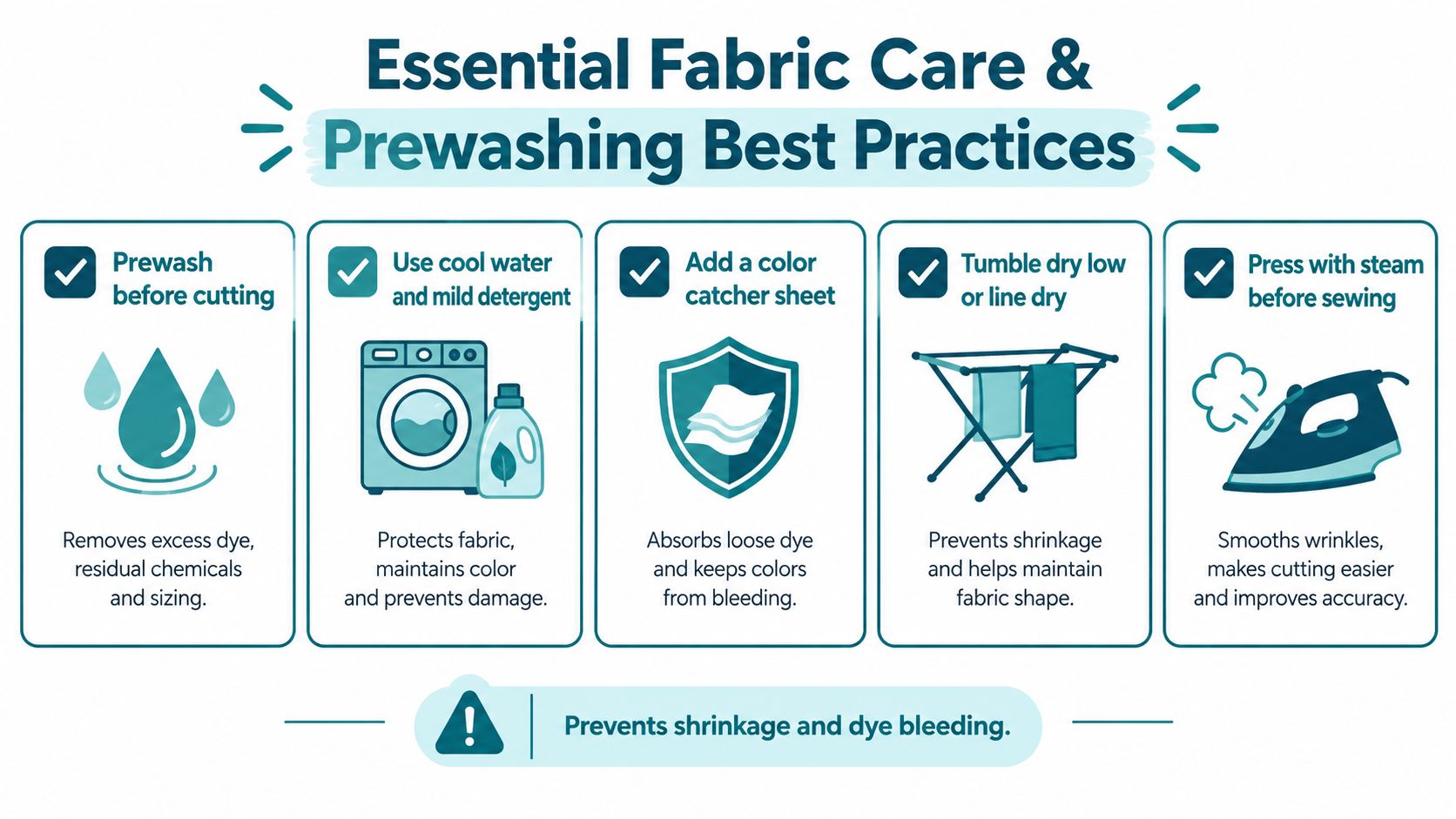
Published guides place cotton shrinkage across a broad range, from roughly 1% to 5%, depending on the fabric, its finish, and whether it has already been prewashed. This prewashing guidance and that shrinkage comparison point to the same practical lesson: a sample test is more dependable than assuming every bolt will behave alike.
Prewash the yardage when you want the quilt top and future laundering to start from a similar baseline. Use cool water and mild detergent. Dry the fabric in the way you expect to dry the finished quilt, then remove it promptly to limit deep wrinkles. If you prefer the crisp feel of unwashed cotton, you can skip the full wash, provided you accept that later laundering may change the quilt's dimensions.
After washing, press the fabric while it is slightly damp, or use steam according to its care instructions. Guide the iron along the grain rather than pulling the cloth diagonally. If the fabric becomes skewed, ease it back into alignment by hand before it dries completely.
Before rotary cutting: Confirm that the grain is reasonably straight, the cloth is fully dry, and the surface is smooth. A ruler cannot correct fabric that has already been stretched out of shape.
For preparation supplies and quilt-ready yardage, see the High Country Quilts fabric and notions department. Choose tools that match your washing, drying, and pressing routine.
At the fabric counter, two cottons can look equally attractive yet behave very differently under a rotary cutter. Choose the format first, then examine the cloth. Yardage suits borders, sashing, backing, garments, and large cutting plans. Precuts provide coordinated pieces, reduce cutting time, and let you sample a collection before buying more fabric.
The global quilting fabric market is projected at approximately USD 1.34 billion in 2026 and USD 1.87 billion by 2035, with cotton projected to represent roughly 68% of worldwide quilting fabric consumption, according to this market projection. Cotton remains central, but lighter fabrics and alternatives also appear in the category, so the word “cotton” alone does not tell you how a fabric will work in a quilt.
A fat quarter gives you a moderate piece for a block, appliqué, small bag, or color study. A jelly roll groups narrow strips for strip piecing and designs that depend on consistent widths. A charm pack contains small squares for sampling, patchwork studies, and projects made from compact units. Match the format to the pattern rather than choosing the package with the most appealing print.
Designer collections simplify color coordination because their prints are developed to sit together. They may still differ in weight, hand, or finishing. Hold fabrics together and compare their surface, listed fiber content, and width where that information is available.
Quilting cotton is usually woven to keep its shape during repeated cutting and piecing. Apparel cotton may be softer, lighter, or more fluid because it is designed to drape around the body. Test a candidate fabric before cutting: let a corner hang to judge drape, rub a damp white cloth over a dark print to check for loose dye, and wash a small sample to observe shrinkage and distortion. These checks can reveal structural differences that a shop light will hide.
Use this buying sequence:
A well-chosen precut can make a first project approachable. Yardage gives experienced quilters more control over borders, background fabric, and backing. For coordinated quilting cotton collections and precuts, High Country Quilts provides options. Choose a small, manageable project that lets you practise cutting, pressing, and color placement before buying for a large quilt.
At High Country Quilts we care deeply about community. With our experiences in retail, we know that a store is not only a place to shop but also a place for the community to gather and share. During this busy...

Hi! We’re Adam and Renee Wheaton, the new owners of High Country Quilts! For more than 40 years, we’ve owned and operated vacuum and sewing businesses. Following in Renee’s father’s footsteps after he retired from All Discount Vacuum and Sewing in Colorado...


Leave a comment