

We Love Our Quilting Community
At High Country Quilts we care deeply about community. With our experiences in retail, we know that a store is not only a place to shop but also a place for the community to gather and share. During this busy...


You've chosen a rich green plush for a baby quilt or cozy throw, imagined the finished softness, and then watched the fabric slide, stretch, and leave green fuzz across the cutting table. That experience is common. Green minky fabric looks simple, but its knit base, raised pile, heat sensitivity, and laundering behavior make it different from ordinary quilting cotton.
The good news is that minky becomes manageable once you understand what you're handling. Choose the right weight, stabilize it before cutting, control the layers at the machine, and test a swatch before committing your main yardage. You'll get a softer, more reliable project without fighting the fabric at every step.
Green minky fabric is usually a 100% polyester microfiber knit with a dense cut-pile face and a flat knit backing. It isn't a woven cloth. The backing gives the fabric mechanical stretch, while the cut pile creates the velvety or plush surface that makes it popular for quilt backs, blankets, toys, clothing, and home décor. The color changes the appearance, not the fundamental construction.
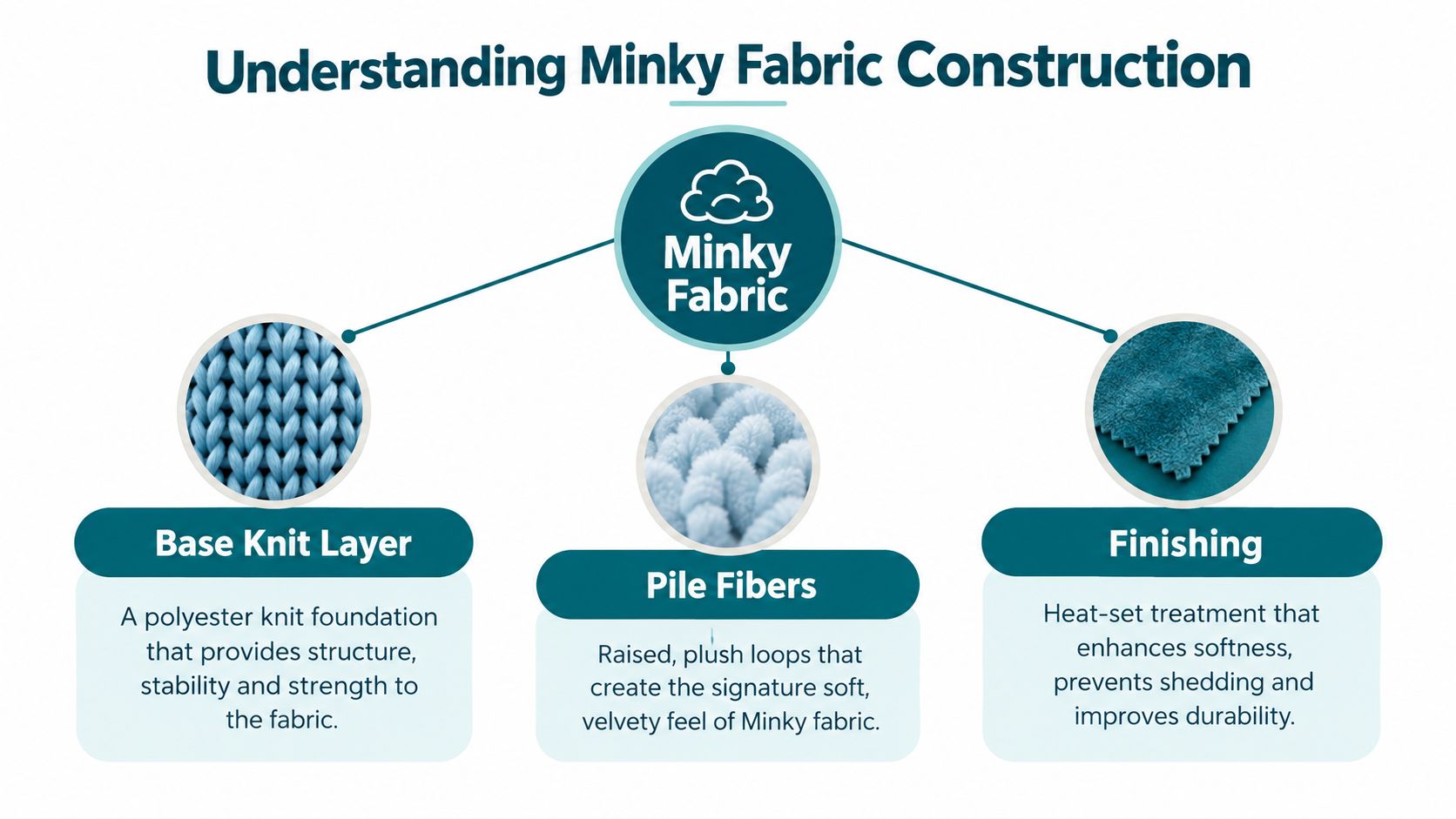
Pile height strongly affects both touch and sewing behavior. Commercial minky examples range from approximately 2.5 mm for short-pile fabric to 8–30 mm for plush textures, and commonly sold weights range from roughly 180–350+ GSM. These specifications are summarized in this minky fabric construction guide.
A short pile generally creates a flatter, easier-to-control surface. A taller pile feels loftier and warmer, but it can hide seam lines, shed more at cut edges, and create thicker seam allowances. Density matters too. A dense pile feels substantial and can resist flattening, while a lighter construction may be easier to feed through a domestic machine.
For quilting, midweight fabric around 250–350 GSM often offers a practical balance between softness and stability. Heavier fabric above 350 GSM can provide more loft, but it also increases seam bulk and may make presser-foot feeding more difficult. Treat those figures as selection guidance, not a guarantee that every fabric with the same weight will behave identically.
Polyester belongs to a highly scaled synthetic-fiber supply chain. Global polyester production rose from approximately 63 million metric tonnes in 2022 to about 71 million metric tonnes in 2023, and polyester represented roughly 57% of worldwide fiber production in 2023, according to Textile Exchange's 2024 Materials Market Report. The broader global fiber market reached 124 million tonnes in 2023, up from 116 million tonnes in 2022, and total fiber production has more than doubled since 2000.
Those figures describe polyester overall, not every minky product. A particular bolt may differ in yarn, backing, pile height, dye system, width, stretch, weight, or recycled content. Read the product specification rather than assuming that every green plush fabric has the same performance.
Practical rule: Feel the pile, then check the specification. Softness tells you how the surface feels, but it doesn't tell you how the fabric will stretch, feed, wash, or meet an intended safety requirement.
Minky rewards preparation. If you cut it while it's relaxed, join it without support, and rely on a standard presser foot, the layers can shift enough to produce wavy edges and puckered seams. Stabilize first, then make the machine do less work.
Lay the fabric flat on the cutting surface and identify the direction of stretch. Mark the nap direction on the wrong side with a removable fabric marker. When two pieces are joined, keep their pile running in the same direction, because reversing one piece can make the green look subtly different.
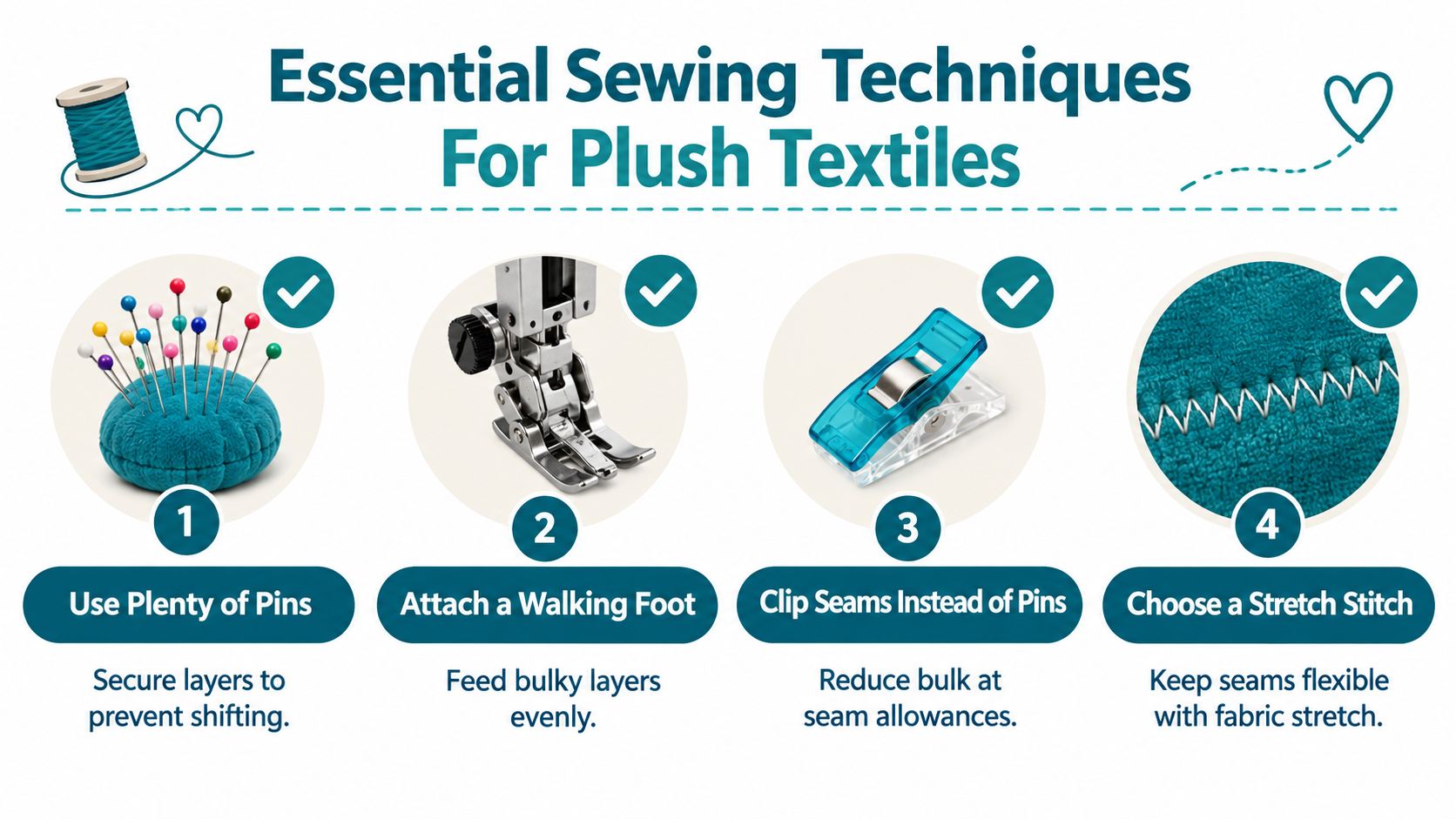
Stabilize the fabric before cutting. A firm cutting surface, a fresh rotary blade, and single-layer cutting help preserve accurate edges. Clips are especially useful for thick or stretchy layers because they hold the seam allowance without burying sharp pins in the pile. If you do use pins, place them across the seam allowance and remove them before the presser foot reaches them.
A walking foot or dual-feed system helps move the upper and lower layers together. This matters when minky is paired with cotton, batting, or another fabric that stretches at a different rate.
Use a fresh needle suited to knit fabric, and test the stitch on a scrap containing the same layers as the project. A slightly longer stitch can reduce perforation and puckering. The exact setting depends on your machine and fabric weight, so the test seam is more reliable than copying a setting without checking the result.
The required sewing approach resembles other plush or fleece projects, so this Cobra DTF transfer guide can provide useful handling context when you're working with bulky, soft textiles.
A walking foot reduces layer shifting, but it can't correct a distorted cut. If the seam begins to ripple, stop and check whether the fabric is being pulled, whether the presser-foot pressure is too high, or whether the stitch is too short for the knit base.
Place the pile sides together when sewing a conventional seam, and keep excess pile from being caught in the seam allowance. After sewing, trim only what interferes with the seam. Avoid direct high heat, because polyester pile can flatten or deform permanently.
Green minky fabric isn't environmentally different from plush fabric in another color. Its relevant care and environmental questions come from the polyester microfiber construction, the pile density, and the way the finished item is washed and dried.
Research on synthetic textiles estimates that they contribute 16%–35% of global microplastic pollution, with microfiber release occurring during production, laundering, and use. The same research attributes approximately 49% of release to production, 28% to laundering, and 23% to use. These figures are discussed in the research on microfiber release from synthetic textiles.
Abrasion, laundering, and drying can affect dimensional stability and fiber release. For a finished minky item, choose a gentle wash with cool water, reduced agitation, and a mild routine appropriate for the manufacturer's care label. Air drying is preferable to high-heat tumble drying because heat can flatten or deform the pile.
A lower-impact care routine doesn't make polyester biodegradable. It can, however, reduce unnecessary friction and heat.
For readers comparing broader manufacturing choices, compare eco-friendly production methods to understand why fiber selection, processing, and product life all matter.
OEKO-TEX STANDARD 100 is a useful procurement screen for baby blankets and other close-contact projects. The program tests finished textile components for listed harmful substances according to intended use, including certain dyes, heavy metals, formaldehyde-related chemicals, and PFAS/PFCs. OEKO-TEX states that PFAS are banned in its standards, while also cautioning that STANDARD 100 doesn't certify a product as universally “PFAS-free.” The OEKO-TEX STANDARD 100 information explains the scope.
A certification doesn't prove flame resistance, recycled content, durability, or environmental superiority. Check the exact colorway or finished article, not just a general fabric family or manufacturer name.
Green minky fabric works especially well when softness is part of the purpose. A short or mid-pile version can make a comfortable quilt backing, baby blanket, pillow, or appliqué accent. A taller pile creates a more dramatic surface for throws and sensory projects, but it also adds bulk and makes precise cutting more demanding.
For a quilt backing, prioritize width, stability, and a manageable pile. A midweight fabric around 250–350 GSM can balance plushness with easier handling. For a blanket where loft matters more than crisp seams, a heavier option may suit you, provided your machine can feed the layers evenly.
Directional pile deserves the same attention as a printed design. Run your hand across the surface in both directions. One direction will feel smoother, while the other will feel more resistant. Keep that direction consistent across the entire project so the green surface reflects light evenly.
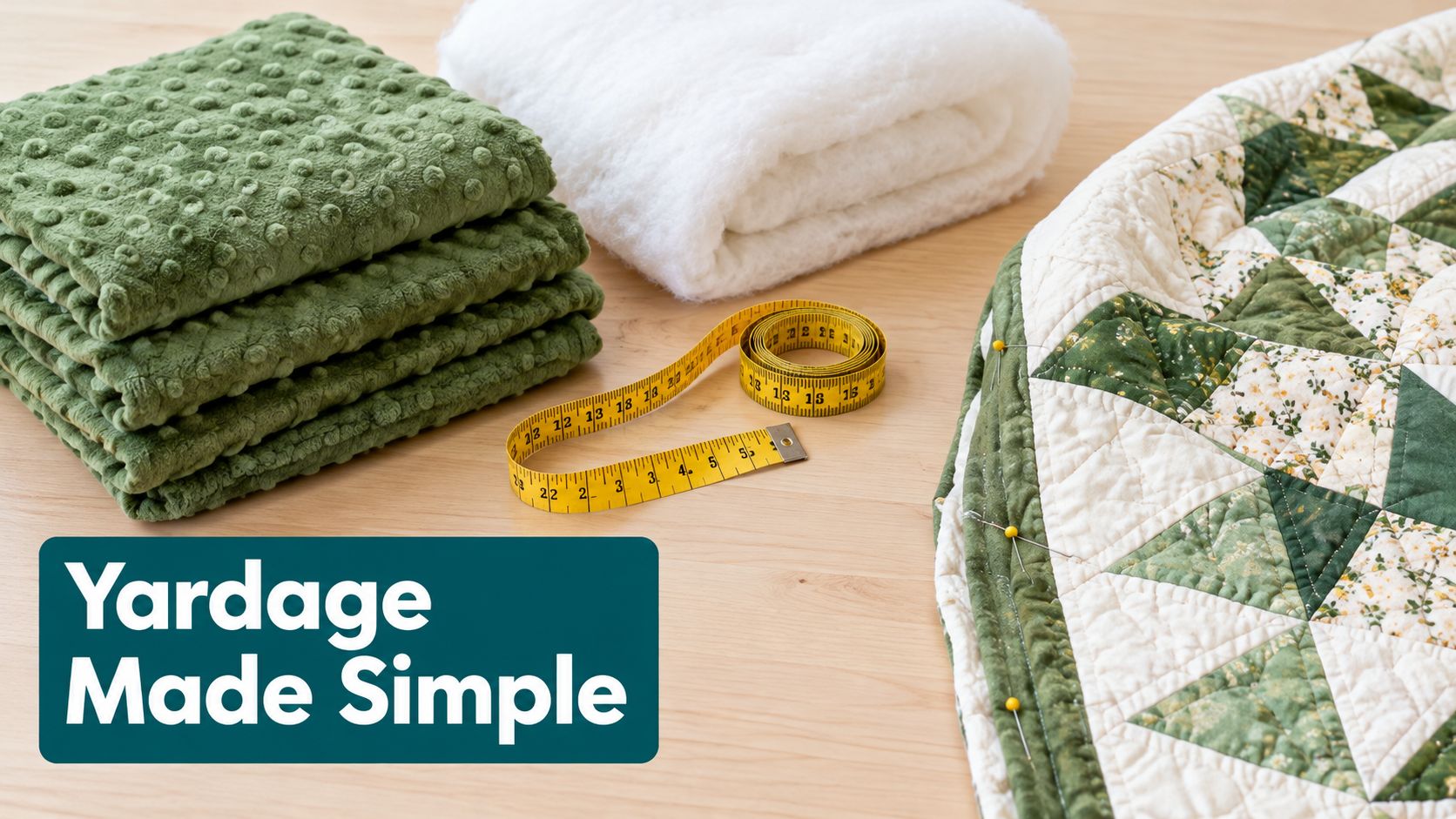
Start with the finished project dimensions. Add room for trimming, stretch, directional pile, and the possibility that the fabric will move during sewing. If your backing requires a seam, account for seam allowances and match the pile direction before deciding how much fabric to purchase.
A simple planning process looks like this:
Green minky is also useful for stuffed items, pet blankets, robe panels, and small appliqué details. For a first project, choose a shape with fewer seams. A simple blanket or single-piece backing lets you learn how your machine handles the fabric before you add intricate piecing.
A small swatch can reveal problems that a full cut hides until it's too late. Before cutting the main yardage, prepare a sample large enough to wash, measure, sew, and inspect. Use the same thread, needle, seam allowance, stitch, batting, and care routine you plan to use in the finished project.
Start by marking the swatch with its original measurements. Wash it using the planned routine, then compare the post-wash dimensions. Check whether the pile has changed, whether the backing has distorted, and whether the green dye has transferred.
The recommended checks are practical:
These checks follow the guidance in research on polyester knit fleece care and fiber release. They also help you decide whether prewashing is practical for your project. Don't assume that a fabric's color, softness, or label tells you how it will behave after laundering.
If the swatch performs poorly, change the care routine, stabilize the fabric differently, select a shorter pile, or choose another product before cutting the quilt.
Online listings can show a color and a product description, but they can't let you feel the stretch, compare pile direction, or judge seam bulk in person. A local quilting shop gives you the chance to place fabrics side by side and ask questions before buying enough material for a large project.
At High Country Quilts in Colorado Springs, shoppers can examine Cuddle® minky fabric, quilting fabrics, sewing notions, machines, and accessories in person. The store also operates as an authorized BERNINA dealer, with training and support for BERNINA sewing machines. That combination matters when a plush project exposes a feeding issue that isn't obvious from a product page.
Bring your project dimensions and ask staff to help you compare options. Useful questions include:
For broader purchasing decisions, uniform fabric sourcing advice offers a useful reminder to evaluate fiber content, durability, intended use, and specification details together.
Local support is particularly valuable for beginners. You can bring a sample, compare needles and clips, discuss machine settings, and learn whether an upcoming class matches your skill level. A short conversation before purchase may prevent a difficult seam, an unsuitable pile, or an avoidable return.
Color and softness don't establish chemical safety. Check the exact product's fiber content, care instructions, certification information, and intended use. OEKO-TEX STANDARD 100 can show that a certified textile article passed listed harmful-substance testing, but it doesn't prove flame resistance or universal environmental safety.
Don't assume it complies. In the United States, non-tight-fitting children's sleepwear must be flame-resistant and capable of self-extinguishing after ignition. The applicable rules are codified in 16 C.F.R. Part 1615 for sizes above 9 months through 6X and Part 1616 for sizes 7 through 14, as explained by the U.S. Consumer Product Safety Commission's children's sleepwear guidance.
Compliance applies to the intended garment and involves testing fabric, prototype seams, trim, and production garments. A fabric label alone isn't enough.
No. Harmful-substance testing and flammability compliance are separate questions. Don't describe ordinary green minky fabric as flame-resistant unless documentation supports that claim for the specific fabric and intended finished product.
Wash a swatch using the planned routine, measure for dimensional change, check color transfer with a damp white cloth, inspect cut-edge shedding, and sew a sample seam. Those steps reveal more than appearance alone.
High Country Quilts offers Cuddle® minky fabric, sewing notions, machine support, and classes that can help you approach plush projects with the right tools and techniques. Visit High Country Quilts to explore fabric options, get practical guidance in Colorado Springs, and build confidence before cutting your first green minky project.
At High Country Quilts we care deeply about community. With our experiences in retail, we know that a store is not only a place to shop but also a place for the community to gather and share. During this busy...

Hi! We’re Adam and Renee Wheaton, the new owners of High Country Quilts! For more than 40 years, we’ve owned and operated vacuum and sewing businesses. Following in Renee’s father’s footsteps after he retired from All Discount Vacuum and Sewing in Colorado...


Leave a comment