

We Love Our Quilting Community
At High Country Quilts we care deeply about community. With our experiences in retail, we know that a store is not only a place to shop but also a place for the community to gather and share. During this busy...


You're staring at a broken zipper, a fabric bundle you bought months ago, or a sewing machine still in its box. You search for sewing classes near me for adults, open several listings, and quickly discover that “beginner” can mean anything from a relaxed project workshop to a demanding garment course.
The right class isn't the closest one. It's the class with a format, instructor ratio, equipment policy, and progression plan that match the way you learn. This guide will help you compare those details before you register, so your first experience feels practical and encouraging rather than confusing.
A beginner often arrives with a very specific goal. One student wants to shorten trousers. Another wants to make a cushion cover. Someone else has inherited a sewing machine and wants to understand what all those dials and feet do. A video can demonstrate the process, but it can't see that your thread is misrouted, your presser foot is raised, or your fabric is pulling sideways.
That's where an in-person class earns its place. An instructor can correct machine threading, needle choice, seam allowance, and fabric handling while you're working. Those small corrections matter because early habits affect every later project. Guided repetition also helps you remember a process instead of merely recognizing it when you watch someone else perform it.
Instructor's rule: Your first class should leave you with a repeatable process, not just a finished object.
Adults sometimes worry that they're too old to learn, too slow for the group, or behind everyone else. In practice, adult learners often bring useful strengths: patience, attention to purpose, and the ability to explain what they want to make. You don't need childhood sewing experience. You need a teacher who breaks the task into manageable actions and gives you time to try each one.
Textile making already reaches a broad adult audience. The National Endowment for the Arts' U.S. arts participation data found that 26.2% of U.S. adults in 2017, roughly one in four, had made, woven, crocheted, quilted, needleworked, knitted, or sewn during the previous twelve months. The same dataset reported that 54% of U.S. adults had made any art during that year.
England's official participation data also recorded textile making among adults, with 14.3% participating in 2016/17, compared with 12.1% in 2010/11, as reported in the same federal arts reference. Sewing isn't an outdated skill waiting for a revival. It's a practical form of creativity that helps people make useful items, alter clothing, and spend focused time away from screens.
The social benefit matters too. Local classes introduce you to people who understand why fabric grain matters and why a “quick” project can take patience. Those classmates can become accountability partners, idea sources, and part of a continuing maker community.
Class format affects three things: how often you practise, how much correction you receive, and whether you complete a project or sample one technique. Choose the learning outcome first, then check whether the schedule and teaching arrangement support it. A class that meets your goal is more useful than one that fits the label “beginner.”
A multi-week course builds a steady learning path. Early sessions may cover machine orientation and straight seams, followed by seam finishing and a guided project. The time between meetings lets you repeat each technique at home, so you return with specific questions instead of trying to remember everything at once.
This format suits a beginner who wants dependable foundations. It may feel slower than a full-day class, but spaced practice helps skills become easier to recall. Ask whether missed sessions can be made up, whether materials are included, and whether you need access to a machine between classes. If home practice is unrealistic, a course with supervised practice may serve you better.
An intensive places instruction in one concentrated block. It can suit a busy adult who wants to test sewing or finish a defined project, such as a tote bag, simple pouch, or cushion cover. You receive quick feedback while working, but there is little time between steps to build automatic habits.
Adult beginner listings use several short, skills-based structures, including three three-hour beginner sessions, two-hour weekly classes over four to six weeks, and six-hour weekend courses split into two three-hour blocks, as shown by Sew in Asylum's adult class examples. The better comparison is guided progression with chances to repeat, not the amount of time promised in the description.
Drop-in workshops let you choose a topic and attend when your calendar permits. They work well for sewists who already understand machine basics and want focused help with zippers, quilting blocks, bags, or a particular pattern.
They are less suitable as a first and only class. A workshop may assume that you can thread the machine, control seam allowance, and follow basic instructions. Check the prerequisites before registering. If the description names a technique but does not explain the starting skill level, contact the instructor.
Private instruction adjusts the pace to your needs and gives you direct troubleshooting. It can help when you are learning on your own machine, correcting a repeated technique problem, or preparing for a particular garment or pattern. The instructor can watch your hand position, fabric control, and machine settings closely, then correct the cause rather than only fixing the current mistake.
The trade-off is higher cost and dependence on one instructor's availability. Choose this format when precise individual feedback matters more than meeting classmates. A group class may provide useful observation and shared problem-solving, while a private lesson concentrates entirely on your questions.
| Format | Duration | Best For | Skill Building | Typical Cost Range |
|---|---|---|---|---|
| Multi-week series | Several scheduled sessions | Beginners seeking routine | Progressive, with practice between meetings | Varies by studio |
| One-day intensive | One concentrated day | Busy adults testing a project | Fast introduction with limited recovery time | Varies by studio |
| Drop-in workshop | Single focused session | Sewists with basic knowledge | Technique-specific | Varies by studio |
| Private lesson | Scheduled individual session | Personal troubleshooting | Highly tailored | Varies by instructor |
For working adults, evening and weekend timing often determines whether practice happens. Select the format you can attend consistently, then compare the class size, equipment, and expected preparation. A product-based option, such as the beginner sewing project details, can also help you identify whether your goal calls for a guided project, a technique workshop, or a longer foundation course.
A polished listing doesn't guarantee useful teaching. Before you pay, look for evidence that the studio has planned the learning experience around beginner mistakes, equipment needs, and hands-on correction.

A description that names only a project may be incomplete. You should be able to identify what happens first, which techniques you'll practice, and what you're expected to know before arriving. Ask about practice time, supply requirements, and the policy for missing a session.
Also ask how many students share an instructor. Sewing errors can involve thread tension, presser-foot handling, needle selection, or machine setup. If one instructor must circulate among a large group, you may spend too long waiting while a small error turns into unpicking and rework.
Before registering: Ask, “What should I be able to do independently when this class ends?”
Pricing is only one part of the financial decision. The base fee may cover teaching time and machine use, while fabric, patterns, thread, needles, or specialty presser feet remain your responsibility. A low advertised price can become less attractive if the supply requirements are unclear.
The supplied information doesn't establish verified price ranges, so treat every exact figure in a local listing as specific to that provider rather than a universal market standard. Request a complete materials list before registering, including whether the studio supplies cutting tools, irons, rulers, and machines.
| Expense Category | Typical Cost Range | What It Covers |
|---|---|---|
| Group class fee | Varies by provider | Instruction, scheduled studio time, and sometimes machine use |
| Fabric and project materials | Varies by project | Fabric, interfacing, batting, lining, or closures |
| Patterns and printed instructions | Varies by project | Commercial or instructor-provided pattern materials |
| Notions | Varies by project | Thread, needles, zippers, buttons, clips, and marking tools |
| Personal machine | Varies by model | Home practice and long-term independent sewing |
A workshop can be a sensible first purchase when you're uncertain about committing to equipment. Classroom access lets you test whether you enjoy sewing and whether a particular machine style feels comfortable. If you already know you'll practice regularly, buying a personal machine may make home repetition easier, but choose support and service as carefully as the machine's feature list.
Ask whether a studio offers open practice time, membership benefits, or bundled materials. The most useful comparison is the total learning cost, not the registration fee alone. You're paying for access to correction, tools, a project plan, and the chance to leave with skills you can use again.
Searching locally becomes easier when you decide what you need before opening a directory. Start with the phrase adult sewing classes near me, then add a preferred format, such as beginner series, weekend workshop, private lesson, quilting, or garment sewing.

Don't buy a large collection of tools before you know what your class supplies. A small kit may include fabric clips, a seam ripper, fabric scissors, a tape measure, pins or a pin cushion, and a water-soluble marking tool, but follow the instructor's list first.
Read cancellation and transfer policies before payment. Save the studio address, parking information, arrival instructions, and any note about bringing a machine. Preparation doesn't make you an expert, but it removes avoidable first-day stress and gives you more time at the machine.
Your first finished project should answer a larger question: what do you want to make next? A useful pathway moves from control and accuracy toward independent decisions about fabric, fit, construction, and finishing.

Choose the next course by goal rather than by prestige. A future garment maker may benefit from pattern reading and fitting. A quilter may prefer rotary cutting, piecing accuracy, and quilting techniques. Someone interested in practical repairs may need machine maintenance and alteration guidance before advanced construction.
Open studio time can bridge the gap between a class and independent sewing. It gives you a place to repeat a seam, ask about a machine setting, or finish the project that felt too ambitious at home. Online tutorials can supplement that practice, but they work best after an instructor has shown you the physical handling of fabric and equipment.
For an additional structured learning resource, you can review this online sewing course as a supplement to local instruction.
Sewing groups, guilds, and shop events also help maintain momentum. The history of community instruction supports that local model. A documented 1915 example records the Jacob Riis House in New York City offering 17 weekly sewing classes and five weekly sewing clubs for adult women. A UK craft study later recorded Community Learning craft-course participation rising from 150,900 to 248,800 learners between 2007/08 and 2009/10, before reaching 236,100 in 2010/11, while formal craft further-education participation fell from 20,550 to 4,750 between 2007/08 and 2010/11, as documented in this historical account of adult craft education. The pattern points to a lasting strength of accessible, community-based learning.
You arrive with a project in mind, but you are unsure whether to begin with a sewing machine, a quilting class, or basic skills. For adults in Colorado Springs, High Country Quilts offers a local learning path through beginner sewing instruction, project-based workshops, quilting courses, bag making, embroidery, and clothes making. This range lets you choose a suitable first class and continue without starting the search over when your skills grow.
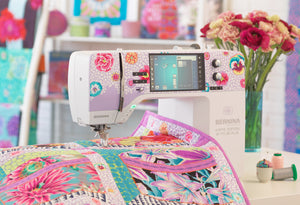
Machine access removes another source of uncertainty. As an authorized BERNINA dealer, High Country Quilts provides training and support for BERNINA sewing machines, and students can use them during class. Handling the equipment with an instructor nearby helps you decide what features matter before choosing a machine for home practice.
Class size affects how quickly you can correct a mistake. With a supportive instructor-to-student ratio, you can ask for help when fabric feeds unevenly, a seam puckers, or a thread jam stops the machine. In-person guidance works like a handrail on stairs. It steadies you at the moment a technique feels unfamiliar, rather than leaving you to repeat the same error at home.
The shop also provides a community setting for learning and planning. Review the current schedule online, contact the team about your goals, or visit in person to see how the classes work before registering. Bring a specific idea, such as a bag, garment, or quilt, and explain your current experience. The team can help you compare a fundamentals class, a project workshop, and a machine-focused session.
A useful class gives you three things: a clear starting project, equipment you can handle, and instruction that matches your pace. It should also offer a next course, so each class builds on the last.
High Country Quilts offers adult sewing and quilting classes, beginner instruction, project workshops, and access to BERNINA machines during class. Visit High Country Quilts to explore upcoming classes in Colorado Springs or contact the team to choose a course that matches your goals.
At High Country Quilts we care deeply about community. With our experiences in retail, we know that a store is not only a place to shop but also a place for the community to gather and share. During this busy...

Hi! We’re Adam and Renee Wheaton, the new owners of High Country Quilts! For more than 40 years, we’ve owned and operated vacuum and sewing businesses. Following in Renee’s father’s footsteps after he retired from All Discount Vacuum and Sewing in Colorado...


Leave a comment