
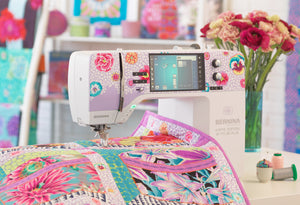

We Love Our Quilting Community
At High Country Quilts we care deeply about community. With our experiences in retail, we know that a store is not only a place to shop but also a place for the community to gather and share. During this busy...


You're in the aisle with bolts of fabric on one side and sewing machine boxes on the other, trying to figure out whether you're looking at a simple hobby or a lifelong rabbit hole. That hesitation makes sense. Sewing and quilting are connected, but they don't feel the same when you're starting out, and a good beginner guide should make the difference feel clear instead of intimidating.
The easiest way to think about it is this. Sewing builds things you can use right away, and quilting layers those sewn pieces into a warmer, more textured finished structure. A quilt is a stitched structure made from at least two outer fabric layers with an insulating middle layer, and the stitching is what holds those layers together, according to the Victoria and Albert Museum's introduction to quilting and patchwork. That simple structure is why the two crafts overlap so much. The same machine, the same thread, and many of the same habits show up in both.
A lot of beginners think they have to choose between “learning to sew” and “learning to quilt.” In practice, the line is softer than that. Sewing is the broad skill of joining fabric into something useful, like a pouch, a pillow, or a tote. Quilting uses those same joining skills, then adds a layered build that turns flat fabric into a finished textile with body and warmth.
Think of sewing as writing a sentence. You pick a fabric, make a seam, and finish a useful object. Quilting is more like writing a whole story, because you're building from many pieces and thinking about how the layers behave together.
That's why a beginner who starts with a simple sewn project often finds quilting less mysterious afterward. The hand skills overlap, the machine work overlaps, and the language overlaps too. You're still feeding fabric under a presser foot, guiding a seam, and making choices about thread and finish.
Practical rule: If a project needs to be practical and quick, think sewing. If you want texture, warmth, and a surface that can carry color in pieces, think quilting.
The history of quilting also helps take the pressure off. Britannica traces quilting back to ancient Egypt around 3400 BCE, notes the earliest surviving bed quilt from 14th-century Sicily, and explains that the word “quilt” entered English around 1300 from the Latin culcita (Britannica). That long history matters because this isn't a trendy corner of craft culture. It's a durable textile practice that has kept adapting across centuries, materials, and uses.
Once you understand that sewing and quilting share tools and a workspace, the hobby feels less like two separate mountains. A beginner can make a pillowcase, then move to patchwork, then eventually piece a full quilt top without starting over mentally. The stitch path changes, but the logic stays familiar.
That's also why local classes often combine both skills in one teaching space. A friendly shop can show you the difference without making you choose too early. If you're browsing for fabric, thread, or a first machine, start with one small project and let the other craft grow naturally from it.
A beginner often learns fastest by watching what the machine is doing. The fabric is the surface you build on, the thread is the connector, and the stitch is the repeated action that holds the layers together so they do not drift apart.

At the machine, the top thread and the bobbin thread meet inside the fabric stack. That meeting point creates the lock that makes the seam hold. If the thread choice, needle size, or tension is off, the stitch can look uneven or fail to form cleanly.
Quilting asks the machine to handle a thicker stack of materials, so the setup has to be a little more exact. The American Quilter's Society recommends a scant 1/4-inch seam allowance and a stitch length of about 12 stitches per inch (2.0 mm) for most piecing seams, because the slightly narrower seam helps compensate for fold thickness after pressing and keeps blocks accurate (SCHMETZ quilting guidance). That small bit of discipline matters quickly once you begin joining many units together.
Precision is not fussy in quilting. It is structural. A small seam change can shift block size, point alignment, and the final shape of the top.
Needle condition, thread size, and tension work together. If one of them is wrong, the stitch can skip, fray, or pull the fabric in a way that makes the seam look tired instead of crisp. SCHMETZ's quilting guidance says to change the needle regularly, inspect the needle eye and groove for damage, match thread size to needle size, and adjust thread tension and guidance to prevent skipped stitches and uneven seam formation.
That advice translates into a simple studio habit. Use a healthy needle, make sure the thread and needle belong together, and test before you commit to a full project. A local authorized dealer can help with that setup by showing you needles, thread, and machine options that beginners can realistically buy and keep using, instead of sending you home with tools that only make the machine harder to understand. Once that routine feels normal, the machine stops feeling mysterious and starts feeling dependable.
Sewing and quilting share the same roots, but they ask for different patience. Sewing usually rewards utility first. Quilting rewards structure, layering, and a slower attention to how pieces meet one another. That difference shows up in the projects people choose, the fabrics they buy, and the pace they prefer.

A sewn project usually stands on its own as a single fabric construction, like a tote bag or pillow. A quilt begins as a top, then becomes a layered piece once batting and backing are added. That middle layer changes the feel of the whole thing, because the quilt is no longer just fabric joined at seams, it's a stitched surface with thickness.
The rhythm changes too. Sewing often feels like making a useful thing in one pass. Quilting usually means making a top first, then building the layered “quilt sandwich,” then stitching through the layers. For some beginners, that second rhythm feels calming because it breaks the project into clear stages. For others, the layer-building feels more exacting, and that's fine too.
If you want quick wins, start with sewing and make something practical. If you're drawn to color, blocks, and the idea of building a surface piece by piece, quilting may be the better first step. Neither path locks you out of the other, and many makers bounce between them depending on the project.
The overlap lies in the machine and the habit of accuracy. Whether you're sewing a seam or piecing a block, you're still guiding cloth, checking alignment, and learning how your machine behaves under your hands. That shared foundation is what makes the crafts feel like cousins instead of strangers.
A beginner kit does not need to be fancy, but it does need to be dependable. A few well-chosen tools make the early months easier, because they handle the same problems beginners meet again and again, uneven cutting, crooked stitching, and the need to undo a mistake without harming the fabric. Sharp fabric scissors, a rotary cutter, a cutting mat, pins, a seam ripper, a measuring tape, basic thread, and a reliable sewing machine cover most first projects.
Fabric scissors are for clean cutting, not for paper or cardboard. A rotary cutter and mat help you make straighter, faster cuts, especially when you are preparing patchwork pieces that need to match up later. Pins hold layers together so they do not slide before they reach the needle, and a seam ripper gives you a clean way to remove a seam that went wrong.
A measuring tape lets you check fabric, seam lengths, and finished pieces. Basic thread should feed smoothly without snagging or shedding. Your machine ties the whole setup together, so spend time learning how it behaves with straight stitching before you add decorative stitches or specialty techniques.
A beginner does not need every tool on day one. The first goal is a setup that cuts cleanly, sews straight, and lets you fix mistakes without panic.
If you shop in person, an authorized dealer can help you compare machine feel, stitch quality, and accessory options in a real conversation. High Country Quilts is one local option for that kind of hands-on support, along with classes and fabric choices you can see in person.
At an authorized dealer, you will usually hear people talk about mechanical and computerized machines, along with quilting feet like a quarter-inch foot, a walking foot, and a free-motion foot. The names sound technical at first, but the jobs are straightforward. A quarter-inch foot helps keep seam allowances consistent for piecing, a walking foot helps feed multiple layers more evenly, and a free-motion foot gives you more control when moving the quilt under the needle.
Test stitching matters more than labels if you are still unsure what your machine should do. A machine that feels smooth on a test seam and handles your fabric stack cleanly gives you a better starting point than a long list of features you may not use yet.
The fastest way to learn is to finish something small. A beginner project should teach one or two useful habits, not every skill at once. That's why the best first makes usually stay simple, use manageable pieces, and give you a finished object you can use or display right away.
A pillowcase is a strong first sewing project because it teaches straight seams, pressing, and how to finish edges neatly. A small patchwork wall hanging adds the rhythm of piecing and the accuracy needed for block work. A strip-quilt baby blanket introduces batting, layering, and quilting through the layers without asking you to manage a huge bed-size top.
| Starter Project | Skills Taught | Best For |
|---|---|---|
| Pillowcase | Straight seams, pressing, clean finishing | Absolute beginners who want a quick finish |
| Small patchwork wall hanging | Rotary cutting, piecing accuracy, block matching | Makers ready to practice quilting basics |
| Strip-quilt baby blanket | Layering, basting, stitching through batting | Beginners who want a real quilt experience |
The table above is the simplest way to choose. If you want the least pressure, start with the pillowcase. If you want the first taste of quilting structure, choose the wall hanging. If you already know you want a quilt, the strip blanket gives you a small-scale version of the full process.
Many quilters now learn online before they step into a classroom. Video tutorials can show hand position, seam direction, and machine handling in a way that flat photos can't always do. That makes an in-person class even more useful, because the instructor can correct the exact thing your hands are doing.
The best beginner mix is usually one tutorial, one small project, and one real conversation with a shop teacher. That combination keeps the learning concrete. It also stops you from collecting ten unfinished starts before you've finished one thing.
Buying a machine online can get you a box. Buying from an authorized dealer can get you setup, troubleshooting, training, and a place to return when you have questions. That difference matters more than most beginners expect, because the first months of sewing and quilting are full of small adjustments that are easier to solve in person than by guessing alone.
A local dealer can let you test machines before you commit, which helps you feel the difference between models instead of reading about it. That matters when you're trying to understand stitch quality, pedal response, and how the machine handles the kind of fabric stack you'll use. You can also ask about warranty support, trade-in options, and service, which are hard to evaluate from a product page alone.
A shop like High Country Quilts also gives you a place to learn from other people who are working through the same beginner mistakes. Classes, sew-alongs, and casual store advice can turn a confusing purchase into a steady practice. That kind of support is especially useful when you're still building confidence with tools and terminology.
Good buying question: Can I try this machine with the fabric and thread I'll actually use at home?
A beginner's first machine often becomes a long-term tool, not a temporary one. That makes support and service part of the value, not just the sale. If you know where to go for help, you're more likely to keep sewing instead of stalling out when something needs adjustment.
The same goes for supplies. A good shop helps you understand which feet, threads, and fabrics solve a problem instead of adding clutter. That keeps your setup lighter, clearer, and easier to use on the days when you only have an hour to sew.
A new maker usually reaches the next stage one small project at a time. You learn how a seam feels under the presser foot, try a few tools, and finish something simple enough to use or gift. That rhythm matters in sewing and quilting, because both hobbies ask for practice, but they do not ask for the same kind of practice.

High Country Quilts is a premier quilting and sewing shop in Colorado Springs, an authorized BERNINA dealer offering expert training, classes, community events, and an extensive selection of fabrics, precuts, and notions. For a beginner, that kind of shop matters because it connects the two parts of the craft in one place. You can ask about a sewing machine for everyday stitching, then get help understanding how that same machine fits quilting work, which usually means handling larger layers and more careful piecing.
A local authorized dealer also helps you make choices that match real life, not just a product description. You can see how fabrics feel, talk through which notions solve an actual problem, and get plain answers from people who work with these tools every day. That is especially helpful when you are still learning the difference between a machine that looks good on paper and one that fits your own projects.
The community side matters too. Classes and in-store advice give you a place to ask beginner questions without guessing, and that makes the learning curve feel less steep. For someone building skills in sewing and quilting at the same time, a shop like High Country Quilts can be the steady place where those skills start to connect.
If you are ready to take the next step, start with one project you can finish and one conversation you can have in person. High Country Quilts gives beginners a place to do both, with real tools, fabric, and support under one roof.
At High Country Quilts we care deeply about community. With our experiences in retail, we know that a store is not only a place to shop but also a place for the community to gather and share. During this busy...

Hi! We’re Adam and Renee Wheaton, the new owners of High Country Quilts! For more than 40 years, we’ve owned and operated vacuum and sewing businesses. Following in Renee’s father’s footsteps after he retired from All Discount Vacuum and Sewing in Colorado...


Leave a comment