
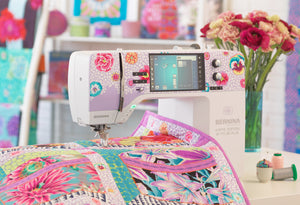

We Love Our Quilting Community
At High Country Quilts we care deeply about community. With our experiences in retail, we know that a store is not only a place to shop but also a place for the community to gather and share. During this busy...


You're probably here because you've admired a quilt for years and thought, “I love this, but I'd never be able to make one.” I hear that all the time in the shop. Usually it comes right before someone picks up a fabric bundle, looks at a ruler wall, and feels completely lost.
That feeling is normal.
Quilting looks complicated from the outside because finished quilts hide the learning process so well. You see color, precision, and beautiful stitching. You don't see the first wobbly seam, the miscut square, or the beginner who needed help threading a machine. Every quilter starts there.
What changes things is having a clear path. Good quilting classes for beginners take the mystery out of the craft. Instead of trying to learn everything at once, you learn one useful skill at a time, in the order that makes sense. You stop guessing. You start making.
This guide is for the person who wants that kind of start. If you've been curious, nervous, excited, or all three at once, you're in the right place.
A new student often walks in holding a photo on her phone. Maybe it's a quilt her grandmother made. Maybe it's a simple patchwork throw she saw online. She usually says some version of the same thing: “I don't even know where to begin.”
The answer is simpler than often assumed. You begin with one class, one project, and one set of basic tools.
That first step matters because quilting isn't a tiny niche hobby. The quilting community in the United States and Canada includes 9 to 11 million active participants, and 76% of quilters prefer to source supplies and education from local quilt shops rather than big-box retailers, according to the Craft Industry Alliance quilting market survey. That tells me two important things. First, you are far from alone. Second, beginners often learn best in a real shop with real people nearby.
Online videos can be helpful, but they often skip the little details that trip beginners up. A class gives you immediate answers when you ask things like:
Those are small questions, but they make a huge difference in how confident you feel.
You don't need to feel talented to start quilting. You need a place where questions are welcome.
A beginner class changes the emotional side of quilting. At first, you might feel awkward touching tools you've never used. By the second or third class, you're making choices, solving small problems, and noticing improvement.
That's when the craft starts to feel fun.
You also start to see quilting as a community activity, not a test. People compare fabrics, laugh about crooked seams, and help each other unpick mistakes. The room gets quieter when everyone focuses, then lively again when someone finishes a block for the first time.
That moment matters. It's the point where “I wish I could quilt” turns into “I'm making one.”
You sit down at a sewing machine, look at the ruler, the mat, the fabric, and the sample block on the table, and it can all feel like a lot at once. A good beginner class fixes that feeling by putting the steps in the right order. Instead of guessing what comes first, you learn one skill, practice it, and then add the next, like stacking steady little blocks until the whole process makes sense.
Many beginner classes are taught over several sessions rather than one long workshop. That pacing is common in hands-on sewing courses because it gives your hands and eyes time to catch up with what you are learning, as shown in a sample beginner quilting syllabus from a community education program.

Most beginner classes follow a practical path that helps you build confidence early.
Each skill supports the next one.
If your cutting is off, piecing gets harder. If your seam allowance changes, your blocks come out the wrong size. If your pressing is careless, matching corners becomes a struggle. A class helps you catch those small issues while they are still small.
That is one reason beginners often leave class feeling more confident than they expected. You are not just told what to do. You see why each step matters, and that makes the process feel less mysterious.
A beginner class should feel guided, calm, and active. You should have time to try a step, ask a question, and try it again. Some students understand cutting right away but need extra practice with seam allowance. Others are comfortable sewing but need help reading a ruler. That is normal.
By the end of a well-structured class, quilting usually feels much more approachable. You know the order of operations, you understand the purpose behind each step, and you can walk into your next class at High Country Quilts feeling like a beginner who already has a foothold, not a beginner starting from zero.
The first shopping trip can feel like too much. Fabric bolts everywhere. Tools in every size. Gadgets with names you've never heard before. Beginners often assume they need a huge setup before they can start.
You don't.
You need a short list of dependable basics, and you need to know why each one matters. Expert instructors consistently require a rotary cutter with a 45-degree angle, a self-healing mat at least 18x24 inches, an acrylic ruler with 1/8 inch markings, and 100% cotton fabric that is pre-washed to avoid 3-5% shrinkage for accurate quarter-inch seams, according to Jenny's Sewing Studio class outline.

These are the items I'd consider essential for a first class.
These aren't always required on day one, but they make life easier.
| Item | Why it helps |
|---|---|
| Extra bobbins | You won't have to stop and rewind as often |
| Small iron or pressing tool | Handy for classes with limited pressing stations |
| Fabric clips or pins | Helpful for keeping layers aligned |
| Project bag | Keeps cut pieces and tools together |
Buy fewer tools, but buy the right ones. Beginners do better with simple, accurate equipment than with a drawer full of novelty gadgets.
If you're building your kit, take a look at rotary cutters and mats, quilting rulers, and beginner fabric bundles so your first setup is practical instead of overwhelming.
Fabric is the biggest stumbling block. New quilters often choose fabric based only on color, then wonder why it frays, stretches oddly, or doesn't press cleanly. For class, stick with quilting cotton and the fabric quantities listed for the project.
The second confusion point is tool size. Not every ruler works for every task, and not every cutting mat is large enough to be comfortable. If you're unsure, ask before you buy. A quick question can save you from a frustrating first class.
The nicest thing about a beginner quilting class is that you don't leave with only vocabulary. You leave knowing how to do something with your hands.

At first, terms like piecing, binding, and quarter-inch seam can sound technical. In class, they become concrete. Piecing means sewing fabric shapes together accurately. A quarter-inch seam means giving those shapes the exact seam allowance that lets blocks fit together. Binding means finishing the raw edges so your quilt looks complete and holds up over time.
A beginner might start with a simple coaster or mug rug. That teaches measuring, cutting, straight seams, and pressing without requiring a large amount of fabric. Another student may make a table runner, which adds repetition and helps build confidence in matching seams over a longer piece.
A small lap quilt is often the first project that makes someone say, “I really made this.”
That kind of project teaches patience in a satisfying way. You repeat the same core actions enough times for them to start feeling natural. Your first block may look a little off. Your fourth one is usually much better.
Some beginner skills never stop being important:
If you'd like ideas for manageable first projects, browse beginner quilt patterns. A simple pattern can make the learning curve feel much friendlier.
Here's a helpful look at the process in action.
Your first project doesn't need to be impressive. It needs to be finishable.
That's the true confidence-builder. Not perfection. Completion.
You see a beautiful sampler quilt, sign up for the first class that catches your eye, and then spend the week before it starts wondering, “What if everyone else already knows what they're doing?” That feeling is common. Choosing a beginner class is less like picking the prettiest fabric and more like picking a first recipe. You want something inviting, clear, and realistic for where you are right now.
A good first class should lower the temperature a little. It should make the process feel manageable from day one. The right fit gives you enough challenge to stay interested and enough support to keep your confidence intact.
One practical point to consider is cost. Some beginner quilting courses are sold as a short series rather than a single drop-in class. For example, Thimble Fingers beginner quilting information describes a multi-session format that gives new quilters time to practice between classes instead of trying to learn everything in one sitting.
A class description can sound exciting and still be wrong for your first step. These questions help you sort that out.
Nervous beginners often assume the fastest class is the smartest choice. Usually, the better choice is the class where you can follow each step, make a mistake, and ask for help before that mistake turns into frustration.
Quilting has a rhythm. Cut carefully. Sew steadily. Press. Repeat. A class that respects that rhythm will help you build confidence one clear step at a time.
If you are comparing local options, read the class title and description with one question in mind: “Will this class help me feel more capable by the end of the first meeting?” That answer matters more than whether the project looks ambitious. A strong beginner class should leave you thinking, “I can do this,” not “I hope I can keep up.”
That shift, from intimidated to comfortable, is a true sign you chose well.
For many beginners, the biggest hurdle isn't willingness. It's walking into a shop and wondering if they'll feel out of place. That's why the environment matters almost as much as the curriculum.

A welcoming class feels different the minute you arrive. The room is set up for learning. The project is clear. The teacher expects beginner questions and answers them without making anyone feel silly. That kind of atmosphere turns nervous energy into momentum.
Most new quilters need three things at the same time.
| Need | What helps |
|---|---|
| Clear instruction | Step-by-step guidance with time to practice |
| Good tools | Equipment that works consistently |
| Community | A room where beginners can ask questions freely |
That combination is what helps people stick with the craft.
A local class gives you more than a lesson. It gives you a place to return to when you need help choosing fabric, understanding a pattern, or troubleshooting a machine issue. That ongoing connection is part of what makes quilt shops so useful for beginners.
In that context, High Country Quilts is one local option for people in Colorado Springs who want classes, quilting supplies, and access to BERNINA machine support in one place. If you're comparing local resources, you can browse the High Country Quilts class schedule and see which beginner-friendly options match your goals.
A good beginner class doesn't just teach the project in front of you. It gives you the confidence to start the next one at home.
That's the bridge from intimidation to independence.
The night before class is when doubts get loud. That's usually when beginners start wondering if they signed up too soon.
You didn't.
Sometimes yes, sometimes no. Class policies vary. Check the class description carefully. If a machine is provided, it should say so. If not, expect to bring your own machine and basic accessories.
Most beginner quilting classes ask students to bring the fabric and quantities listed for the project, plus thread, a rotary cutter, a cutting mat, and a ruler, as described in this overview of what to expect in a first quilting class. If your class supply list mentions anything else, follow that list first.
Then you join the rest of us.
Every quilter has cut a strip the wrong width, sewn pieces in the wrong order, or pressed a seam the wrong way. Mistakes are part of learning. In class, they're usually fixable, and even when they're inconvenient, they teach you something fast.
That's common at the beginning. Quilting is a mix of hand-eye coordination, machine control, and repetition. Straight seams come with practice, not with courage. A class gives you the chance to improve before bad habits settle in.
Buy what the project requires, plus a little breathing room if you're nervous about cutting. Don't guess. Follow the pattern or class list. Beginners often overbuy because they don't yet know how pieces are used.
No.
Quilting welcomes careful people, impatient people, mathematical people, sentimental people, and people who love color. You do not need a lifelong sewing background. You do not need perfect taste. You do not need to arrive confident.
You just need to show up ready to learn.
The first class is often the hardest part because it's new. After that, the tools start making sense. The language becomes familiar. The room feels friendly. The project in your hands becomes proof that you can do this.
If you're ready to stop admiring quilts from a distance and start making one yourself, visit High Country Quilts and take the next step with a beginner class, helpful tools, and a local quilting community that makes learning feel approachable.
At High Country Quilts we care deeply about community. With our experiences in retail, we know that a store is not only a place to shop but also a place for the community to gather and share. During this busy...

Hi! We’re Adam and Renee Wheaton, the new owners of High Country Quilts! For more than 40 years, we’ve owned and operated vacuum and sewing businesses. Following in Renee’s father’s footsteps after he retired from All Discount Vacuum and Sewing in Colorado...


Leave a comment