
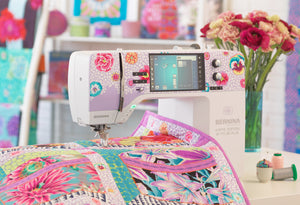

We Love Our Quilting Community
At High Country Quilts we care deeply about community. With our experiences in retail, we know that a store is not only a place to shop but also a place for the community to gather and share. During this busy...


You can stand in a fabric shop with a beautiful print in your hands and still feel stuck. The pattern looks fun, the colors are calling your name, and then it dawns on you: you've got to cut every piece yourself before the sewing even starts. That's where precut fabric squares change the whole feel of the project. They let you move from “someday” to “I can start tonight” without giving up the joy of choosing fabrics that work together.
For a lot of quilters, that's the main appeal. Precuts aren't just about saving time, they're about lowering the friction between an idea and a finished top. They became much more prominent in the early 2000s, when quilting and sewing surged again and manufacturers started offering coordinated bundles for convenience and efficiency, which made the hobby easier to enter for new makers fandafabrics.com.
The first time many beginners open a new quilt pattern, they're thrilled for about five minutes. Then they count the squares, measure the strips, and realize the project includes a lot more cutting than sewing. That's usually the moment when a precut fabric square bundle starts looking less like a shortcut and more like a smart starting point.
The rise of precuts fits how people sew now. Quilters still want beautiful fabric collections, but many of them also want a cleaner entry point, fewer decisions, and less setup before the fun part begins. Coordinated bundles solved that problem, especially for makers who didn't want to buy multiple yard cuts and sort them all out by hand fandafabrics.com.
Precut squares also make pattern reading less intimidating. If a design uses repeated square units, the quilter can think in packs instead of raw yardage, which is easier to visualize and less likely to lead to cutting mistakes. That's a big part of why precuts became a core format in modern quilting retail undergroundcrafter.com.
Practical rule: if the project feels exciting but the cutting list feels exhausting, a precut square bundle may be the better start.
Beginners benefit because the pieces are already sized and coordinated. Busy hobby sewists benefit because the project gets to the sewing table faster. Makers who share a table, or only have a small corner of a room, also benefit because there's less spread-out measuring and fewer tools to manage.
That's why precuts feel so welcoming. They don't replace design thinking, they just remove one of the hardest first steps. Once the fabric is ready, the project feels playable instead of procedural.
Fabric shop vocabulary can sound confusing the first time you hear it. A charm pack, a layer cake, a fat quarter, and a jelly roll all sound similar until you see how they're cut and how they're used. The easiest way to sort them out is to start with squares, then move to the related cuts that often sit beside them on the shelf.
A typical charm pack contains 42 squares of 5-inch fabric, which adds up to about 3/4 yard of fabric total undergroundcrafter.com. A typical layer cake contains 42 squares of 10-inch fabric, or about 3 yards total undergroundcrafter.com. Those counts matter because they give quilters a reliable way to estimate how much fabric a project will use.
Mini charms are the smaller square bundles you'll also see in shops, and they're usually used for tiny blocks, accents, or scrappy details. The practical question isn't just “how big is it,” but “what does this size make easy?” Smaller squares are handy for quick patchwork. Larger squares are better when you want the print to stay visible and the block layout to stay simple.
A fat quarter is not a quarter-yard strip. It's a quarter-yard cut reshaped into a wider rectangle, and a commonly cited finished size is 18 inches by 22 inches designedtoquilt.com. A fat eighth measures 9 inches by 22 inches, and a fat sixteenth is about 9 inches by 11 inches designedtoquilt.com. These shapes matter because many patterns depend on the exact rectangle, not just the yardage equivalent.
A standard jelly roll is a bundle of 40 strips that are 2.5 inches by 44 inches, and it's also known as a rolie polie, strip-pies, or roll ups missouriquiltco.com. That's a strip bundle, not a square bundle, but beginners often compare the two because both are coordinated and ready to use.
| Precut Name | Square Size | Pieces per Pack | Total Yardage, Approx. |
|---|---|---|---|
| Mini Charm Pack | 2.5 inches | 42 | Not provided in verified data |
| Charm Pack | 5 inches | 42 | 3/4 yard |
| Layer Cake | 10 inches | 42 | 3 yards |
If you want to browse square bundles while you're learning the names, look through Charm Packs at High Country Quilts. Seeing the prints arranged in collection order makes the sizes much easier to compare.
Precuts are a strategic choice, not a universal answer. Some projects benefit from them immediately, while others still need yardage for borders, backing, or a very specific color layout. The trick is knowing what you gain, and what you give up, before you buy.

The biggest advantage is coordination. When a designer collection is bundled into one pack, the fabrics already work together, which takes guesswork out of the early planning stage. That matters a lot for beginners who don't yet trust their eye for color balance.
Precuts also reduce the amount of precision cutting you need to do at the start. For makers with low vision, arthritis, or limited workspace, that can materially reduce barriers to quilting by eliminating the physically demanding task of cutting large amounts of yardage youtube.com. That accessibility angle is easy to overlook, but it's one of the strongest reasons to reach for precuts.
Practical insight: if the hardest part of quilting for you is the setup, not the stitching, precuts can make the hobby feel possible again.
Precuts do limit flexibility. You're working inside a fixed size, so if a pattern needs an unusual cut or a very specific border width, yardage may be a better fit. That doesn't make precuts worse, it just means they're better for some constructions than others.
There's also the issue of edge finish. Many precut squares come with pinked edges, which can shift slightly while you're handling them. That's why accurate seam allowance and careful pressing matter so much later on.
If you're choosing between a precut square bundle and yardage, ask one question first. Do you want the easiest path into sewing, or do you want complete control over every cut? The answer usually points you in the right direction. For quilters who want a larger curated bundle, look at Layer Cake options at High Country Quilts.
The best beginner project is one you'll finish. Precuts help with that because they shrink the gap between buying fabric and making something recognizable. You don't need an advanced pattern to get a satisfying result, you just need a clear plan and a pack that fits the design.

A 5-inch charm pack is a natural first choice for simple patchwork. Because the squares are already cut, you can focus on layout instead of measurement. Put the prints on a design wall or table, shuffle them until the color balance feels right, and sew them into rows.
The construction stays friendly because each square starts the same size. That means you spend your energy on arrangement, not on tiny corrections. For a beginner, that's a huge confidence boost, especially when the finished quilt top starts taking shape fast.
You can keep this kind of quilt very plain or add borders from yardage later. That mix of precut squares with cut yardage is one of the most useful modern quilting habits, because it gives you structure without locking you into a rigid look.
A 10-inch layer cake opens the door to designs that look complex but aren't difficult to sew. A disappearing nine-patch starts with a simple grid, then gets sliced and rearranged into a more dynamic layout. The visual effect feels more advanced than the construction really is.
That's why layer cakes are such a good teaching tool. They let new quilters make something polished without requiring advanced cutting. The squares are large enough to showcase prints, but still manageable on a beginner machine.
Later in the process, the layout choices do the heavy lifting. That's what makes this project satisfying. The technique stays simple, but the finished quilt doesn't look simple.
Here's a clear demo of how precut squares come together in real sewing:
If you want a project package that already aligns fabric and pattern, browse quilt kits with precuts at High Country Quilts. That can save a lot of decision-making on your first try.
Precuts sew well when you treat them like precision pieces, not casual scraps. The fabric is already cut, but it still needs careful handling so the finished blocks stay square and the seams behave. A few habits make a visible difference from the first row to the final quilt top.

A scant 1/4-inch seam allowance is worth getting comfortable with when working on square bundles, especially if the edges are pinked. That little bit of discipline helps preserve the size you started with, which matters a lot when blocks need to line up.
Starching can help some quilters stabilize precuts before sewing, especially if the fabric feels soft or slightly loose. It's not mandatory, but it can make the squares easier to control. If you're unsure, test on a few pieces first and see how the fabric behaves under your machine.
Practical rule: sew a few test seams before you commit to the full stack. It's easier to correct your seam allowance early than to fix an entire row later.
Pressing is where good blocks start looking finished. Some quilters press seams to one side, often toward the darker fabric, while others press seams open when the block is small or the intersections need to lie flatter. The best choice depends on the pattern and how much bulk you want at the seam lines.
Mixing precuts with yardage is also part of smart planning. Borders, sashing, and backing often come from yardage, and that's where a ruler and rotary cutter matter again. If you're cutting your own add-on pieces, match the dimensions carefully so the precut squares and the yardage pieces meet cleanly.
A solid ruler, a sharp rotary cutter, and a stable cutting surface will do more for your accuracy than fancy extras ever will. If you're building your toolkit, a shop that carries rulers, rotary cutters, and pressing tools can save you a lot of guesswork. One option is High Country Quilts in Colorado Springs, where you can also look at the notions that support this kind of piecing.
A good precut bundle should feel like quality fabric, not just convenient fabric. Hold it in your hands if you can. The cotton should feel consistent, the print should look clear, and the collection should feel cohesive from one square to the next. Reputable brands are often easier to sew from because the bundle has been curated with that consistency in mind.

In person shopping has a real advantage here. Color can look different on a screen, and fabric hand is hard to judge from a photo. If you're comparing collections, touching the bundles side by side tells you more than a product thumbnail ever will.
For a wider fabric background, including how cotton and linen can differ in feel and use, this ultimate UK cotton linen resource gives helpful context. It's a useful read if you're trying to understand why some textiles behave differently in sewing.
Storage matters once your stash starts growing. Clear plastic bins let you see what you own without digging through piles, and drawer organizers keep smaller bundles flat and clean. The goal is simple, keep the fabric visible enough that you'll use it.
Labeling by size also saves time. Put charm packs with charm packs, layer cakes with layer cakes, and keep related prints together so you can pull a project faster later. That way, your stash feels like a resource instead of a jumble.
If you like shopping new fabric collections online, take a look at the latest arrivals at High Country Quilts. A good precut collection is easier to build when you can see what's fresh and what coordinates across lines.
Should I wash precut fabric squares before sewing?
Usually, no. Most quilters skip washing precuts so the squares keep their size and the edges stay easier to manage. Washing first can make the pieces fray or distort before you even start piecing.
How do I know how many packs I need for a larger quilt?
Start with the finished block size in the pattern, then work backward from the number of squares or strips the design uses. If the pattern is built from repeated square units, precut packs make that math easier because the pack count is already standardized, especially with 42-piece charm packs and layer cakes undergroundcrafter.com.
Is a designer precut worth it compared with a generic one?
A designer pack usually gives you a coordinated color story and a more polished mix of prints. A generic bundle may still work, but it can be harder to trust the way the pieces interact visually. If you're making your first quilt, that coordination can make the whole process feel smoother.
If you're ready to start your first project, visit High Country Quilts in Colorado Springs or explore the online class schedule. Bring your questions, your pattern, or even just a favorite print, and pick the precut bundle that makes the next quilt feel possible.
At High Country Quilts we care deeply about community. With our experiences in retail, we know that a store is not only a place to shop but also a place for the community to gather and share. During this busy...

Hi! We’re Adam and Renee Wheaton, the new owners of High Country Quilts! For more than 40 years, we’ve owned and operated vacuum and sewing businesses. Following in Renee’s father’s footsteps after he retired from All Discount Vacuum and Sewing in Colorado...


Leave a comment