
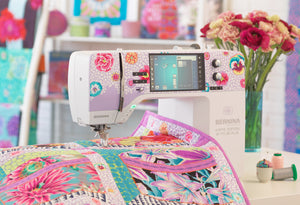

We Love Our Quilting Community
At High Country Quilts we care deeply about community. With our experiences in retail, we know that a store is not only a place to shop but also a place for the community to gather and share. During this busy...


Most longarm quilting pricing is based on square inches, and a basic edge-to-edge design usually falls between $0.01 and $0.03 per square inch, with $0.02 per square inch as the most common standard. That means a 60x80-inch quilt costs exactly $96.00 at the standard rate before batting, prep, thread, binding, or other add-ons.
You've finished the quilt top. The piecing is done, the fabric looks beautiful, and now you're at the stage where many quilters pause and think, “What is this going to cost to finish?” That hesitation is normal. Longarm pricing can feel confusing when you first hear terms like per-square-inch rates, prep charges, batting costs, and custom quilting.
The good news is that longarm quilting pricing isn't mysterious once you know what drives the bill. A quilt's size matters. The quilting style matters. Prep work matters. And the more clearly you understand those pieces, the easier it becomes to make smart choices before you hand over your quilt.
I like to think of it the same way people think about any specialized service. If you've ever looked at help for event organizers pricing tickets, you've seen the same principle at work. Clear pricing builds trust when customers understand what they're paying for and why. Quilting is no different. When the process is transparent, you can budget calmly and avoid that awful feeling of surprise at pickup.
A finished quilt top often creates a funny mix of pride and uncertainty. You're excited because the hard piecing work is behind you. You're uncertain because the last step, professional quilting, has its own language and pricing structure.
That's where many quilters get stuck. They hear one shop quote a low edge-to-edge rate, another mention prep work, and a third start talking about custom ruler work. It can sound like everyone is pricing the same thing differently, when in reality they may be describing completely different levels of labor.
At the heart of longarm quilting pricing is one simple idea. You're paying for the machine time, the quilter's skill, the setup work, and the materials used to turn a flat quilt top into a finished quilt.
For most everyday quilts, the starting point is per-square-inch pricing. From there, the final bill changes based on choices like these:
A clear quote isn't just about the price. It's about knowing what's included before the quilt goes on the frame.
Some quilts move through the process very smoothly. Others need attention before quilting can even begin. That difference is why two quilts of similar size can end up with different totals.
If you want one practical framework for understanding longarm quilting pricing, use this pillar: size, style, prep, and finishing.
That pillar keeps the whole topic manageable. Instead of asking only, “What do you charge?” you can ask better questions. What's the base rate? Is this edge-to-edge or custom? Does my backing need work? Am I bringing batting, or buying it? Do I want binding done for me?
Once you start thinking this way, pricing gets much less intimidating and much more predictable.
A customer brings in a lap quilt, measures it once, and hears one number. Then she brings in a queen quilt and wonders why the price climbs so much. The answer usually starts with one simple system: per square inch, often shortened to PSI.
PSI gives you a way to estimate the base quilting cost yourself before you ever ask for a quote. That matters, because pricing feels much less mysterious when you can check the math on your own kitchen table.
The formula is:
Width × Length × Rate = Base quilting cost
The formula is that simple. Measure the quilt top in inches, multiply to get the total area, then multiply by the quilting rate.
A discussion of average longarm service rates shows that basic edge-to-edge quilting often falls around $0.01 to $0.03 per square inch, with $0.02 per square inch commonly used as a reference point for standard computerized designs. That same discussion uses a 60x80-inch quilt as an example, which comes to $96.00 at a $0.02 rate in this quilting pricing discussion.

Per-square-inch pricing works a lot like buying fabric by the yard. The bigger the project, the more material or machine time it uses. A larger quilt takes more passes across the frame, more stitching, more thread, and more handling from start to finish.
A longarm pricing guide explains that common edge-to-edge rates are built around real shop labor, including loading the quilt, planning the design, and quilting row by row across the top in this longarm pricing breakdown.
That "why" is useful to know. It helps you see that the base rate is not random. It reflects the size of the job and the time needed to quilt it well.
Let's use a quilt top that measures 60 by 80 inches.
| Measurement step | Calculation | Result |
|---|---|---|
| Width × Length | 60 × 80 | 4,800 square inches |
| Base rate | 4,800 × $0.02 | $96.00 |
So the base quilting price would be $96.00 at that rate.
Base price is the starting point, not always the final total. If your quilt needs backing pieced, loose seams repaired, extra pressing, batting added, or special thread changes, those items can increase the quote. This is why good prep gives you more control over cost. A square, well-pressed quilt with properly sized backing usually moves onto the frame with fewer surprises.
Helpful question to ask: Is this quote for base quilting only, or does it include prep, batting, thread, and finishing services?
That one question clears up a lot of confusion.
Some longarm quilters also use hourly or project-based pricing, especially for quilts that need more individualized work. For a standard edge-to-edge quilt, PSI is still one of the easiest systems for customers to understand because you can measure, multiply, and get a realistic starting estimate on your own.
You bring in a quilt top you love, and the first quote sounds reasonable. Then you ask about custom quilting, and the price changes fast. That can feel confusing until you see what you are paying for.
The simplest way to understand the difference is to compare one repeated design with many small design decisions. One asks the longarm to do the same kind of work across the whole quilt. The other treats the quilt more like a map, with different areas needing different stitching plans.
Edge-to-edge quilting uses one continuous design across the quilt from side to side and row to row. Pantographs and computerized all-over patterns fit here.
Because the design repeats, setup and stitching are usually more efficient. That keeps the price lower and makes edge-to-edge a strong choice for everyday quilts, gifts, and quilts made to be used and washed often.
A good comparison is painting a room one color versus adding murals in each corner. Both can look beautiful. One takes less planning and less hands-on work.
Custom quilting assigns different designs to different parts of the quilt. A border might get one motif, the blocks another, and the background a separate fill.
That extra detail adds time in several places. The quilter has to plan the design path, stop and start more often, adjust spacing, and sometimes change tools or thread. Dense fills, ruler work, feathers, echo quilting, and motifs that frame appliqué all raise labor because they demand close attention instead of one repeated pass.
Custom pricing is often much higher for that reason. As noted earlier, shops may price custom work by square inch, by the hour, or by the complexity of the design rather than using a simple all-over rate.

| Feature | Edge-to-edge quilting | Custom quilting |
|---|---|---|
| Design approach | One all-over pattern | Different motifs in different areas |
| Labor level | Lower | Higher |
| Best for | Everyday quilts, gifts, utility quilts | Heirloom quilts, show quilts, statement pieces |
| Typical price direction | Lower base cost | Much higher base cost |
| Hands-on time | More efficient process | More active decision-making and stitching |
Real numbers make this easier to sort out.
Take the same 60 x 80 inch quilt top from the last section. That quilt is 4,800 square inches.
If an edge-to-edge rate is $0.02 per square inch, the quilting charge is:
4,800 x $0.02 = $96
If a custom rate starts at $0.08 per square inch, the quilting charge becomes:
4,800 x $0.08 = $384
That is a difference of $288 before add-ons like batting, thread changes, or prep work. The quilt did not get bigger. The labor changed.
The best choice depends on what you want the quilting to do.
If your fabric is busy, your piecing already carries a lot of movement, or you want a practical finish at a lower cost, edge-to-edge is often the smart option. It gives texture, durability, and a polished look without asking you to pay for detail that may not show clearly.
If your quilt has open spaces, large borders, appliqué, or a few pieced areas you want to highlight, custom quilting may be worth it. Even then, you do not have to choose full custom for the entire quilt. Many quilters save money by asking for a simpler custom approach, such as custom borders with an all-over design in the center, or light custom work only in the blocks that matter most.
That is where preparation and clear goals help you control cost. When you know why custom costs more, you can choose where detail matters and where it does not. You are not guessing. You are deciding.
A quilt can price one way on paper and another way at intake for a simple reason. The quilting charge covers the stitching design. Add-on fees cover the extra labor and materials needed to get the quilt ready, load it correctly, and finish it well.
That distinction helps you stay in control. If you know which costs come from your choices and which come from quilt prep, you can prevent many of the surprises before the quilt ever reaches the frame.
A longarm rate guide shows the kinds of charges many shops list beyond the quilting itself, including quilt preparation at $25.00/hour, simple backing assembly at a flat $10.00 fee, 80/20 batting at $8.00 to $10.00 per yard, thread at $9.00 per color, and binding services from $0.32 per linear inch in this longarm rate guide.

Here is the plain-English version of the common add-ons.
A good way to view these fees is like taking a car in for tires. The tires are the main purchase. Alignment, balancing, and valve stems are separate because they are separate parts of the job. Quilting works the same way.
Piecing and longarming ask different things from a quilt top.
From the piecer's side, the top may feel finished because the blocks are sewn together. From the longarmer's side, the quilt still has to pass a practical test. Will it load squarely? Will the backing stay smooth? Will loose threads show through pale fabric? Will full borders ripple once the machine starts stitching?
Those are not cosmetic details. They affect how the quilt behaves on the frame.
For example, a customer might bring a throw quilt that seems ready to go, but the backing is smaller than needed and the top has several unpressed seams. The quilting price itself has not changed. The extra time to piece backing, press trouble spots, and get everything ready adds labor that sits outside the base rate.
That is why it helps to sort charges into two buckets:
| Cost type | What it covers |
|---|---|
| Base quilting | The actual quilting stitched into the quilt |
| Add-on services | Prep, materials, thread choices, backing help, and finishing |
If someone else has to prep the quilt for the frame, that time becomes part of the total job cost.
The encouraging part is that many add-on fees are preventable. A square top, adequate backing, clipped threads, pressed seams, and a clear plan for batting and binding can keep your final invoice closer to your original estimate.
A customer brings in a queen quilt top and says, “It's about bed size, and I want something simple.” That sounds clear, but it still leaves a lot unanswered. A quote gets accurate when the details are specific enough to show how much quilt is being stitched, what style you want, and whether the quilt is ready for the frame.

A good quote works like a grocery total. If you only say, “I need dinner for six,” no one can give you an exact number. If you say chicken, rice, salad, and dessert, the price gets much clearer. Quilting quotes work the same way.
Start with the actual measurements of your quilt top, width by length in inches. “Throw size” or “full size” is too broad because two quilts in the same category can differ by several inches, and those inches affect the total.
Then gather the choices that shape the job:
Those details do two useful things. They tighten up the estimate, and they show you where you still have control over cost.
Photos and measurements are a good start. The quilt itself often tells the fuller story.
An in-person review can reveal things a tape measure cannot, such as wavy borders, stretched backing, open seams, or heavy thread buildup on the back of a light quilt. Those issues do not always mean a problem. They do mean the quote may need to include extra prep time or a recommendation that saves trouble later.
That is the part many quilters find helpful. Instead of getting a low estimate first and a surprise charge later, you get a clearer picture up front.
Say your quilt top measures 60" x 72". That is 4,320 square inches.
If you choose an edge-to-edge design at $0.03 per square inch, the quilting portion would be:
4,320 x $0.03 = $129.60
Now add your other choices. If you need batting, that cost gets added. If the backing still needs to be pieced, that labor gets added. If everything arrives pressed, trimmed, and ready to load, your quote usually stays closer to that base figure.
That is why accurate quotes depend on both size and readiness.
Use this before you request pricing:
If you'd like a closer look at the process, this video gives helpful visual context.
Ready for a quote? We make it easy. Book a consultation at our Colorado Springs shop.
If you want to keep the final bill under control, the best place to start is not the pattern book. It's your prep table.
The more ready your quilt is when it reaches the longarm, the fewer billable tasks remain for someone else to do. That gives you real control over your total.
Press the quilt top. Press the backing. Trim loose threads, especially behind light fabrics. Check seams that look weak or popped open.
Those steps matter because prep labor is one of the easiest charges to avoid. If the quilt arrives flat, clean, and stable, there's less need for shop time before quilting can start.
The cheapest quilting decision is often good preparation.
If your budget is tight, choose a lighter edge-to-edge pattern instead of dense quilting. An airy all-over design can still look beautiful while keeping the project in a more affordable range.
This doesn't mean settling. It means matching the quilting style to the purpose of the quilt. A couch quilt, baby quilt, or gift quilt often doesn't need dense custom stitching to look finished and lovely.
A few tasks are very manageable for many home quilters:
A short conversation can save a lot of guesswork. Ask what prep standards the quilter expects. Ask whether backing needs to be pieced a certain way. Ask whether there are minimums or separate finishing charges.
When customers understand the “why” behind longarm quilting pricing, they usually spend more comfortably because they're making informed choices instead of reacting to surprises.
Yes, it can. A pricing discussion about longarming notes that high-density custom quilting can consume 3 to 5 bobbins for a single lap quilt, which can push the final bill $30 to $60 beyond the base per-square-inch rate in this discussion of bobbin use and longarm cost.
That's one reason custom work costs more than the base square-inch rate alone might suggest. Dense stitching uses more thread, more bobbins, and more handling time.
Usually because the quilt needs prep work that wasn't obvious at first. Border fullness, open seams, heavy thread buildup, and backing problems often don't show up in a simple size estimate.
For many everyday quilts, yes. It gives a cohesive finish, keeps quilting costs more manageable, and works well for gifts, bed quilts, and utility quilts.
Absolutely. Those are common add-ons, and knowing whether they're separate helps you compare quotes fairly.
Say so upfront. A good quilter can usually point you toward choices that protect the look of the quilt while keeping the total more manageable, such as a less dense edge-to-edge design or fewer extra services.
If you're ready to turn your quilt top into a finished quilt with clear, friendly guidance, High Country Quilts is a great place to start. Reach out for a personalized longarm quilting quote, ask your questions, and get the kind of straightforward help that makes the whole process feel much simpler.
At High Country Quilts we care deeply about community. With our experiences in retail, we know that a store is not only a place to shop but also a place for the community to gather and share. During this busy...

Hi! We’re Adam and Renee Wheaton, the new owners of High Country Quilts! For more than 40 years, we’ve owned and operated vacuum and sewing businesses. Following in Renee’s father’s footsteps after he retired from All Discount Vacuum and Sewing in Colorado...


Leave a comment