

We Love Our Quilting Community
At High Country Quilts we care deeply about community. With our experiences in retail, we know that a store is not only a place to shop but also a place for the community to gather and share. During this busy...


Ever walked into a quilt shop and felt a little overwhelmed by the sheer volume of fabric bolts? It can be tough knowing where to start, especially when you want everything to match perfectly. That's where a layer cake comes in.
Think of it as a quilter's secret weapon: a perfectly coordinated bundle of 42 pre-cut 10-inch by 10-inch fabric squares, all pulled from a single designer's collection. This smart little package saves you hours of cutting and lets you get right to the fun part—sewing.
The name "layer cake" is a perfect analogy. Just like a beautiful stacked cake where each layer complements the next, a fabric layer cake gives you 42 "slices" of a designer's entire collection. Every single print, color, and pattern is designed to work together beautifully.
This simple idea has become a go-to for quilters of all skill levels. It takes the guesswork out of fabric selection, which can often be the most daunting part of a project. Instead of spending hours matching bolts, you can open a single package and dive right in.
So, what makes a layer cake so special? It boils down to a few key features that quilters have come to love. Once you understand what's inside, you'll see why they're such an efficient starting point for so many projects.
A Layer Cake isn't just fabric; it's a creative shortcut. It provides the building blocks for a beautiful quilt while freeing you from the most labor-intensive step: preparation.
When brands like Moda Fabrics first introduced these 10" x 10" squares, it was a total game-changer for the quilting world. Suddenly, quilters had an affordable and efficient way to work with a whole collection of coordinated fabrics. It's no wonder they became so popular! A quick search will show you hundreds of unique layer cake options catering to every style, from modern and bold to classic and traditional.
Whether you're a beginner looking for a foolproof first project or a seasoned quilter who wants to get a new quilt started fast, a layer cake offers the perfect blend of convenience and creative freedom.
So, what’s the big deal with these simple stacks of 10-inch squares? Why are they a fixture in just about every quilter's sewing room? It turns out, the appeal of a layer cake quilt fabric bundle goes way beyond just being convenient. Quilters of all skill levels, from total beginners to seasoned pros, reach for them for four big reasons that make the whole process smoother and a lot more fun.
These pre-cuts solve some of the most common headaches in quilting, from the daunting prep work at the beginning to making sure the final design looks just right. Let's dive into exactly why they've become such a beloved tool in the quilting world.
The most obvious win here is the time you get back. A huge chunk of any quilting project is spent washing, ironing, and meticulously cutting fabric yardage. A layer cake lets you skip almost all of that.
The squares show up at your door perfectly cut, pressed flat, and ready to sew. You can literally open the package and get straight to the fun part in minutes, not hours. That instant gratification is a powerful motivator, letting you see your beautiful quilt top come together that much faster.
Ever stand in a fabric store, overwhelmed by choices, and worry that the prints you pick won't actually look good together? Layer cakes take all that guesswork out of the equation.
Every single square is pulled from one designer's collection, which was created to be perfectly coordinated. This means every color, every print, and every scale is guaranteed to harmonize beautifully. You get that polished, professionally designed look without any of the stress of playing fabric matchmaker yourself.
Think of a layer cake as your personal fabric curator. It hands you a cohesive, designer-approved palette, making sure your finished quilt looks intentional and thoughtfully blended.
Let's be honest—buying enough yardage to get a wide variety of different prints can get expensive, fast. A layer cake is a fantastic way to sample an entire fabric line without having to buy a big cut of every single piece.
You get 42 different (or duplicated) squares for a fraction of what it would cost to buy them all separately. This makes high-end designer fabrics much more accessible and is a great way to build up a diverse stash for other projects. This kind of accessibility has helped fuel a craft that's bigger than ever. In fact, the U.S. quilting industry is projected to become a $4.5 billion market by 2025, driven by millions of quilters who love smart products like these. If you're curious about industry trends, you can explore the quilting fabric market growth on Market Reports World.
The 10-inch square is an incredibly versatile and efficient size. It's big enough to be the star of a block but can also be easily cut down into smaller, common quilting shapes—like 5-inch charm squares, 2.5-inch strips, or half-square triangles—with very little fabric left over.
This smart sizing means you use more of what you pay for, making your hobby a bit more sustainable and easier on the wallet. Less waste in the scrap bin means more beautiful fabric in your quilts.
Walking into a fabric shop or browsing online is a bit like being a kid in a candy store. With so many gorgeous layer cakes calling your name, how do you possibly choose the one that will become your next masterpiece? The secret is looking past the pretty packaging to see a bundle's true creative potential.
Choosing the right layer cake quilt fabric is about more than just falling for the top square. It takes a little bit of strategy to make sure your finished quilt has the depth, contrast, and visual punch you're hoping for. If you know what to look for, you can pick a bundle that sets you up for success before you even make the first cut.
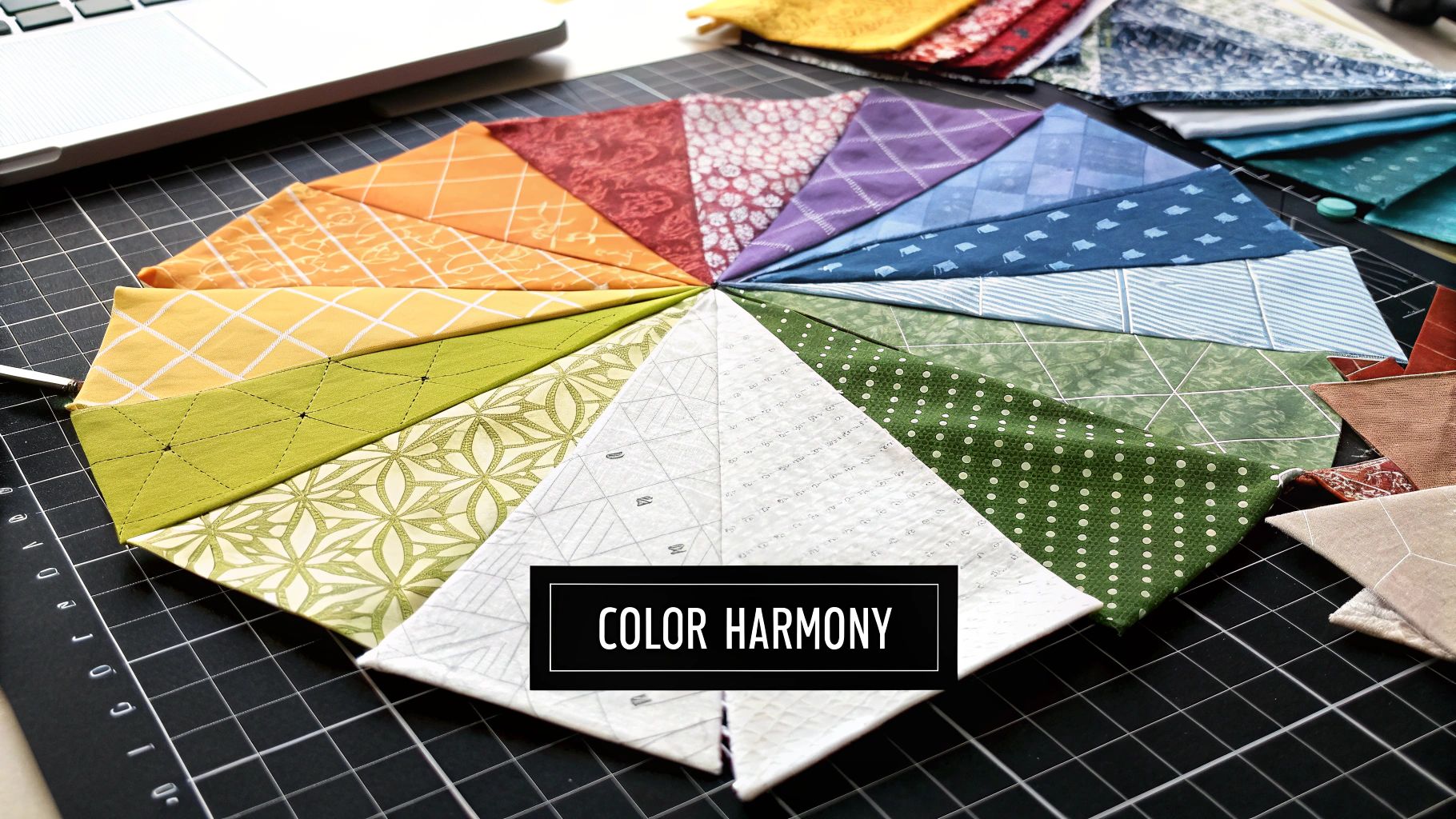
A truly stunning quilt isn't just about pretty colors; it's about value—how light or dark a fabric is. A well-balanced layer cake will have a great mix of light, medium, and dark prints. It's this variety that makes your quilt pattern pop and keeps the whole design from looking flat or muddy.
As you look at a bundle, try to mentally sort the squares into those three value piles. Are there enough light fabrics to give the eye a place to rest? Do you have enough dark fabrics to create strong lines and definition? This quick mental check is the best way to ensure your quilt blocks will look as dynamic as you imagine.
A classic mistake is grabbing a layer cake where all the fabrics are a similar medium value. They look beautiful all stacked up, but once sewn together, the pattern can completely disappear into a sea of sameness. A strong mix of values is the secret ingredient.
Just as crucial as color and value is the scale of the prints. A collection that includes a variety of print sizes adds a wonderful texture and sophistication to your finished quilt. Think of it like putting together an outfit; you need different pieces to create a cohesive look.
You'll want to find a bundle that includes:
Finally, it always helps to have a project in mind. Before you even buy your fabric, it's a good idea to know what you're making. A great first step is choosing the right quilt size for your project, which will tell you if one layer cake is enough or if you'll need more.
And don't forget about quality! Stick with well-known brands that use high-quality, 100% quilting cotton. This means the fabric will have a higher thread count, be less likely to fade, and will stand up to washing and wear, making sure your hard work looks beautiful for years to come.
So, you've got a beautiful bundle of layer cake squares, all perfectly coordinated and ready to go. What now? This is where the real fun begins. A single layer cake pack is bursting with potential, and the right pattern can turn those 10-inch squares into a stunning work of art.
Let's walk through a few popular patterns that are practically made for layer cakes. Whether you're a seasoned quilter or just starting out, there's a design here that will make your chosen fabric collection shine.
This handy visual gives you a quick idea of how many layer cake packs you might need for different quilt sizes. It's a great starting point for project planning!
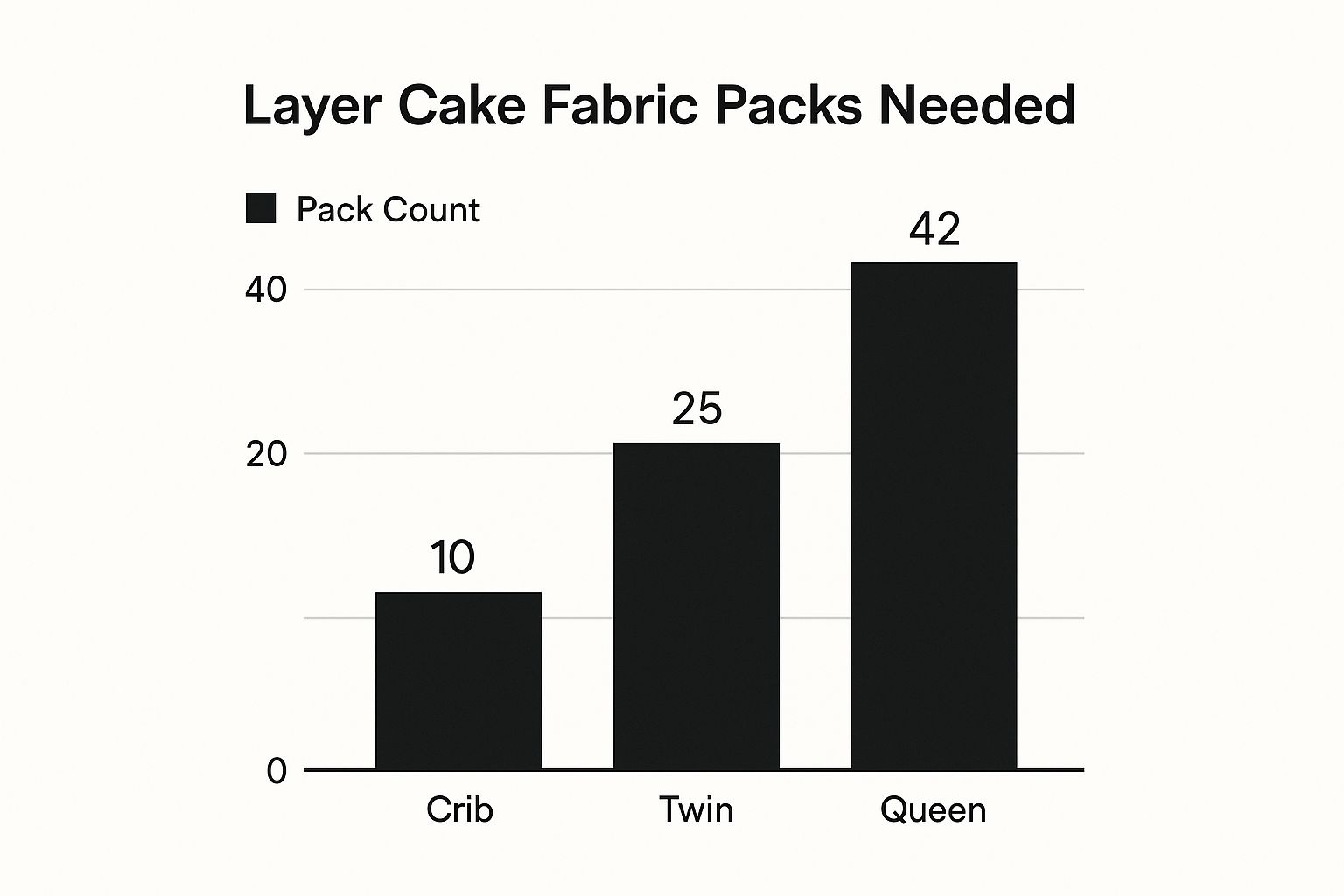
As you can see, the fabric math adds up quickly. A queen-size quilt, for instance, could need over 40 layer cake packs. This is why picking an efficient pattern that makes the most of every square inch is a smart move.
If you're just dipping your toes into quilting, the classic checkerboard (or simple patchwork) is the perfect first project. It's as straightforward as it sounds: you just sew your squares together in neat rows, alternating fabrics as you go to create a timeless grid.
There's no fussy cutting or complicated angles to worry about. Just pure, simple sewing. The magic of this pattern is that it lets the gorgeous prints in the layer cake quilt fabric do all the talking. It's a wonderfully fast and gratifying project that builds your confidence and leaves you with a beautiful quilt you'll be proud of.
Ready for a bit of quilting magic? The Disappearing Nine Patch looks incredibly intricate, but it’s all smoke and mirrors—the good kind! This pattern is a fantastic way to impress your friends and make them think you spent weeks piecing tiny, complicated blocks.
You start by making a basic nine-patch block (just three rows of three squares). Then, you make two simple cuts, slicing the block into four equal smaller blocks. The final step is to rotate and rearrange these new pieces to create a design that looks far more complex than it actually is.
A Quilter's Secret Weapon: The Disappearing Nine Patch is a game-changer. It takes nine simple squares and, with just two cuts, turns them into a dynamic, complex-looking block. It’s the ultimate way to get a big impact with minimal effort.
This pattern is the perfect next step once you’ve gotten comfortable with basic patchwork. It introduces you to the idea of cutting up and reassembling your blocks, a core quilting skill that unlocks a whole new universe of design possibilities.
If you want to create stunning geometric designs and really flex your quilting muscles, it’s time to meet the Half-Square Triangle, or HST. As one of the most fundamental building blocks in quilting, the HST is a true workhorse, and a layer cake is the perfect canvas for making them.
From just two 10-inch squares, you can easily make two HST blocks. The most common method involves drawing a diagonal line on the back of one square, placing it on top of another, and sewing a scant 1/4" seam on both sides of the line. One quick cut down the middle, and you've got two perfect HSTs.
Once you have a stack of these versatile little triangles, the creative possibilities are practically endless.
To help you choose the right project, here’s a quick look at how some popular layer cake-friendly patterns stack up against each other.
This table compares a few go-to patterns, giving you a feel for the skill level required, the main techniques involved, and the kind of quilt you can expect to make.
| Pattern Name | Skill Level | Primary Technique | Finished Quilt Size (Approx.) |
|---|---|---|---|
| Simple Patchwork | Beginner | Sewing squares in rows | 60" x 76" (with one cake) |
| Disappearing Nine Patch | Beginner+ | Cutting & reassembling | 54" x 72" (with one cake) |
| HST Chevron | Confident | Making Half-Square Triangles | 51" x 68" (with one cake) |
| Pinwheel Parade | Confident | Making & joining HSTs | 57" x 66" (with one cake) |
Each of these patterns offers a unique journey and a beautiful result. Whether you stick with a simple grid or dive into the world of triangles, your layer cake is the perfect starting point for your next quilting adventure.
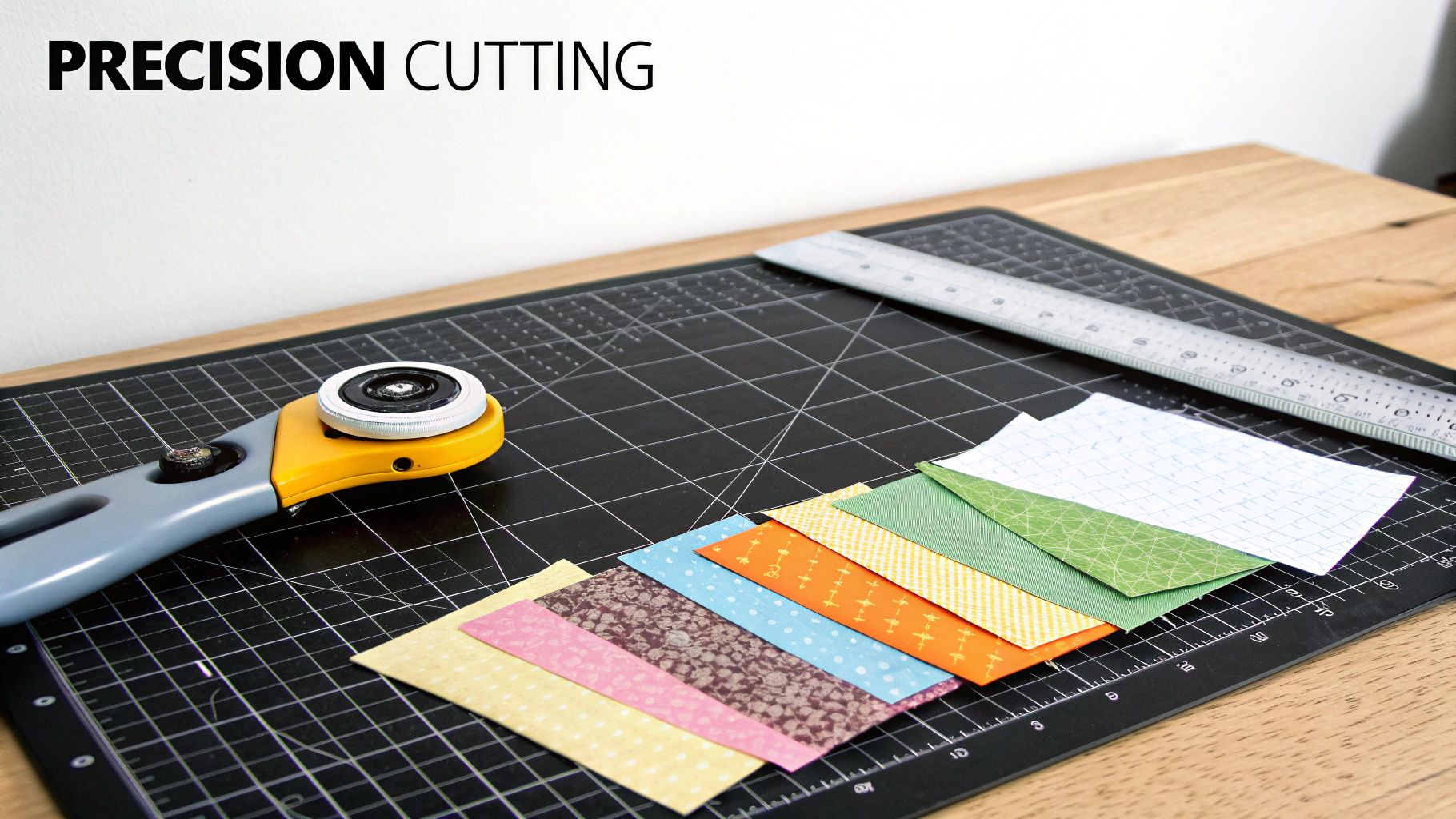
Working with a layer cake quilt fabric bundle is one of quilting’s great joys, but a few simple tricks can take your finished project from looking homemade to looking professionally crafted. These tips are all about managing the unique qualities of pre-cuts to make sure every seam is spot-on and your quilt top lies beautifully flat.
The first question that always comes up is whether you should pre-wash your layer cake squares. The short answer? Don't do it. Pre-cuts are notorious for fraying and can shrink unevenly in the wash, which can easily ruin their perfect 10x10 inch shape before you even start.
Instead of washing, make starch your best friend. A light press with spray starch or a fabric stiffener before you begin sewing is a complete game-changer. This small step gives the cotton a bit more body, stops the bias edges from stretching out of shape, and helps you piece everything together with far greater accuracy.
Once your fabric is prepped and ready, it's all about precision at the sewing machine. Most quilt patterns call for a standard 1/4" seam allowance. But when you're working with pre-cuts, a scant 1/4" seam is your secret weapon. This just means sewing a thread’s width inside the standard 1/4" line on your machine.
So why does that tiny difference matter so much? The fabric you lose in the fold of the seam, plus the thickness of the thread itself, can add up and throw your block dimensions off. A scant seam allowance perfectly compensates for this, making sure your finished blocks hit the exact size the pattern calls for.
You'll notice the edges of pre-cuts are pinked (cut in a zig-zag). This is done to keep fraying to a minimum. When you're sewing your scant 1/4" seam, use the peaks of the zig-zag as your guide, not the valleys. This is the key to keeping your seam consistent and accurate from piece to piece.
Let's be honest, quilting is more fun when you can get into a good rhythm. One of the best ways to speed things up with layer cakes is a technique called chain piecing. This simply means you feed your fabric pairs through the sewing machine one after the other, without stopping to cut the threads in between.
It’s a simple trick with big benefits:
After you've stitched all your pairs into a long chain, you just go back and snip the threads connecting them. It’s like a little assembly line for your quilt blocks. When you combine pre-starching with precise seams and efficient chain piecing, you're set up for success and a gorgeous quilt top.
Once you start working with layer cakes, a few questions always seem to pop up. Getting those answered upfront can save you a lot of guesswork and help you plan your projects with more confidence. Let's walk through some of the most common things quilters ask about layer cake quilt fabric.
Think of this as a quick chat with a quilting friend. We'll cover everything from how many packs you'll need to the age-old debate about pressing seams.
This is probably the number one question, and the answer always comes down to two things: your pattern and your desired quilt size. It's some simple math, but getting it right from the start is key.
As a general rule of thumb, one layer cake is often just right for a sweet little baby quilt or a cozy lap quilt, usually something in the ballpark of 40" x 50". If you're trying to figure out standard bedding dimensions, a handy comforter size guide can be a lifesaver for planning.
For bigger projects, you’ll need to scale up:
Pro Tip: Your pattern is your best friend! Always double-check the fabric requirements listed by the designer. They’ve already done the math for you, so you can shop without worrying about running short.
You absolutely can, and you should! Mixing and matching layer cakes is one of the best ways to get that perfectly curated "scrappy" look that's all your own. It's where your personal style really gets to shine.
The trick to making it work is to find a common element that ties the different collections together. Maybe it's a shared color palette, a similar aesthetic like modern or vintage, or even just fabrics from the same designer. Before you start sewing, lay a few squares from each bundle out on a table to "audition" them. This little step lets you see how they all play together and helps you make sure you love the combination.
This is a mix-up that happens all the time, especially when you're new to pre-cuts. The good news is, the answer is super simple: it’s all about the size.
Layer cakes are incredibly versatile because of their generous size. You can use the 10-inch squares whole for big, bold blocks, or you can easily slice them into four 5-inch charm squares, a bunch of rectangles, or a whole slew of triangles. They give you a lot of options, which is why quilters love them.
Ah, the great quilting debate! Honestly, there’s no single right answer here. It often comes down to personal preference or a specific instruction in your pattern.
Traditionally, most quilters press their seams to one side, usually toward the darker fabric. This helps the seams "nest" or lock into each other when you join rows, making it much easier to get those perfect, crisp points.
On the other hand, pressing seams open helps the quilt block lie incredibly flat, which can be a huge bonus when you get to the quilting stage because it reduces bulk. For most projects using layer cake quilt fabric, pressing to the side is pretty standard, but the most important thing is to just be consistent with whichever method you choose.
Ready to find the perfect layer cake for your next project? At High Country Quilts, we offer a curated selection of beautiful pre-cuts from top designers to inspire your creativity. Explore our collections and start quilting today at https://hcquilts.com.
At High Country Quilts we care deeply about community. With our experiences in retail, we know that a store is not only a place to shop but also a place for the community to gather and share. During this busy...

Hi! We’re Adam and Renee Wheaton, the new owners of High Country Quilts! For more than 40 years, we’ve owned and operated vacuum and sewing businesses. Following in Renee’s father’s footsteps after he retired from All Discount Vacuum and Sewing in Colorado...


Leave a comment