


Free Fabric All Year: Our 2027 Fabric Punch Card
November 2–25 only: buy a $200 gift card in either store and get a free yard of fabric every month of 2027.

Last Updated: November 19, 2026
Quick Summary
Yes, cotton batting is a strong choice for machine quilting because it drapes softly, shows stitches crisply, and breathes well. It does shrink and can shift under a walking foot, so baste carefully and quilt with the right spacing.
Cotton batting is one of the most popular choices for machine quilting, and for good reason. It drapes softly, shows stitches clearly, and breathes well. But it also shrinks, can shift under a walking foot, and behaves differently from polyester. Here is how cotton batting performs under the needle and when it is the right pick.
Cotton batting gives a quilt a flat, natural finish. Quilters who want stitching to stand out usually reach for it first, since the fibers hold a clean line of thread without much fuzz or bearding.
Cotton drapes more than most synthetic battings, so a finished quilt lies close to the bed and folds easily. Its loft is lower, which keeps the quilt light and makes stitch patterns easier to see. Quilters Dream Select is one example: it offers a soft, slightly fuller feel while staying easy to quilt by hand or machine.
Cotton has clear strengths and real drawbacks. Knowing both before you buy saves frustration at the machine.
Pros:
Cons:
Cotton battings, including the Quilters Dream cotton battings we stock, are one common choice for machine quilters. The differences that matter at the machine are shrinkage, loft, weight, and how the batting is stabilized.
100% cotton. Pure cotton batting typically shrinks about 3 to 5 percent after the first wash unless it is pre-washed, which produces the traditional crinkle that many quilters want. It has low loft, so stitch lines read crisply and the quilt drapes close to the body. It is also the heaviest of the three at a given loft, which becomes noticeable on a queen-size or larger quilt.
80/20 blend. The quilt feels slightly puffier and resists creasing more than pure cotton, but stitch definition is marginally softer because the polyester fibers do not compress as tightly. An 80/20 blend is the common middle ground for quilters who want cotton's look without unpredictable shrinkage.
Scrim vs. non-scrim. Many cotton and blend battings are needlepunched with a thin scrim (a lightweight stabilizing layer) or are resin-bonded. Scrim adds stability and allows wider stitch spacing, which matters on a longarm or a home machine with a walking foot. Non-scrim cotton is softer and drapes more but is more prone to shifting and requires closer quilting. Check the manufacturer's label:
Sustainability angle. Conventional cotton is a heavily sprayed crop, and a growing number of quilters ask for organic cotton batting.
Pick pure cotton when stitch definition and traditional drape matter most, and an 80/20 blend when you want a balance of loft and low shrinkage.
Stitch spacing is the distance the manufacturer allows between lines of quilting before the batting can shift, bunch, or tear. For cotton batting, the safe spacing depends on how the batting is stabilized, not just on its fiber content. Choosing a high-quality batting requires careful consideration of how its structural integrity interacts with the best quilting fabric brands to ensure your finished project remains durable and smooth over time.
Scrim or resin-bonded cotton. A scrim-stabilized or resin-bonded cotton batting is the most forgiving. Quilters Dream cotton battings in this range are rated for stitching up to 8 inches apart. Wider spacing keeps the quilt softer and lighter, but it also leaves more room for the batting to migrate during washing.
Non-scrim, needlepunched cotton. Unstabilized cotton is softer and drapes more, but it generally calls for closer quilting, often 4 to 6 inches apart, to keep the layers from separating. Exceeding that limit is where quilters see bearding, thin spots, and lumping after the first wash.
Longarm vs. home machine. Longarm quilters can usually work at the wider end of the manufacturer's range because the frame holds the layers taut. On a home machine with a walking foot, stay toward the closer end, especially on a bed-size quilt, because the quilt's weight and the feed dogs' pull make it harder to keep the sandwich flat.
How spacing changes the finished quilt. Closer stitching produces a firmer, flatter quilt with more pronounced crinkle after washing, because the cotton is compressed and cannot shrink freely. Wider spacing preserves a softer hand and more loft but increases the chance of shifting. If you plan to wash the quilt often, choose closer spacing or a scrim-stabilized batting.
Machine settings that interact with spacing. Cotton batting has more drag than polyester, so a walking foot or an even-feed system is close to mandatory on a home machine. Start with your normal top tension and stitch a test sandwich from the same batting, backing, and thread; if you see puckering or the thread pulls the batting, loosen the top tension by a quarter to a half step. Drop the presser-foot pressure slightly on thick sandwiches so the layers feed without stretching the top. A stitch length around 2.5 to 3.0 mm is a common starting point for utility quilting on cotton.
Watch out: Cotton that is not basted well will shift before you reach the wider spacing limits. Baste every 4 to 6 inches with pins or spray baste the sandwich, and test a sample square before committing to a spacing plan on the full quilt.
Cotton behaves differently under the needle than synthetic batting, so adjust your setup:
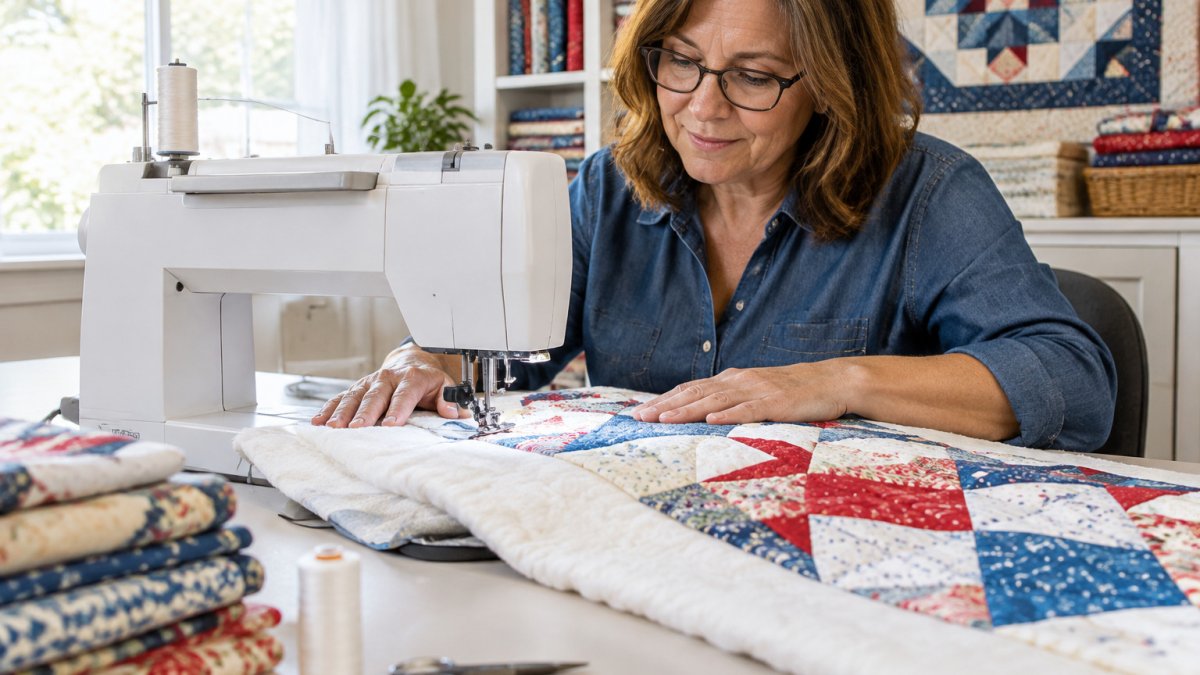
Watch out: Cotton that is not basted well will shift during quilting. Baste every 4 to 6 inches before you start.
These are the Quilters Dream cotton battings we stock, sized for different projects: see the white cotton throw batting for lap quilts and wall hangings.
| Product | Size | Loft | Starting Price | Best For |
|---|---|---|---|---|
| THROW Select White Cotton Batting-W4TH Quilters Dream | 60 x 60 in | Slightly fuller | $24.99 | Lap quilts and wall hangings in white |
| THROW Select Natural Cotton Batting-N4TH Quilters Dream | 60 x 60 in | Soft, natural | $20.49 | Throw-size projects with a natural look |
| CRIB Request Natural Cotton Batting-N3CB Quilters Dream | 46 x 60 in | Low loft | $12.94 | Baby quilts and light projects |
| CRIB Select Natural Cotton Batting-N4CB Quilters Dream | 46 x 60 in | Soft, natural | $16.49 | Baby quilts that need more drape |
| QUEEN Select White Cotton Batting-W4Q Quilters Dream | 108 x 93 in | Mid loft | $62.99 | Full-size quilts with a versatile loft |
Starting Price
The Request line suits lightweight baby quilts, while the Select line gives more drape for larger projects.
Start with the project size, then decide how much loft and drape you want. Visit our Highlands Ranch store to see these battings in person, or ask our staff which option suits your next project.
For most machine quilting, a mid-loft cotton or cotton-blend batting gives a good balance of drape and stitch definition. Cotton is easy to quilt through and lies flat, which helps with even feed under a walking foot. Quilters Dream Cotton Select in queen or throw size is available for lap quilts and bed quilts. Choose a lower loft for a flatter, more traditional look and a higher loft when you want more puff between the stitching.
Cotton batting should generally be quilted about every 2 to 4 inches to prevent shifting and bunching, though Quilters Dream Select and Request battings are rated for stitching up to 8 inches apart. The closer the stitching, the less the batting migrates over time. Quilts that will be washed frequently benefit from denser quilting. Test a sample sandwich first, since loft and fabric weight change how far apart you can safely stitch.
Yes, cotton batting shrinks and crinkles when first washed, which is part of its antique charm. Shrinkage is usually noticeable on the first wash and then stabilizes. Quilting densely before washing also helps control the crinkle.
Cotton batting can be a bit more demanding than polyester because it has less natural stretch and can drag under the presser foot if the sandwich is not basted well. A walking foot and a sharp needle make a noticeable difference.
November 2–25 only: buy a $200 gift card in either store and get a free yard of fabric every month of 2027.

Serger and BERNINA Mastery classes, longarm training, bag-of-the-month, Kids Sewing Club and a Highlands Ranch retreat. Here's what's on the calendar in November.

Free gifts, included packages and special pricing on the BERNINA 790 ULTRA, 990, Liberty Editions, L 890 serger and Q Series longarms, now through December 31.


Leave a comment