


Free Fabric All Year: Our 2027 Fabric Punch Card
November 2–25 only: buy a $200 gift card in either store and get a free yard of fabric every month of 2027.

Last Updated: November 1, 2026
Quick Summary
Good quilting fabric quality comes down to fiber, weave and finish: quilting cotton should feel crisp but not stiff, have an even, tight weave, and print sharply without bleeding. Pre-wash a swatch and test its stretch and color before buying a full yardage.
Choosing quilting fabric quality is less about price and more about what the cloth will do after it's washed, pressed and stitched hundreds of times. This guide walks through how to judge those qualities yourself, whether you're at a cutting counter or scrolling through listings at home.
Good quilting fabric is made to hold its shape, keep its color and stay easy to piece. Most of the differences you'll notice come down to fiber, weave and finishing.
Quilting fabric quality is the combination of fiber content, weave tightness, color stability and finish that determines how a fabric performs in a quilt. Higher quality usually means more consistent threads, cleaner prints and better colorfastness.
A quilt takes many hours to make. A fabric that shrinks unevenly, fades or frays can undo that work.
Quilting cotton is good quality when it feels crisp but not stiff, has an even weave and shows sharp, consistent printing. Most quilters start with 100% cotton because it presses well and holds stitches.
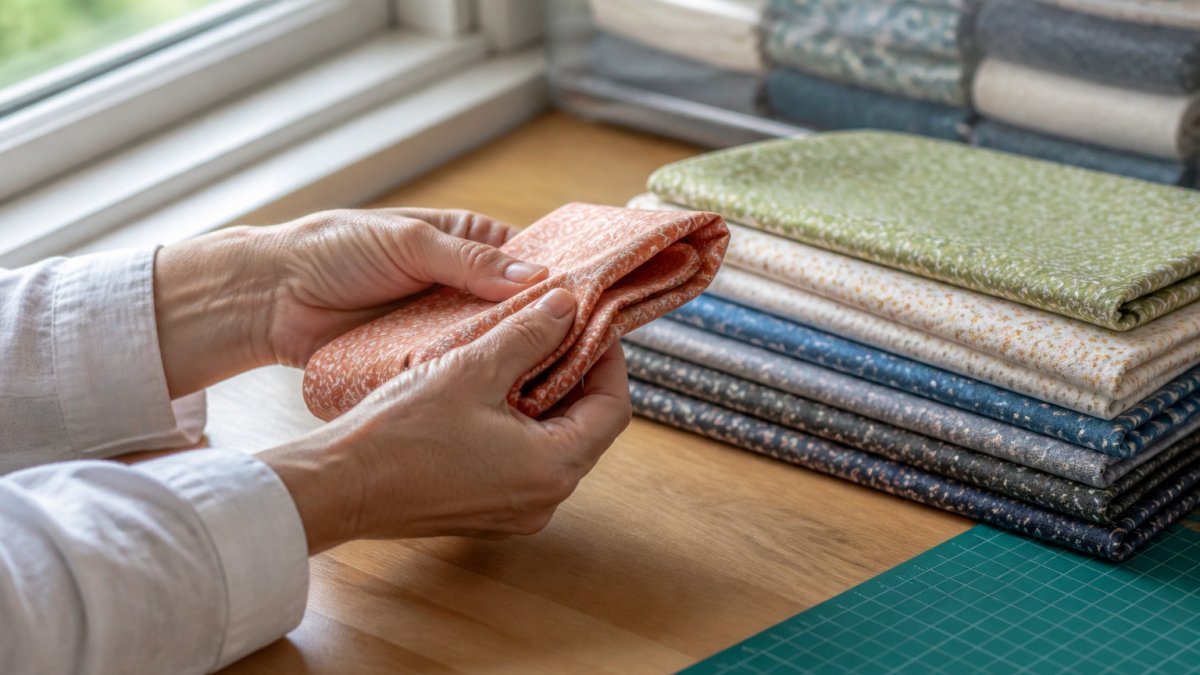
Hold the fabric up to a light source. Look for even spacing between threads and no obvious gaps or thick slubs.
A tighter weave resists fraying and stays stable on the cutting mat. Loose, uneven weaves often shift as you cut.
The hand is how the fabric feels in your fingers. Good quilting cotton feels smooth and substantial, not thin or papery.
Check the print on both sides. The design should look sharp on the front and show no heavy color bleeding on the back.
The best fabric for quilting depends on what you're making. A baby quilt that gets washed often needs different qualities than a wall hanging that rarely gets touched.
For a backing or background, consider the Pismo Lagoon/Sand Ground Works Cotton 44"/45" Fabric Per Yard at $11.19, a 100% cotton fabric.
Work through these steps before you commit to a full yardage. It takes only a few minutes and can prevent wasted fabric.
Coral Block Print Dots Cotton 44"/45" Fabric Per Yard →
Before committing to a full yardage, run through these checks, each with its timing.
| Step | What to do | Time |
|---|---|---|
| Pre-wash a small swatch | Check for shrinkage and color bleeding | Not stated |
| Inspect the selvage | Look for clean edges and consistent printing | Not stated |
| Test the stretch | Pull across the grain and on the bias | Not stated |
| Press the swatch | Good fabric presses flat without scorching | Not stated |
| Check color under two light sources | Compare daylight and indoor light | Not stated |
Buying online saves a trip, but you can't feel the fabric. Read the product details closely and look for specifics like fiber content, width and care instructions.
Product photos can vary in color. Look for a clear description of the print and whether the fabric is sold per yard or by a bundle.
For example, the Coral Block Print Dots Cotton 44"/45" Fabric Per Yard at $11.89 lists 100% cotton, a 44" to 45" width and a pre-wash recommendation, so you know what to expect before you order.
Coordinating colors means choosing fabrics that work together through shared undertones, value and scale. A cohesive quilt usually has a clear color story, even when it mixes many prints.
Start with one or two anchor fabrics. Then pick others that match their value, meaning how light or dark they look in grayscale.
Holding fabric swatches side by side in natural light can show you how the colors interact.
Once you've tested swatches and chosen your colors, the next step is getting the fabric into your sewing room. Our Highlands Ranch store carries a wide selection of fabric lines and accessories, so you can compare quality in person.
Start with the weave: hold the fabric up to light and look for even, tight threads with no gaps or slubs. Quilting cotton is usually a plain weave, and a tightly woven fabric holds its shape and resists fraying at the cut edge. Check the selvage for clear printing and consistent color across the width. Then prewash a small swatch in cool water with mild detergent and tumble dry on low. If the color bleeds, the print shrinks unevenly, or the fabric feels thin and stretchy afterward, the quality is lower. Good quilting cotton stays crisp, keeps its color, and presses flat.
Look for 100% cotton with a medium weight that feels firm but not stiff. Quilting cottons are typically sold at 44 to 45 inches wide, and wideback fabrics at 108 inches are useful for quilt backings. Check that the print is crisp on both sides, the colors are even, and there are no flaws. For quilts that will be washed often, prewash every fabric before cutting so shrinkage happens before the quilt is assembled. Buying a little extra for binding and borders also helps you avoid color mismatch if you need more later.
Read the product description for the fiber content, width, and manufacturer, and look for a clear statement that the fabric is 100% cotton. Zoom in on product photos to check print clarity and whether the color matches your screen expectations as closely as possible. Order a swatch or small cut when available before committing to a large yardage purchase. Our Coral Block Print Dots Cotton 44 inch to 45 inch fabric, priced at $11.89 per yard, and our White Bella Solids Cotton Wideback at $17.49 per yard list their width, fiber type and care instructions so you can compare before you buy.
Yes, prewash quilting fabric before cutting, especially if the quilt will be laundered regularly. Wash in cool water with mild detergent and tumble dry on low heat, following the care instructions on the product. Prewashing removes excess dye that could bleed onto lighter fabrics, and it lets the cotton shrink before your pieces are sewn together. Skipping this step can cause puckering, uneven blocks and distorted seams after the first wash.
Choosing quilting fabric quality gets easier once you know what to look for. Check the weave, feel the hand, pre-wash a swatch and coordinate colors before cutting. Stop by High Country Quilts in Highlands Ranch to see and feel the fabric for yourself.
November 2–25 only: buy a $200 gift card in either store and get a free yard of fabric every month of 2027.

Serger and BERNINA Mastery classes, longarm training, bag-of-the-month, Kids Sewing Club and a Highlands Ranch retreat. Here's what's on the calendar in November.

Free gifts, included packages and special pricing on the BERNINA 790 ULTRA, 990, Liberty Editions, L 890 serger and Q Series longarms, now through December 31.


Leave a comment