Calculating fabric for a quilt, using the how to calculate fabric for a quilt approach, is easier than most quilters expect. Once you know your finished quilt size, a few simple measurements and formulas tell you how many yards to buy for the top, backing, borders, and binding. This step-by-step guide will help you plan your shopping list before you cut a single strip.
How Much Fabric Do I Need for a Quilt Top?
The answer depends on the finished size of your quilt and the width of the fabric you buy. A quilt top is simply the pieced front, and its fabric needs come from the total area you have to cover. Most quilters start by working out the finished width and length, then adding seam allowances and a little extra for cutting waste.
Here is a quick way to start:
Measure the finished width and length you want.
Note the usable width of your fabric (usually 40 to 42 inches after selvages).
Divide the total area by that usable width to estimate strips or pieces.
Round up to the nearest eighth of a yard.
Some quilters skip the math and buy extra, but that often leads to wasted fabric. Planning first keeps your budget under control.
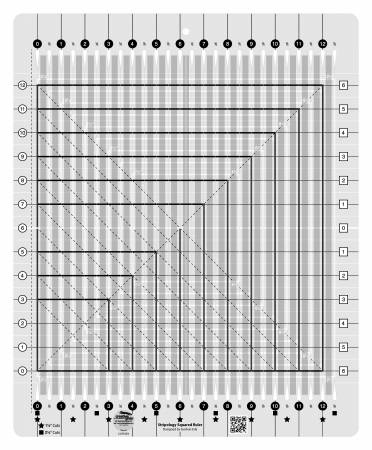
Creative Grids Stripology Squared Quilt Ruler
Measuring Your Quilt Width and Length
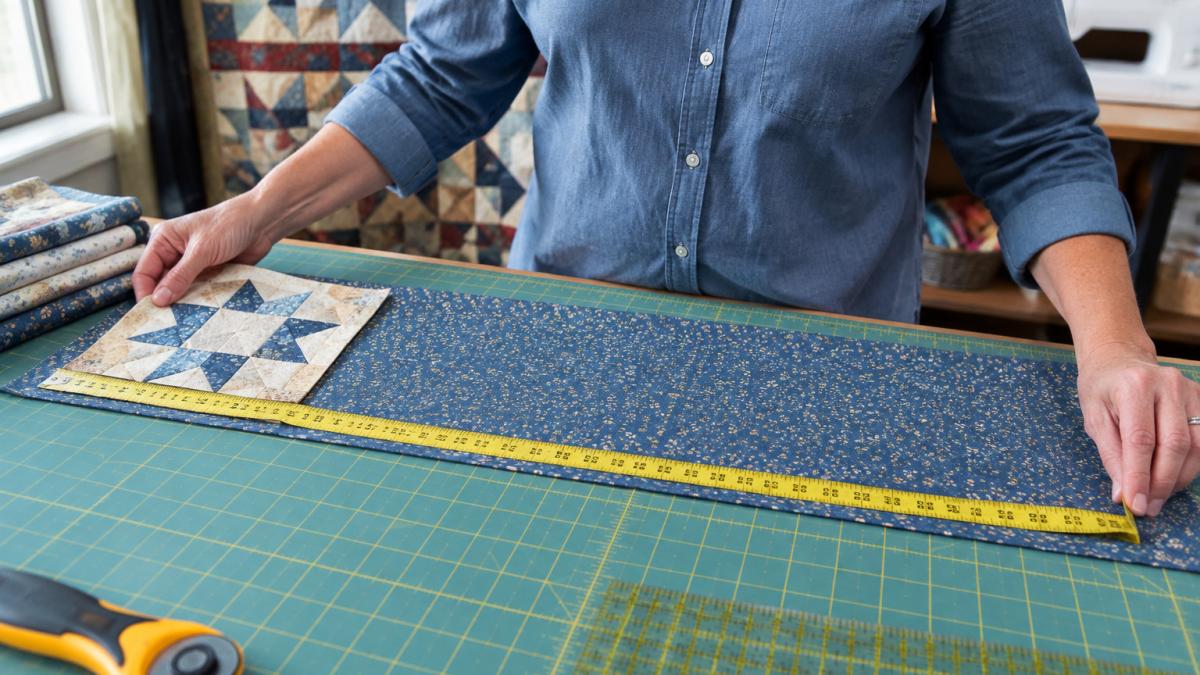
Start by measuring the quilt top across the center, not along the edges, since this is the first step in learning how to calculate fabric for a quilt accurately. Edges can stretch, which gives you a bad reading. Lay the top flat on a cutting table and use a quilter's tape measure to record the width and length in inches.
Measure twice and write down both numbers. If the two readings differ, measure a third time and take the average.
Watch out: Forgetting to add seam allowances to your piece sizes is one of the most common mistakes. Always add about 1/4 inch per seam when you calculate cut sizes.
Working Out Block Count and Yardage per Strip
This is where most fabric estimates go wrong, because the number you buy is based on cut sizes, not finished sizes. Work the chain in order: finished block size, cut size, blocks per strip, strips needed, then yards.
Step 1: Set the finished block size and add seam allowance. A block that finishes at 12 inches square is cut larger because every seam eats 1/4 inch. A four-patch block made of two rows and two columns has three internal seams across and three down, so the cut size is 12 1/2 inches square. A nine-patch with the same finished size also cuts at 12 1/2 inches because the seam count is the same. The rule: cut size = finished size + (1/2 inch x number of seams along that edge).
Step 2: Find blocks per strip. Divide your usable width of fabric (WOF) by the cut size and round down. With a 42-inch usable WOF and a 12 1/2-inch cut block, 42 / 12.5 = 3.36, so you get 3 blocks per strip, not 4. That rounding-down step is where quilters overshoot their fabric budget.
Step 3: Count strips. Divide total blocks by blocks per strip and round up. A 60-by-72-inch quilt top at 12-inch finished blocks needs 5 blocks across and 6 down, or 30 blocks. At 3 blocks per strip, that is 10 strips.
Step 4: Convert strips to yards. Multiply strips by cut width, then divide by 36. Ten strips at 12 1/2 inches = 125 inches, and 125 / 36 = 3.47 yards. Round up to the nearest quarter yard: 3 1/2 yards.
Worked example with two prints. Suppose the same 30-block quilt uses two fabrics in an alternating layout, 15 blocks each. Each fabric needs 5 strips at 12 1/2 inches, or 62.5 inches, which is 1.74 yards, round up to 1 3/4 yards per print, or 3 1/2 yards total. Buying 3 1/2 yards of one fabric and 3 1/2 of the other would leave you with nearly double what you need.
Add cutting waste. Add 10 percent to any strip count that involves fussy cutting, angled cuts, or squaring up after prewashing. For the example above, 10 percent of 10 strips is 1 strip, so buy 11 strips (3.82 yards, rounded to 4 yards) if you plan to square up.
Directional prints and nap change the math. If the print has an obvious up direction, or the fabric is a flannel, minky, or corduroy with nap, you cannot rotate pieces to fit more per strip. Because washing can affect fabric dimensions, decide whether to wash reproduction fabric before finalizing your strip counts and cutting plan.
Precuts and scraps. A fat quarter is roughly 18 by 21 inches. From one fat quarter you can cut one 12 1/2-inch square plus leftover strips, so a 30-block quilt in fat quarters needs about 30 fat quarters if each block is a single square, or fewer if you piece blocks from smaller units.
Quilter measuring a 12.5-inch fabric block against a 42-inch width of cotton fabric on a cutting mat.
Watch out: Dividing finished block size by WOF instead of cut size inflates blocks per strip and under-buys fabric by a full strip or more on a bed-size quilt.
The steps below follow the same chain of calculations used in the yardage example.
Step
What to do
Worked figure
1. Set cut size
Finished size plus 1/2 inch per seam along the edge
12 inch block cuts at 12 1/2 inches
2. Blocks per strip
Divide usable width by cut size, round down
42 / 12.5 = 3 blocks
3. Count strips
Total blocks divided by blocks per strip, round up
30 blocks = 10 strips
4. Convert to yards
Strips x cut width, divided by 36
125 inches = 3.47 yards
5. Add waste
Add about 10 percent for fussy or angled cuts
10 strips becomes 11 strips
Estimating Border and Binding Yardage
Borders and binding are bought separately from the quilt top, and each has its own formula. Do them in this order so the border length reflects the quilt top after the blocks are sewn, not the finished size you started with.
Border yardage. Measure the quilt top width and length after the blocks are assembled. For a butted border (strips sewn end to end), cut two strips the width of the quilt plus 1/2 inch for seam allowance, and two strips the length plus 1/2 inch.
Worked example: a 60-by-72-inch quilt top with a 4-inch border. Butted: two strips at 60 1/2 inches and two at 72 1/2 inches, total 266 inches, or 7.39 yards, round up to 7 1/2 yards. Mitered: add 8 inches to each strip, giving 68 1/2 and 80 1/2 inches, total 298 inches, or 8.28 yards, round up to 8 1/2 yards.
If the border fabric is directional or has a large repeat, add one full repeat length to each strip so the pattern matches at the seams. A 24-inch repeat on a 72-inch strip means buying 96 inches for that strip instead of 72 1/2.
Binding yardage. Binding is cut in strips, usually 2 1/4 inches wide for a double-fold binding, and the strips are joined end to end. The length you need is the quilt perimeter plus 10 to 12 inches for joining and corners. For the 60-by-72-inch quilt, perimeter is 264 inches; add 12 inches for a total of 276 inches of binding.
Convert binding length to strips: divide by usable WOF and round up. 276 / 42 = 6.57, so 7 strips. Multiply by strip width and divide by 36: 7 x 2.25 = 15.75 inches, and 15.75 / 36 = 0.44 yards. Round up to 1/2 yard. A larger king-size quilt at 100 by 110 inches has a 420-inch perimeter, needs 11 strips, and comes to 0.69 yards, round up to 3/4 yard.
Bias binding. If you need bias binding for curved edges, the strip count rises because bias strips are cut on the diagonal and waste more fabric. A common pattern is to add 25 to 30 percent to the straight-grain estimate. For the 60-by-72-inch quilt, 1/2 yard becomes about 5/8 yard.
Seam allowance and waste. Add 1/4 inch per seam when you join border strips, and add 2 inches per border strip for squaring up after sewing. For binding, the 10-to-12-inch buffer already covers the diagonal join seams and the final closure.
Watch out: Measuring the border from the original finished size instead of the assembled quilt top under-buys border fabric whenever seam allowances shrink the top, which is common on quilts with many small blocks.
Calculating Quilt Backing Fabric with a 108 Inch Backing
Many quilters buy 108-inch-wide backing so they can skip seams. If your quilt is 108 inches wide or narrower, you may need only about 2 to 3 yards of 108-inch fabric, depending on the length.
To check, add 6 to 8 inches to the quilt's width and length for loading on a longarm or for basting. A quick formula:
Length needed = quilt length + 8 inches
Compare that length against the fabric's 108-inch width
Divide by 36 to convert inches to yards
Wider backing can save seaming time, but always confirm the fabric's actual width before you buy.
Quilt Backing Fabric Calculator: A Worked Example
Let's walk through a real example. Suppose you want a finished quilt top that measures 60 inches by 72 inches, and you plan to use 108-inch backing.
Quilt length plus 8 inches = 80 inches
80 inches divided by 36 = 2.22 yards
Round up to the nearest quarter yard = 2 1/4 yards
So a 60-by-72-inch quilt needs about 2 1/4 yards of 108-inch backing. Add a little extra if you plan to quilt with a pantograph or need more room for loading.
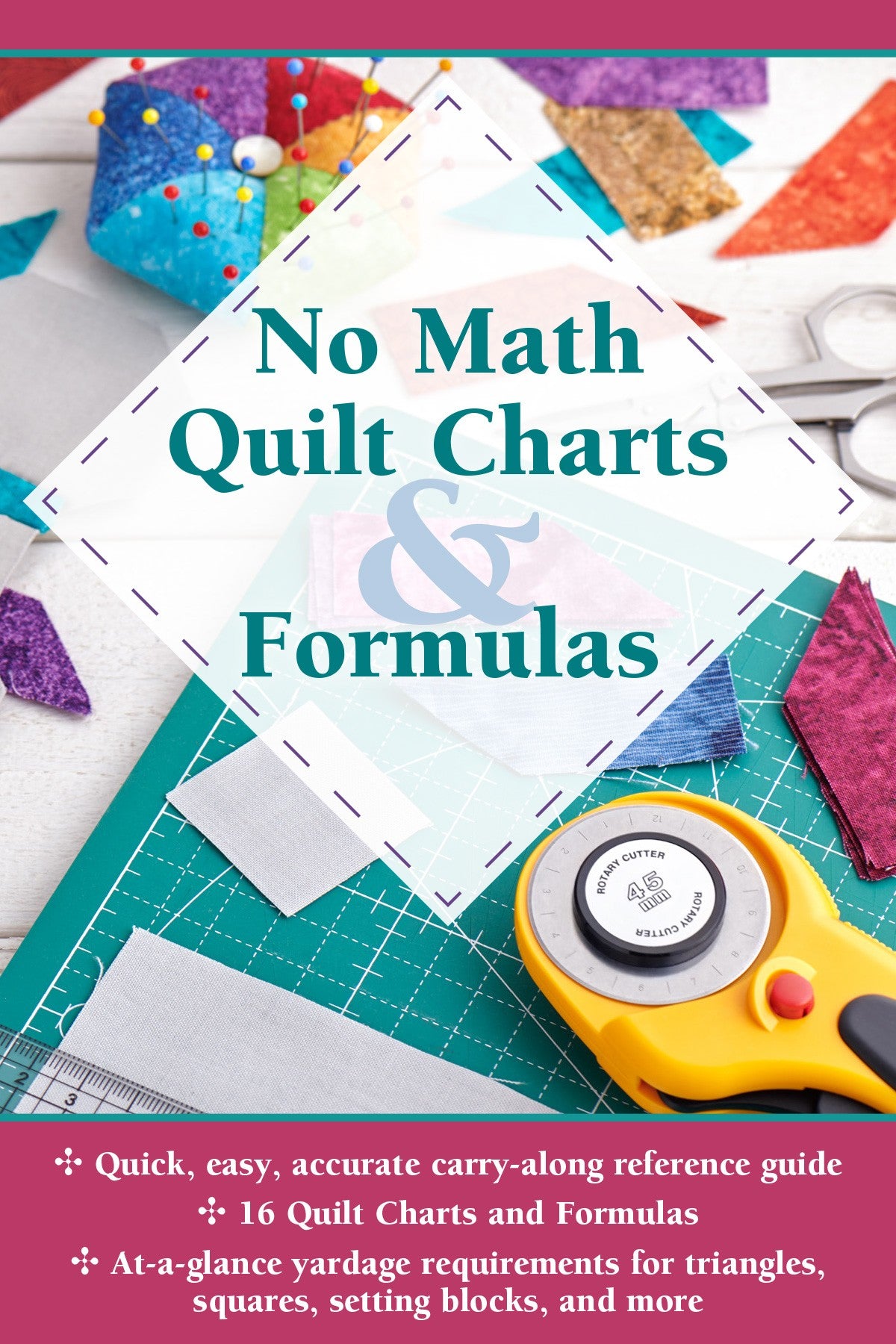
Many quilters find it helpful to keep a printed chart nearby. The Updated No Math Quilt Charts & Formulas guide is a pocket-sized book of 16 quilt charts and formulas covering fabric requirements for blocks, backing, and binding.
Updated No Math Quilt Charts & Formulas
Planning Your Shopping List for Your Next Quilt
Put all your numbers on one list before you visit the store. Include the top, borders, binding, and backing, each with its yardage and the fabric width you plan to buy.
Top fabric: yardage from your block count
Border fabric: yardage from your perimeter estimate
Binding fabric: about 1/2 to 3/4 yard
Backing: 108-inch fabric in the length you calculated
Bring your list when you shop, so you can check the amounts against the fabric you are considering.
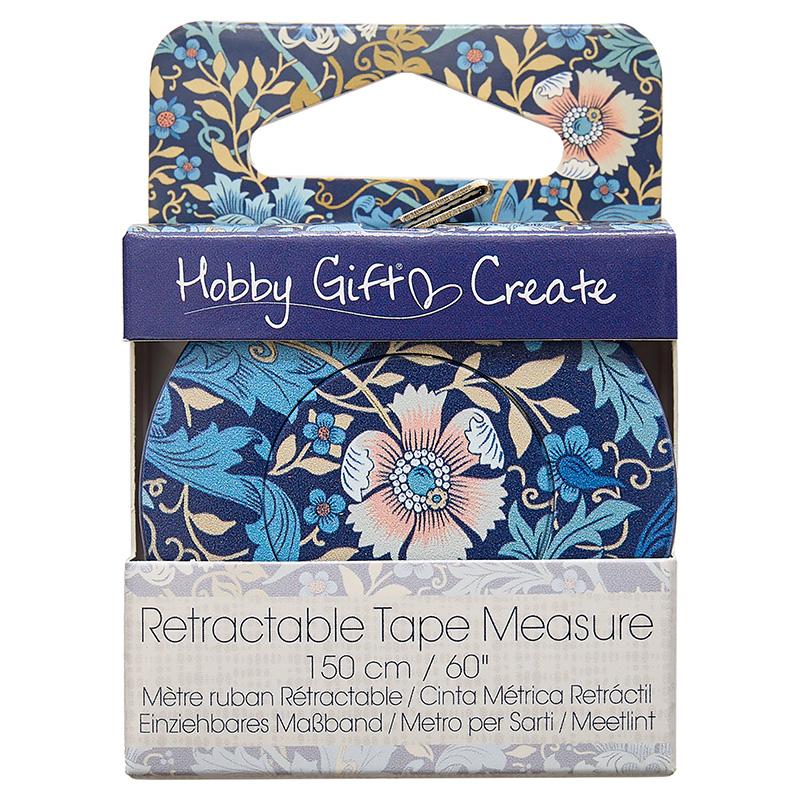
Woodblock Retractable Tape Measure
Frequently Asked Questions
How do I figure out how much fabric I need for a quilt?
Start with the finished quilt dimensions, then add the seam allowance and any borders. Divide the total fabric length you need by the usable width of the fabric, which is usually about 40 to 42 inches after selvages are trimmed. Round up to the nearest eighth of a yard, and add a little extra for cutting waste and pattern matching. Writing each step down as you go makes the final shopping list easy to check.
How much extra fabric should I buy for a quilt?
Most quilters add about 10 percent to the calculated yardage to cover cutting waste, shrinkage and mistakes. Directional prints, large motifs and pattern matching need more, so add extra for those. For a quilt top with a complex layout, it is safer to round up by a quarter yard. Buying a little more from the same dye lot also keeps color consistent if you need more later.
How do I calculate backing fabric for a quilt?
Add 4 to 6 inches to each side of the quilt top to allow for quilting and loading on the frame, then decide whether the backing will be pieced or a single width. A 108 inch wide backing fits a quilt up to roughly 100 inches wide without a seam, which means you only need the length plus the extra inches. Buy 108 inch wide fabric when you can, since it saves time and avoids a center seam.
How big of a quilt will 3 yards of fabric make?
Three yards of 42 inch wide fabric gives about 126 inches of usable length in one direction. That is enough for a baby quilt or a lap quilt, but not for a full-size bed quilt once borders and backing are included. The answer depends on the block design, so use the cutting layout and a yardage chart to confirm the finished size before you cut.
Serger and BERNINA Mastery classes, longarm training, bag-of-the-month, Kids Sewing Club and a Highlands Ranch retreat. Here's what's on the calendar in November.
Free gifts, included packages and special pricing on the BERNINA 790 ULTRA, 990, Liberty Editions, L 890 serger and Q Series longarms, now through December 31.




Leave a comment