

We Love Our Quilting Community
At High Country Quilts we care deeply about community. With our experiences in retail, we know that a store is not only a place to shop but also a place for the community to gather and share. During this busy...


You're standing at the fabric wall, holding two beautiful bolts that look perfect together. One feels crisp and steady in your hands. The other is softer, drapier, and a little harder to control. Both could become a lovely quilt, but they won't behave the same way at the cutting table, under the iron, or in the wash.
That's why the best fabric for quilts isn't one universal answer. The right choice depends on whether you're making a daily bed quilt, a wall hanging, a warm flannel throw, an heirloom project, or a quick precut pattern. Fiber, weave, weight, shrinkage, colorfastness, and care all affect how satisfying the project will be.
A beginner often chooses fabric by color first. That's natural. A deep blue print may catch your eye, while a soft floral seems perfect for a gift. Yet a quilt has to do more than look attractive on the bolt. The fabric must survive cutting, sewing, pressing, quilting, washing, and regular handling without becoming distorted or difficult to manage.
Consider a first patchwork quilt made from ordinary quilting cotton. Its stable surface helps you cut accurate pieces, match seams, and press without fighting excessive stretch. Now compare that with a slippery voile or a plush minky backing. Those fabrics can create beautiful results, but they ask for different tools, patience, and finishing techniques.
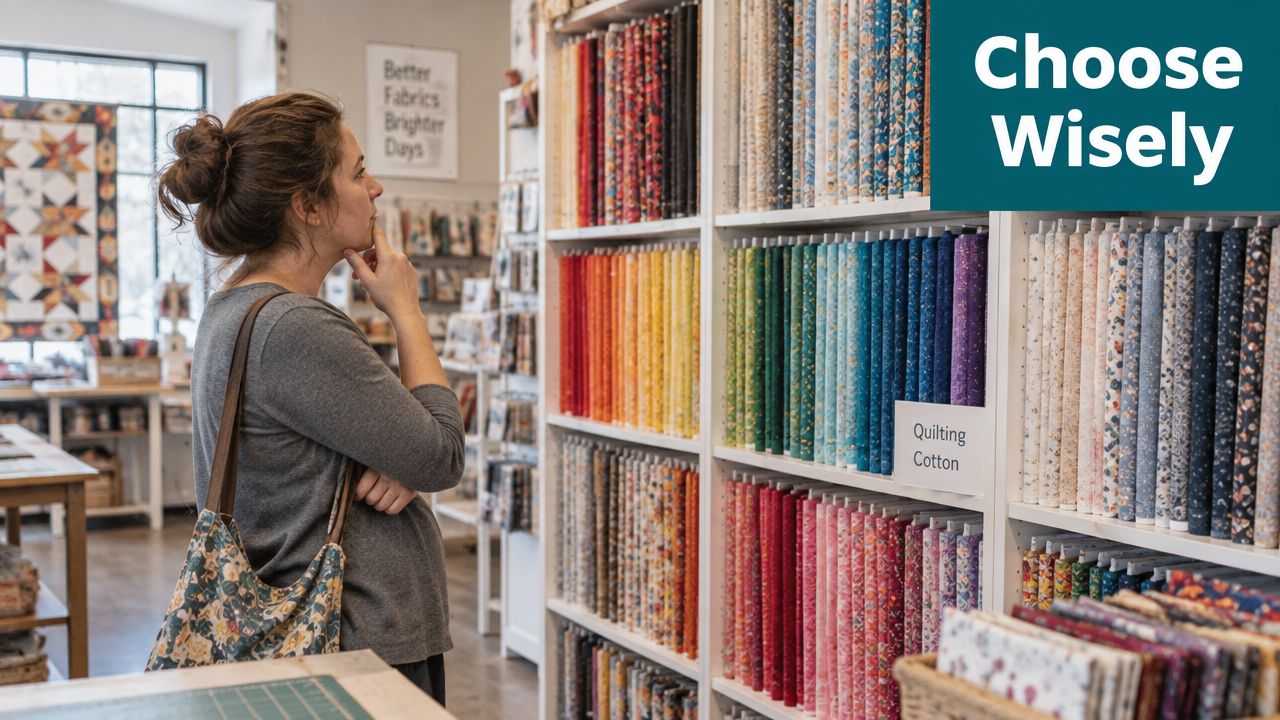
At the cutting table: Choose fabric for the life of the quilt, not only for the moment you spot the color.
This guide uses a practical buying lens. You'll learn how fiber and weave affect handling, how popular quilt fabrics compare, when cotton isn't the most suitable option, and how to match fabric to your skill level. You'll also find advice for shrinkage, precuts, washing, and everyday care, so you can make a confident choice before cutting into your yardage.
The aim isn't to limit your creativity. It's to prevent avoidable surprises. A fabric that's forgiving for a first quilt may not be the best choice for a lightweight summer coverlet, while a specialty fabric that works beautifully in an heirloom design may frustrate someone learning accurate piecing.
At the cutting table, a fabric label gives you four useful clues: fiber, weave, thread count, and weight. They describe what the threads are made from, how they cross, how closely they are packed, and how substantial the cloth feels.
Fiber is the raw material in the threads. Cotton is a natural cellulose fiber, while polyester is synthetic. Quilting cotton became widely used by American quiltmakers during the Civil War era, as cotton textiles were increasingly produced on an industrial scale in the 19th century. Its continued popularity also comes from predictable handling and broad availability, as explained in this history of quilting cotton and wool.
Fiber affects comfort, pressing, and moisture response. At 20 °C and 65% relative humidity, cotton has a standard moisture regain of about 7.0% to 8.5%, while polyester is around 0.4%, according to the same reference. In practical terms, cotton takes up moisture more readily, which contributes to its familiar, breathable hand. Polyester absorbs far less, so it behaves differently during use and care.
Weave explains how the threads interlace. A plain weave works like a simple basket, with threads passing over and under each other in a regular grid. That even structure gives quilting cotton the stability beginners need for rotary cutting, accurate seams, and small patchwork pieces.
Thread count describes how many threads occupy a given area. Quilting cotton is often listed around 68 × 68 threads per square inch, while broader descriptions place good-quality quilt cotton around 60 to 75 threads per inch. Budget lines may measure 60 to 80 TPI, premium quilting cotton 90 to 110 TPI, and some higher-end cloth roughly 200 threads per inch in both warp and weft, as outlined in this guide to thread count in quilting fabric.
A denser weave works like a tighter screen. It generally limits distortion during cutting and piecing, helps keep batting fibers from pushing through the quilt top, and reduces unraveling or fiber migration. Batting fibers showing through are often called “bearding.”
GSM, or grams per square meter, indicates fabric weight. Quilting cotton is commonly recommended around 120 to 150 GSM, a practical middle range for piecing because it offers body without feeling too heavy. For choosing among fabrics, consider weight, shrinkage, and material behavior before buying yardage or precuts.
The familiar answer is 100% quilting cotton, and it remains a strong starting point. Cotton can absorb roughly 25% to 27% of its own weight in water, while polyester typically absorbs about 0.4% to 0.5%, according to this cotton and polyester textile comparison. That difference helps explain why cotton often feels more breathable and responds more noticeably during washing and pressing.
But other fabrics earn a place in quilting. Flannel adds warmth and softness. Batik offers saturated color and a distinctive surface. Linen blends bring texture and relaxed drape, while voile creates a light summer quilt. Minky feels plush but can shift during construction, so it's usually easier as a backing than as a piecing fabric.
| Fabric Type | Weight and Feel | Shrinkage and Care | Best For |
|---|---|---|---|
| Quilting cotton | Stable, crisp, medium weight, easy to press | Prewash when appropriate, especially for a washable quilt | Beginner patchwork, everyday quilts, precise piecing |
| Flannel | Soft, brushed, warm, and slightly relaxed | Can shrink differently from quilting cotton, so test and prewash carefully | Cozy throws, winter quilts, baby quilts |
| Batik | Firm hand, dense-feeling surface, vivid color presence | Washing behavior can differ from standard cotton, test before cutting | Detailed designs, high-contrast patchwork, confident beginners |
| Linen and linen blends | Textured, breathable, and more drapey | Can shrink and crease differently, follow the care label | Modern quilts, relaxed styling, wall pieces |
| Voile | Lightweight, soft, and fluid | Needs careful handling and may require extra stabilization | Summer quilts, lightweight covers, delicate designs |
| Cotton-poly blends | Often smoother and more wrinkle-resistant | Follow fiber-specific care instructions and test compatibility | Utility quilts, projects where easy care matters |
| Minky | Plush, stretchy, and soft on the back | Can shed and shift, requiring careful cutting and quilting | Plush-backed baby quilts and snuggly throws |
Watch this demonstration before combining unfamiliar materials:
If your pattern calls for conventional piecing, start with a stable fabric for the quilt top. You can introduce texture through the backing, binding, or a small accent section rather than asking every fabric in the quilt to perform the same job.
For a dependable starting point, browse the quilting cotton fabric collection. Look for compatible colors and a similar fabric weight, especially if you're working with precut pieces.
“Use 100% cotton” is useful beginner advice, but it's not a complete decision rule. A wall hanging doesn't experience the same wear as a quilt used every night, and a summer coverlet has different comfort needs from a thick winter throw.
Cotton still dominated quilting fabric share at about 48.2% in 2025, according to global quilting fabric market coverage. At the same time, market discussions point toward increased interest in organic cotton, recycled fibers, and low-impact dyes. That shift doesn't make conventional quilting cotton unsuitable. It means shoppers are weighing performance, sourcing, certification, and environmental priorities together.
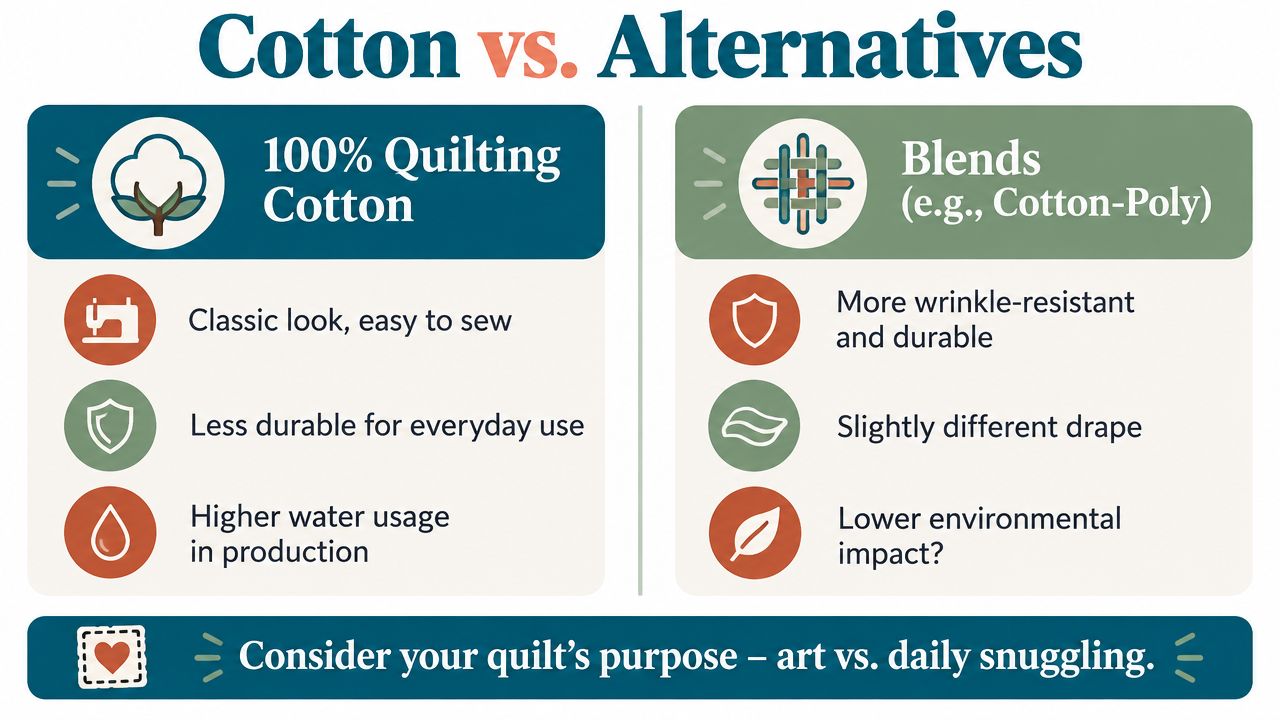
For a daily bedding quilt, stable cotton remains practical because it's straightforward to piece, press, quilt, and wash. A cotton-poly blend may suit someone who prioritizes wrinkle resistance or wants a different balance of durability and drape.
For a wall hanging, you can prioritize visual texture, weave character, or a specialty lightweight fabric. The piece won't face the same repeated laundering and body contact, so handling requirements may matter more than maximum softness.
An heirloom quilt deserves attention to fabric consistency, colorfastness, construction, and long-term care. Organic cotton may appeal to shoppers who want certified materials, while a linen blend may provide the visual character they want for an art-focused design. Check certification and traceability information rather than relying on a broad sustainability label alone.
Use-case rule: The best fabric is the one whose strengths match how the finished quilt will be used.
Seasonal projects also benefit from flexibility. A lightweight voile quilt can feel airy for warm weather, while flannel creates a more enveloping winter layer. Choosing an alternative isn't rejecting cotton. It's recognizing that comfort, appearance, maintenance, and construction all belong in the same conversation.
At the cutting table, start with the label rather than the color card. Confirm the fiber content, check the listed weight when available, and hold the cloth under good light. Fabric that feels loose, wavy, or unusually fragile may be harder to cut accurately and keep square. That matters because a small shift at the cutting table can grow into mismatched seams across a block.
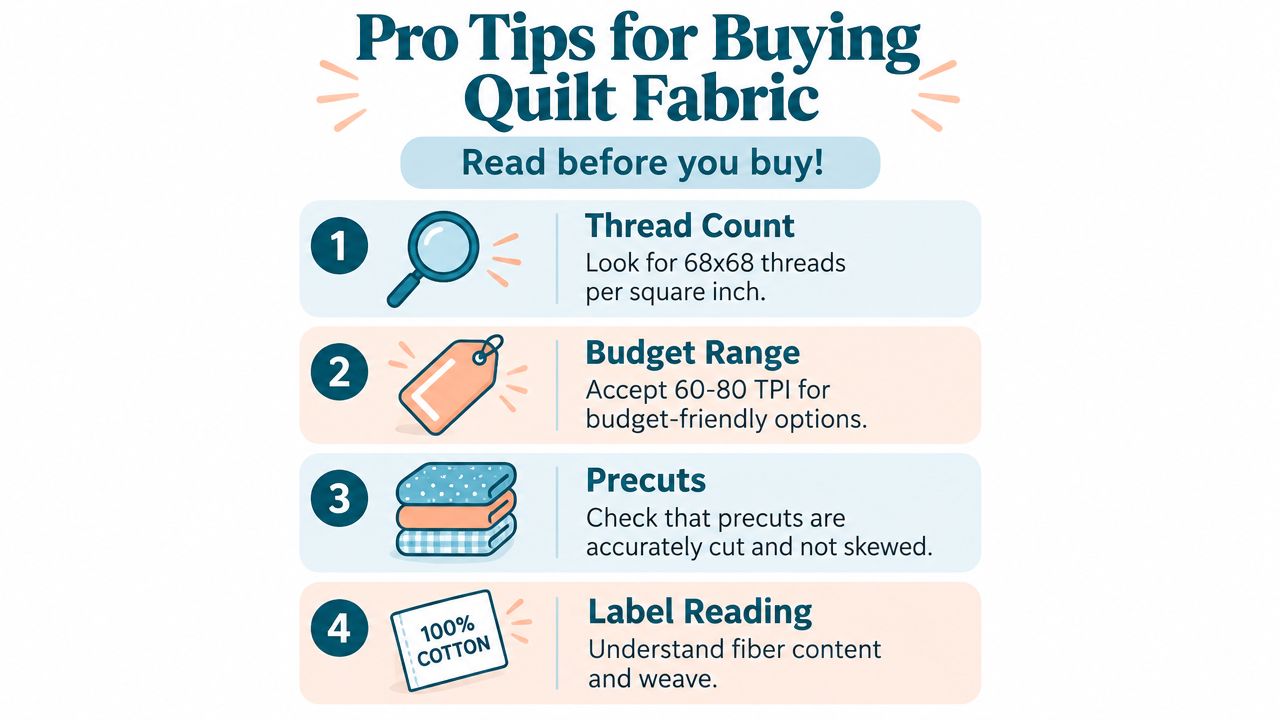
Thread count offers one clue about construction. A practical quilting cotton benchmark is around 68 × 68 threads per square inch. Budget fabric may fall around 60 to 80 TPI, while premium quilting cotton is often placed around 90 to 110 TPI, according to this quilting cotton construction guide. Higher density is not automatically better for every quilt. A tighter weave can reduce distortion, unraveling, and batting bearding, while the project's purpose still determines the most suitable hand and weight.
Prewashing is a project decision, not a rule for every quilt. For a quilt that will be washed regularly, it can reveal shrinkage and remove excess dye or finishing treatments. If you are unsure, wash a small sample first, especially when fabrics have different fiber contents or will be sewn together.
Precuts reduce measuring and help keep a coordinated palette within reach. Fat quarters suit blocks that need generous shapes, while Jelly Rolls provide strips for patterns designed around them. Check that each piece has a straight edge and has not been skewed during handling. Precut quilt fabric bundles can be a practical choice when you want coordinated pieces without cutting every strip from yardage.
Keep the rotary cutter sharp, align the ruler carefully, and use a sound cutting mat. These tools cannot correct unstable fabric, but they make well-constructed fabric easier to handle. Reliable quilting notions also help with small construction adjustments, where control matters as much as the fabric choice.
Your pattern, quilt purpose, and experience should guide the fabric choice together. For a first patchwork quilt, stable quilting cotton with a medium weight is usually easier to cut, sew, and press. A firm weave behaves like a steady sheet of paper at the cutting table, while a loose or slippery fabric can shift under the ruler. Batik and linen blends may shrink and handle differently after washing, so compare fiber content before combining them.
Choose quilting cotton with an even weave and a mix of small prints, blenders, and one or two larger motifs. Small prints act as quiet background notes, while larger motifs add interest without making every seam a matching exercise.
A precut pattern can make the first project feel more manageable. Coordinated pieces let you focus on seam allowance, pressing direction, and block assembly instead of calculating every cut. Before sewing, check that the pieces are not skewed and that the pattern matches the precut sizes.
Flannel suits a couch quilt or winter bed quilt when softness and warmth matter. Its brushed surface feels inviting, yet it can relax and shrink differently from quilting cotton. Wash and dry it according to the finished quilt's care routine before piecing. Using flannel consistently across the quilt top often gives a more predictable result than mixing it casually with crisp cotton.
See the flannel fabric collection for options suited to warm, comfortable projects.
Batik's strong color presence can make intricate designs look crisp and intentional. Its hand may feel firmer than ordinary quilting cotton, which can support detailed piecing. Test a small sample first to see how the particular fabric cuts, presses, and responds to washing.
The batik fabric collection can help you compare coordinated color families for high-contrast blocks and complex patterns.
Voile works well for an airy summer quilt, but its fluid drape makes accurate cutting more demanding. Minky can create a soft baby quilt backing. Its plush pile and stretch call for careful pinning, controlled quilting, and a clean cutting area.
Match fabrics by behavior as well as color. A lightweight top paired with a stretchy backing may require more handling than a beginner expects, while a heavier combination can make the finished quilt warmer and less flexible. For a quilt that will be washed and gifted, write the care instructions with the finished piece. Pretest a color that might bleed, and do not assume a fabric will behave like standard quilting cotton because it is sold for quilts.
The choice becomes much simpler when you use a short decision sequence. First, identify the quilt's purpose. Next, choose the handling characteristics you need, such as stability for beginner piecing, softness for a throw, lightness for summer, or plushness for a baby quilt. Then check fiber content, weave, weight, shrinkage, and care before you buy enough fabric for the project.
A curated shop can also help you compare fabric in person. At High Country Quilts, shoppers can explore quilting fabrics, seasonal fabrics, precuts, sewing notions, and tools online through the High Country Quilts fabric shop. The Colorado Springs store also provides access to classes, community events, sewing support, and BERNINA training for makers who want hands-on guidance.
If you're uncertain, bring your pattern or a photo of the finished quilt. A fabric conversation is more useful when it includes the block size, intended use, backing plan, and washing expectations. You don't need to know every textile term before you begin. You only need a clear purpose and a willingness to test how the fabric behaves.
High Country Quilts offers quilting fabrics, precuts, sewing notions, classes, community events, and hands-on support for choosing materials that fit your project. Visit High Country Quilts in Colorado Springs or shop online, and bring your pattern questions so you can start your next quilt with confidence.
At High Country Quilts we care deeply about community. With our experiences in retail, we know that a store is not only a place to shop but also a place for the community to gather and share. During this busy...

Hi! We’re Adam and Renee Wheaton, the new owners of High Country Quilts! For more than 40 years, we’ve owned and operated vacuum and sewing businesses. Following in Renee’s father’s footsteps after he retired from All Discount Vacuum and Sewing in Colorado...


Leave a comment