
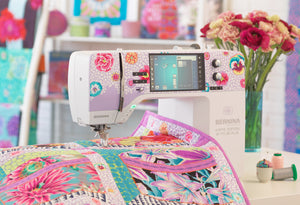

We Love Our Quilting Community
At High Country Quilts we care deeply about community. With our experiences in retail, we know that a store is not only a place to shop but also a place for the community to gather and share. During this busy...


You're standing in the sewing aisle with a kid who's excited, a budget that's real, and two very different boxes in front of you. One looks playful and cheap. The other looks plain, heavier, and a little more serious. I'd take the second one most of the time, because the best childrens sewing machine usually isn't a toy at all, it's a real beginner machine that a child can grow into with supervision and help.
| Machine Type | Best Age | Speed Control | Stitch Count | Stability | Price Range |
|---|---|---|---|---|---|
| Toy-style starter machine | Younger beginners, supervised | Limited or basic | Few stitches | Light, less stable | Budget-friendly, often near the basic-entry range |
| Real beginner machine | School-age beginners and tweens | Stronger control | More stitches, but not the main point | Better stability | Mid-range |
| Scalable entry-level machine like the Brother CS7000X | Older children and motivated beginners | Yes, built for control | 70 built-in stitches | Stronger for long projects | Higher than toy models |
The mistake parents make is buying for the box, not the child. A kid doesn't need glittery branding, and they don't need twenty decorative stitches. They need a machine they can thread, control, and trust without constant drama.
Practical rule: if the child can't sit down, sew a straight line, and finish a small project with adult guidance, the machine is too complicated or too flimsy for where they are right now.
A lot of “kids” sewing machines are just lightweight beginner machines with friendlier marketing. That's why the smartest buying decisions start with the child, not with the word kids on the box. One comparison of the market described the Brother XM2701 as the “best overall kids sewing machine,” and another guide organized machines by children aged 7 to 12 years old rather than by a separate product category, which tells you the truth about this space, it's really a beginner category with a child-use case. stitchandsew.net
The wrong machine fails in three predictable ways. First, the child gets frustrated and quits. Second, the setup is clumsy enough that an adult has to take over every step. Third, the machine feels unsafe or unpredictable, which makes a beginner tense instead of curious.
A good kid-appropriate machine solves those problems by being simple, stable, and forgiving. The best options usually have basic stitch counts, easy threading, and enough portability that an adult can move it without a hassle. That's why the most credible advice for parents focuses on usability and supervision, not cartoon colors or toy branding.
A child who can see the thread path, understand the controls, and sew at a calm pace is far more likely to finish a project.
This is also where dealer support earns its keep. A real shop can show you how the machine threads, how the speed feels, and how much pressure a child needs on the pedal. Online listings can't do that, and toy packaging certainly won't.
If you want a store-side example of what a child can sit down and learn on, ask about a real beginner machine such as the Brother XM2701 product page. It's the kind of model that makes sense when the child is ready for supervised sewing, not pretend sewing. For a child who's interested, that difference is everything.

Parents get pulled toward stitch menus and cute branding, but that is the wrong place to spend attention. A child learning to sew needs a machine that stays calm, handles simple tasks well, and does not turn every mistake into a meltdown.
The first feature I care about is speed control. If a child cannot slow the machine down and keep it predictable, everything else gets harder. The second feature is a finger guard or safety cover. It does not replace supervision, but it does reduce the chance that a first sewing session feels scary.
The third feature is threading simplicity. If a child cannot rethread the machine without a full reset and adult help, frustration shows up fast. Easy bobbin access matters for the same reason. Kid-sewing guidance from swoodsonsays.com puts the focus on reliable straight and zig-zag stitching, easy bobbin access, and low, predictable speed, because beginners do not need decorative complexity to learn well. swoodsonsays.com
Stitch count matters less than stitch quality. A machine with a few useful stitches that feeds fabric well is a better buy than a machine full of gimmicks and a twitchy motor. For a child, the win is confidence, not options.
Weight matters too. A machine that is too light tends to scoot around and feel unstable, while a sturdier one gives the child a calmer platform. Good lighting and controls that are easy to reach help as well, because kids learn faster when they can see the seam line and adjust the settings without guessing.
A dealer can show you these features in person instead of making you decode product copy. That is the fastest way to tell whether a machine is beginner-friendly or just dressed up to look that way.
If you want a more scalable option, the Brother CS7000X product page is worth a look because it combines 70 built-in stitches, automatic needle threader, speed control, and an oversized extension table. That setup gives a motivated child room to grow without forcing an upgrade too soon.
Parents keep getting pushed toward cute toy machines, but the choice is simpler. Buy a toy-style starter only if the child needs a very short, closely supervised introduction. Buy a real beginner machine if the child wants to sew. Buy a more capable model if you want the machine to grow with the child instead of getting replaced fast. One European buying guide puts the basic floor for children's machines at about €40, which is a useful benchmark if you want to keep expectations realistic. universoreborn.com
| Machine Type | Best Age | Speed Control | Stitch Count | Stability | Price Range |
|---|---|---|---|---|---|
| Toy-style learning machine, like the Klein 7901 | Younger children with heavy adult help | Basic or limited | Very limited | Light, more playful than sturdy | Usually entry-level |
| Real beginner machine, like the Brother XM2701 | Older kids and supervised beginners | Better control | Useful beginner range | More stable than toys | Low to mid-range |
| Scalable full beginner machine, like the Brother CS7000X | Tweens and teens who want to keep going | Yes | 70 built-in stitches | Stronger for longer projects | Mid-range to higher |
Toy-style machines suit kids who are only starting to get used to fabric, threading, and hand-eye coordination. The Klein 7901, which is marketed as a machine “para niños,” fits that role well enough. It is a learning object first, a sewing machine second. dollsanddolls.com
That kind of machine can work for a very young beginner who needs a soft introduction and constant supervision. It is a poor pick for a child who wants to make things they will really use.
A real beginner machine with predictable controls is the smarter buy. The Brother XM2701 works because it is light, full-featured, and still approachable. That makes it a better fit for a child who is ready to practice straight seams, small pouches, and simple projects without fighting the machine.
The most future-proof choice is the Brother CS7000X. Its automatic needle threader, speed control, and oversized extension table make it much easier for an older child or tween to work on something bigger than a bookmark. If you are buying for a child who is likely to keep sewing, this is the machine that makes sense.
A toy machine feels harmless because it is small and cute. In practice, that is often the least useful choice in the room. Cheap mini machines usually give uneven stitches, jam thread, slip on the table, and respond to the pedal in a jerky way that frustrates a child fast.
A proper beginner machine changes the experience right away. The child can slow down, line up fabric, and see steady progress without the machine fighting back. That matters because early success keeps a young sewer interested.

Consistency is the first problem. The stitches are often uneven, and that makes a child feel like they are doing everything wrong when the machine is the issue. Tiny machines can also be so light that they shift around on the table, which makes fabric control even harder.
Adult dependence is the second problem. If the bobbin is awkward, the threading path is confusing, or the motor speed is hard to predict, a parent ends up doing most of the work. At that point the child is not learning, they are watching.
A proper beginner machine lets the child take part in the whole process. They can thread, guide fabric, and sew at a pace that matches their hand control. A built-in threader and speed control make setup manageable instead of annoying.
That is why I would rather give a motivated child a sturdier machine than a flimsy novelty. The child gets more skill, the parent deals with fewer breakdowns, and the machine keeps working after the first burst of enthusiasm. If you want to compare those options side by side, look at the Brother XM2701 and the Brother CS7000X, then choose based on whether your child is just starting or already hooked.
Age matters, but not the way packaging suggests. A child's patience, hand control, and interest level tell you more than a number on a box. The cleanest approach is to match the machine to the child's actual stage, not to the marketing label.

At this stage, think guided play and pre-sewing skills. Hand sewing, felt work, and very simple toy-style practice are enough if the adult is fully involved. The goal is comfort with thread, direction, and patience, not independence.
A beginner machine starts making sense for supervised use if the controls are simple and the speed is manageable. Straight seams, pillow covers, and simple tote bags fit here.
This stage is about building independence. A child who's already comfortable with the basics can use a starter machine with more autonomy, especially if the machine has a threader and stable feed. Small clothing repairs, drawstring bags, and simple gifts work well.
Older teens can transition to a full-feature machine they can grow into. This is the point where a machine like the Brother CS7000X starts to make a lot of sense, because it gives room for bigger projects without forcing another upgrade too soon. The machine should support ambition, not limit it.
If a child is eager but easily discouraged, buy for patience, not for age alone. If the child loves detail work and keeps returning to a project, they're usually ready for more machine.
Buying from a dealer changes the whole experience. You're not just picking a box off a shelf, you're getting access to a person who can show the machine, explain the controls, and help when the child gets stuck later. That support matters more than a flashy product description.
A store can do things a marketplace can't. The child can sit at the machine before it comes home. Someone can demonstrate speed control, thread the needle in front of you, and explain how to keep the machine clean and tuned. That kind of hands-on help is worth more than another star rating.
For families building a dedicated sewing corner, an organized workspace helps too. The Ocodile art and craft table guide is a useful reference if you're planning storage and surface space around a child's sewing setup, especially when you want tools, fabric, and notions within reach.
High Country Quilts also matters here because it functions as an authorized BERNINA dealer, and it offers machine training, classes, service, and repair. That means a child who starts sewing can keep learning in the same place instead of hitting a dead end when the first project is over. If your child sticks with it, that continuity is a huge advantage.

The machine is only half the story. A clean setup and a simple routine keep sewing fun instead of chaotic. That's especially true for children, who do better when everything happens in the same place, the same way, every time.
Use a dedicated table, keep the chair height comfortable, and leave the machine where it doesn't need to be moved every time. Teach threading before the first real project, not in the middle of it. Start with light cotton or felt so the child can see what the machine is doing.
Simple rule: the first lesson should end with a finished seam, not with the child still trying to figure out where the bobbin goes.
A finger guard, start/stop button, and speed control matter because they keep the pace predictable. A child who can control the machine without panic is less likely to push too hard or yank fabric. Clean hands, tied-back hair, and a calm work area help more than many assume.
For a broader family lens on child safety, the safer teether choices with Hiccapop article is a helpful reminder that products for kids should be judged by how they reduce risk in real use, not just by how they're marketed.
Cover the machine when it's not in use. Change needles on a sensible schedule. Keep the bobbin case clean, because lint buildup turns a smooth session into a frustrating one. Bring the machine in for service when it starts sounding rough or skipping stitches.
If you stay on top of the basics, the machine can outlast the first project phase by a long shot. That's the whole point of buying something sturdier in the first place.
A sewing machine gift works best when you're honest about the child's personality. If they love trying new things but need a gentle introduction, choose a simpler machine. If they're already stubborn in the good way, the kind of kid who will keep practicing until they get it right, buy the machine they can grow into.
The smartest gift decision is to match the gift to the next six months, not to the fantasy version of the child. A toy-style starter can make sense for a very young beginner. A real beginner machine makes more sense for a child who's ready to sew something they'll keep. If you need inspiration for hands-on presents beyond sewing, the Playz guide to DIY gifts is a handy reminder that the best gifts usually leave room for making, not just opening.
Here's the cleanest buying path for most families:
If you want a simple next step, start with the machine demo, ask about beginner classes, and let the child sit down at a real setup before you buy. That one hour will tell you more than twenty product reviews.
High Country Quilts can help you choose a beginner sewing machine, explain the features in plain language, and support the child after the purchase with classes and service. If you're in Colorado Springs and want a machine that matches real sewing goals instead of toy branding, visit High Country Quilts and get the right setup before the first project starts.
At High Country Quilts we care deeply about community. With our experiences in retail, we know that a store is not only a place to shop but also a place for the community to gather and share. During this busy...

Hi! We’re Adam and Renee Wheaton, the new owners of High Country Quilts! For more than 40 years, we’ve owned and operated vacuum and sewing businesses. Following in Renee’s father’s footsteps after he retired from All Discount Vacuum and Sewing in Colorado...


Leave a comment