
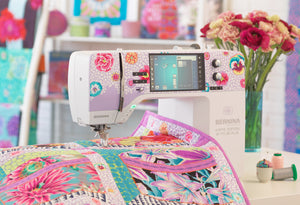

We Love Our Quilting Community
At High Country Quilts we care deeply about community. With our experiences in retail, we know that a store is not only a place to shop but also a place for the community to gather and share. During this busy...


You can spend hours comparing stitch length, throat space, embroidery modules, and presser feet, then still end up with the wrong purchase if you choose the wrong shop. That's the mistake I see most often. The machine matters, but the BERNINA sewing machine dealer you buy from decides whether you get a smooth setup, solid training, real repair support, and a machine that fits the way you sew.
A beginner can spend weeks comparing models online and still buy the wrong setup. The specs may look straightforward, then the first real project exposes the gaps. Threading feels confusing, tension is off, the accessories sit unused, and no one in the process showed how to use the machine in a way that fits the sewer's skill level.
Dealer choice decides whether that purchase becomes a useful tool or a frustrating return visit.

BERNINA International AG is headquartered at Seestrasse 161 in Steckborn, Switzerland, with the main switchboard listed as +41 52 762 11 11 (ZoomInfo profile). That matters because it shows the brand sits inside a serious international manufacturer structure, not a loose marketplace of sellers.
A premium sewing machine only works well when the dealer stands behind it. A BBB-listed Bernina Sewing Center in Nebraska pairs machine sales with classes and servicing/repair, and it also carries cabinets, accessories, notions, and used machines (BBB profile). That model keeps the customer inside one support system instead of spreading the purchase across unrelated vendors.
Practical rule: if a dealer cannot explain setup, support, and repair in plain English, walk away.
That advice matters even more for a buyer in Colorado Springs who wants long-term help, not just a box at checkout. High Country Quilts is the kind of local dealer people should look for, because the value lives in training, setup, and service after the sale. A machine bought from the right shop gets used correctly sooner, stays in better shape longer, and gives the owner a clear place to go when something feels off.
The cheapest deal often becomes the most expensive mistake. Buyers who chase price alone end up with a machine they do not know how to use, a store that does not know their history, and no reliable path for service when they need it.
A shop can say it sells BERNINA machines and still leave you exposed. Verify the dealer through BERNINA's official channels before you pay, then compare that result with what the store says on its own site.

Start with the dealer listing and then ask for documents you can inspect. An authorized shop should be able to show an authorized dealer certificate, a service history record for the machine line it supports, or warranty registration confirmation. If the dealer cannot produce any of that, treat the claim as unverified.
Ask who handles service in the store and who is trained on BERNINA machines. Ask for names, not general promises. A real dealer can tell you whether service is handled in-house, by a named technician, or through a clear support channel.
The reason is simple. BERNINA's own support structure for pre-owned machines treats machine history and service documentation as part of the machine's value, not as a casual resale detail (BERNINA pre-owned support). If documentation matters there, it matters before you buy too.
A non-authorized seller can still look polished and persuasive. The difference shows up after the sale, in setup help, repair access, and the way the seller handles questions about accessories or compatibility. If the shop cannot explain those pieces clearly, you are buying a box, not support.
A premium machine without a reliable support path is just a complicated box on your sewing table.
Ask direct questions before you commit.
A shop that answers plainly is usually prepared to stand behind the machine later. That matters in Colorado Springs, where buyers often want a local place like High Country Quilts for setup, training, and service after the sale, not a reseller that disappears once the card is charged.
Buy from an authorized dealer if you want ownership to feel predictable. Buy from a non-authorized seller if the only thing you are comparing is the sticker price. Those two paths lead to very different results once the machine is in your sewing room.
| Feature | Authorized Dealer | Non-Authorized Seller |
|---|---|---|
| Warranty confidence | Clearer brand-backed support path, with the dealer able to explain what is covered and how claims are handled | Support can be vague, and the buyer may have to sort out coverage alone |
| Setup help | Usually includes setup, basic calibration, and matching the machine to the way you sew | Often limited to shipping the box and handing over a manual |
| Training | Hands-on classes, owner orientation, and follow-up help are common parts of the sale | Usually no real training, just a quick handoff |
| Repair access | More likely to connect you with a trained technician, approved service channel, or proper parts source | You may end up searching for a third-party repair shop on your own |
| Machine fit | Dealer can ask about quilting, embroidery, garment sewing, and skill level before recommending a model | The buyer is left to guess whether the machine fits the job |
| Service protocol | Authorized shops usually log the sale, document the machine, and guide you through the next step instead of guessing | Service history may be incomplete, making future troubleshooting slower |
| Support after purchase | A real dealer keeps answering questions after the sale and helps with accessories, feet, and setup changes | Many non-authorized sellers disappear once the charge goes through |
That table is the real buying decision. The difference is not just who rings up the sale. It is who helps you use the machine well after the box is opened, when you are dealing with tension quirks, foot choices, or a project that pushes the machine harder than expected.
Authorized dealers also have a cleaner process for service and owner support. You usually get a documented handoff, clearer responsibility for repairs, and a path back to the shop when something needs attention. A serious dealer does not treat service as an afterthought. It builds the sale around it.
The support gap shows up fast.
The first time you need tension help, presser-foot guidance, or a parts match, the difference becomes obvious. Authorized dealers can usually talk through the machine in the language of real use. Non-authorized sellers often have nothing useful to offer once the payment clears.
If the store can't help you own the machine, it's not the right store.
That is why I tell students to buy support, not just hardware. In Colorado Springs, that usually means working with a local shop like High Country Quilts, where setup, training, and service are part of the ownership experience instead of a one-time transaction.
Don't walk into a dealer and hope the salesperson leads you well. Bring your own checklist. The right questions expose whether the shop understands quilting, embroidery, garment sewing, and long-term machine ownership.

If the dealer gets impatient with basic questions, that tells you enough. A serious shop welcomes them because those questions separate a good match from an expensive mistake.
A dealer who knows the product will talk about how the machine behaves under load, what accessories matter, and which features you'll use. A dealer who only repeats brochure language is giving you a sales pitch, not advice.
Good dealers talk about use cases. Bad dealers talk about excitement. You want someone who asks what you sew, how often you sew, and what frustrates you about your current machine.
High-intent buyers should ask one more thing. What happens after the sale if you need software help, maintenance, or an adjustment? If the answer is vague, move on. That kind of vagueness costs more later than any discount ever saves.
The handoff matters. A serious dealer does more than put a boxed machine in your car. It sets the machine up, walks you through the controls, and makes sure you can sit down at home without guessing at every button.

A premium machine can include embroidery modules, overlocking functions, and software connections that trip up a new owner fast. Setup should clear that out before you ever begin a project. The dealer should match the machine to your skill level and the kind of sewing you do, then show you how the parts work together.
A good first appointment covers threading, bobbin handling, tension basics, foot selection, and the first few steps of your preferred project. If you sew quilts, ask how the machine behaves with layers and walking feet. If you plan to use embroidery, ask how the module attaches, how designs load, and what settings usually need attention before the first stitch. That is the part of ownership online sellers skip, and it is the part that saves you from frustration later.
Local instruction changes the whole experience. You are not left at home with a manual and a pile of attachments. You get shown how to use the machine in real time, with someone who can correct mistakes before they become habits.
Ask for hands-on help with classes, threading, tension, presser feet, and your first project path. Ask how the shop handles routine servicing/repair too. A dealer that explains maintenance clearly helps you protect the machine, keep it running well, and avoid unnecessary downtime. That matters even more if you are new to quilting, new to computerized features, or stepping up from a simpler machine.
The ownership side continues after the first lesson. A dealer should tell you what to watch for, when to bring the machine back in, and where to go if you need help with adjustments, software questions, or a routine checkup. That is the difference between buying a machine and learning to use it well.
High Country Quilts in Colorado Springs fits the dealer model the right way. It's an authorized BERNINA dealer, and its focus on expert training and support lines up with what serious buyers need after the sale. That matters more than glossy product photos because ownership starts with setup, not checkout.
The shop is also built around the wider sewing life, not just the transaction. Its community focus, fabric selection, and class environment give buyers a place to learn, ask questions, and keep improving after the machine comes home. That is the kind of support structure beginners need when they're learning a complex machine.
For shoppers comparing a bernina sewing machine dealer locally, that combination is the point. You want a place that sells the machine, helps you understand it, and stays relevant after the first project is done. High Country Quilts does that in a local setting where support is still personal, not anonymous.
High Country Quilts also serves people who want more than a machine aisle. The shop's fabric and notions side makes it a practical stop for quilters who need tools, project material, and continued guidance in one place. For a buyer, that reduces friction and keeps the learning curve manageable.
If you're in Colorado Springs and you want the ownership side handled properly, start with a dealer that treats instruction and support as part of the product. Visit High Country Quilts to see how an authorized BERNINA dealer approaches setup, classes, and long-term machine support.
At High Country Quilts we care deeply about community. With our experiences in retail, we know that a store is not only a place to shop but also a place for the community to gather and share. During this busy...

Hi! We’re Adam and Renee Wheaton, the new owners of High Country Quilts! For more than 40 years, we’ve owned and operated vacuum and sewing businesses. Following in Renee’s father’s footsteps after he retired from All Discount Vacuum and Sewing in Colorado...


Leave a comment