

We Love Our Quilting Community
At High Country Quilts we care deeply about community. With our experiences in retail, we know that a store is not only a place to shop but also a place for the community to gather and share. During this busy...


Ready to start quilting but not sure where to begin? Finding the right class is the perfect first step. While a quick search for "beginner quilting classes near me" on Google Maps is a great starting point, the real gems are often found by digging a little deeper into your local community.
Finding a class that fits your style and schedule is easier than you think. It's all about knowing where to look—both online and right in your own neighborhood. Combining a few different search methods will give you the best possible options, from a comprehensive beginner's course to a fun, one-off project workshop.
Your phone is your best friend here. A quick search on Google Maps for "quilting classes" will instantly show you local quilt shops and sewing studios, complete with reviews from other students. This is the fastest way to get a lay of the land.
But don't stop there. Platforms like Eventbrite and even Facebook Events often list specialty workshops that might not show up in a standard search. These can be great for finding unique classes focused on a specific technique or holiday project.
Sometimes the best finds are offline. Your local quilt shop is more than just a place to buy fabric—it's a community hub. Pop into a store like High Country Quilts and just ask what they offer. The staff are quilters themselves and can give you the inside scoop on their class schedule and which ones are best for someone just starting out.
A few other places are worth a look:
Quilting is a huge and growing community. Believe it or not, there are between 9 and 11 million active quilters out there. The industry is on track to become a $5 billion market by 2027, according to a Craft Industry Alliance report. You're in good company
You’ve tracked down a few local options—fantastic! Now comes the fun part: figuring out which beginner quilting class is the perfect match for you. Not all introductory courses are created equal, and the right one will give you a solid foundation to build on for years to come.
First things first, take a close look at the curriculum. A great beginner class won't just throw you into a complex project. Instead, it will focus on the absolute essentials. You want to see things like mastering the rotary cutter, sewing a consistent quarter-inch seam, and learning how to properly prepare your fabric. These are the skills that form the bedrock of every single quilt.
Beyond the "what," you need to consider the "how." The classroom environment itself can make or break your experience. I always tell new quilters to pay attention to class size. A smaller group, say 5 to 15 students, usually means you'll get more one-on-one time with the instructor. That personal guidance is gold when you're fumbling with a new machine or trying to get your seams to line up just right.
The instructor's experience and personality are just as crucial. You're looking for someone who is not only a talented quilter but also a patient and encouraging teacher. Check out online reviews or just ask the shop staff about the instructor. Their insights can tell you a lot about what to expect.
A truly great beginner class does more than just teach you how to make one project. It equips you with the fundamental skills and confidence to tackle future quilts on your own, turning a one-time lesson into a lifelong hobby.
This quick overview gives you a snapshot of what to expect in terms of cost, time, and class size. It's a handy reference when you're weighing your options.
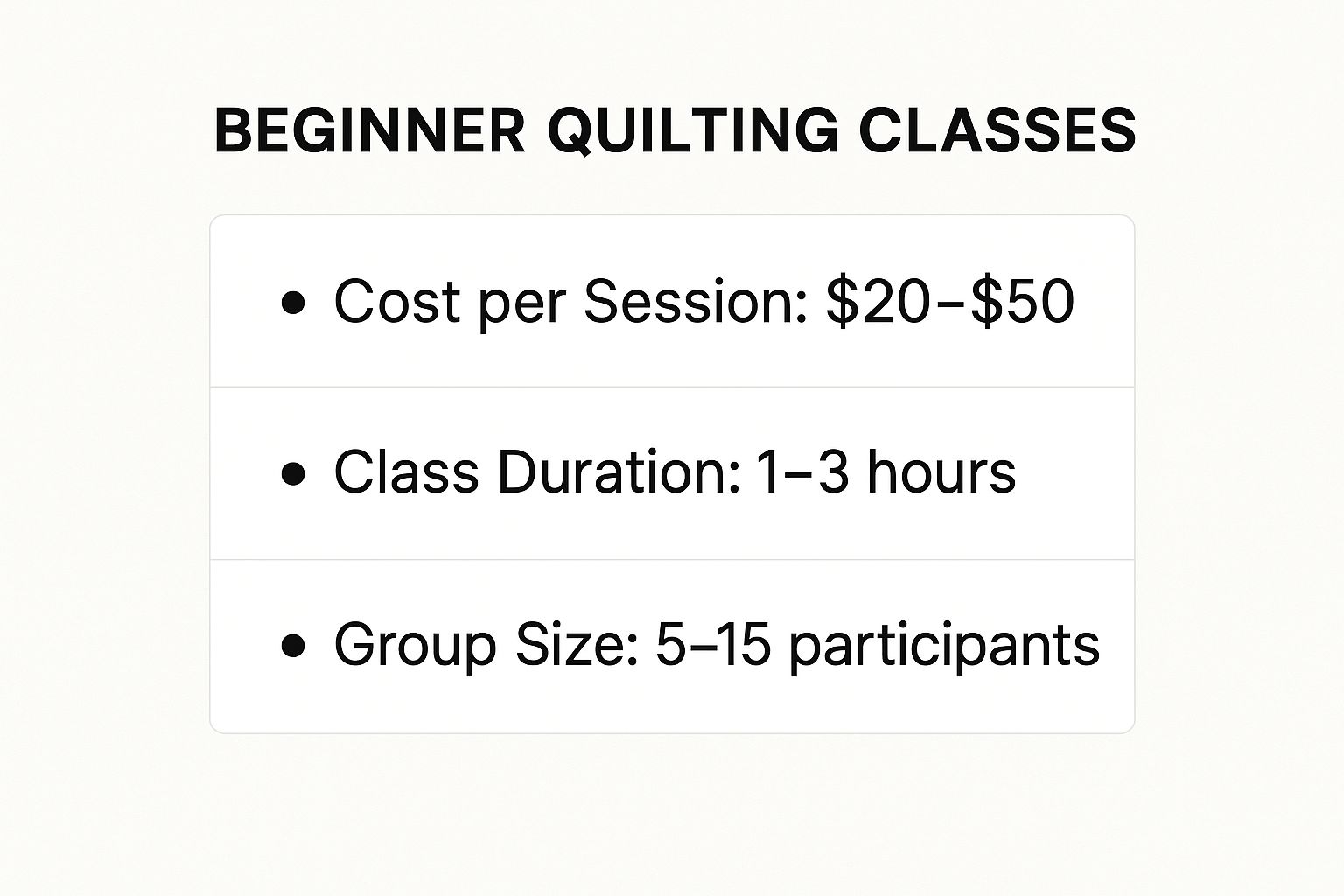
As you can see, most beginner sessions are pretty accessible, so you can likely find a great fit for your budget and schedule.
Before you pull out your credit card, a little homework goes a long way. Don't be shy about calling the shop or emailing the instructor with a few questions. Getting clarity upfront ensures you won't be disappointed later.
Here are the essential questions I always recommend asking:
To make this even easier, I've put together a simple checklist. Print it out or save it to your phone and use it to compare the different classes you're considering. It’s a great way to see how they stack up side-by-side.
| Feature | Class A | Class B | Class C |
|---|---|---|---|
| Instructor's Name & Experience | |||
| Total Cost ($) | |||
| Class Duration (Total Hours) | |||
| Class Size (Max Students) | |||
| Project Focus | |||
| Covers Core Skills? (Rotary, ¼" Seam) | |||
| Materials Included? (Kit, Fabric, etc.) | |||
| Sewing Machine Provided? | |||
| Schedule (Weekly, Weekend, etc.) | |||
| Online Reviews/Reputation |
Filling this out will give you a clear, objective look at your choices, helping you confidently pick a class that will set you up for success. Here at High Country Quilts, we design our beginner courses to check all these boxes, ensuring you get a supportive and inspiring start on your quilting adventure.
Before you dive headfirst into your new quilting adventure, it's a good idea to figure out the budget. Knowing the full cost upfront means you can focus on the fun stuff—learning and creating—without any financial surprises popping up later.
So, what should you expect to pay? Most beginner workshops fall somewhere in the $50 to $150 range. This usually covers the instructor's expertise and your spot in the classroom. It's always a good idea to look for shops with transparent pricing policies so you know exactly what you're getting for your money.
This is where you have a couple of options. Many beginner classes offer a pre-packaged material kit, which can run anywhere from $30 to $70. Honestly, for your first class, this is often the best way to go. The kits come with all the fabric and thread you'll need, perfectly coordinated for your project, which saves you a potentially overwhelming trip to the fabric store.
The other option is getting a supply list and buying everything yourself. This gives you more creative control, which is great, but it can also be a bit daunting for a total beginner. If you do go this route, my advice is to stick with high-quality quilting cotton from a trusted shop like High Country Quilts to avoid any frustration.
Pro Tip: Always ask if sewing machines are provided! Many studios, including ours, have BERNINA machines available for students. This lets you try before you buy and saves you from lugging your own machine to and from class.
Whether you get a kit or not, you'll need a few essential tools. Think of these as a one-time investment that will serve you well on countless projects to come. These are the absolute basics for getting clean, accurate cuts.
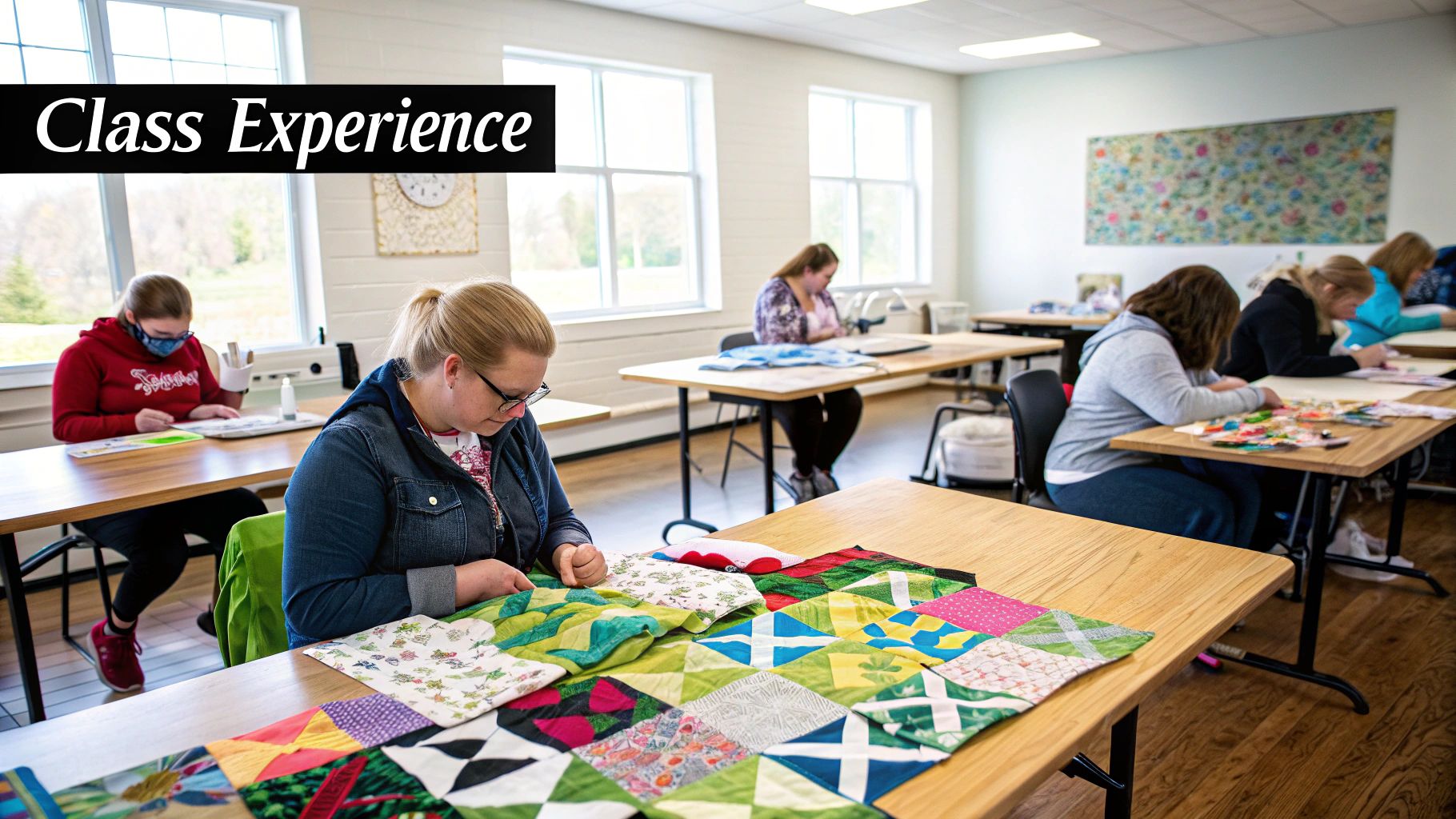
Trying to learn quilting on your own can feel a little isolating. While there are tons of great tutorials out there, one of the best parts of signing up for a beginner class is the instant community you step into. It’s about so much more than just mastering a quarter-inch seam—it’s about sharing your progress, celebrating the small wins, and getting a boost of encouragement when a project starts to feel overwhelming.
There’s a special kind of camaraderie when you’re working alongside other beginners. You’re all in the same boat, navigating the same challenges, whether it's choosing the right fabrics or trying to make sense of your sewing machine's quirks. This creates a really supportive space where no question feels silly and you can all learn from each other's experiences.
Think of your first course as a doorway into the wider world of local quilting. I’ve seen it time and time again: students who meet in a beginner class often become fast friends. They’ll go on to join local quilt guilds together or even just form their own small groups that meet up for coffee and a bit of stitching.
These friendships become an amazing support system that lasts long after the final class is over.
Joining a class means you're not just learning a skill—you're finding your people. This sense of belonging is often what keeps quilters engaged and passionate for years, turning a simple hobby into a meaningful part of their lives.
The quilting world is wonderfully diverse and always happy to see new faces. It might have a reputation as a craft for retirees, but the community is seeing a fantastic wave of newcomers. In fact, recent surveys show that 18% of quilters now identify as beginners, a big jump from just 11% the previous year. You’re starting at a great time, with so many others just beginning their journey, too. You can read more about the growing quilting market from the Craft Industry Alliance.
Here at High Country Quilts, we see this firsthand every day. Our classes are filled with people from all walks of life, brought together by a shared desire to create something beautiful with their own two hands.
So, you’ve found the perfect class and are ready to dive into the world of quilting. Fantastic! To make sure your first day is as smooth and enjoyable as possible, a little prep work can make a world of difference. It’s not about perfection; it’s about getting organized so you can relax and soak up all the new skills.
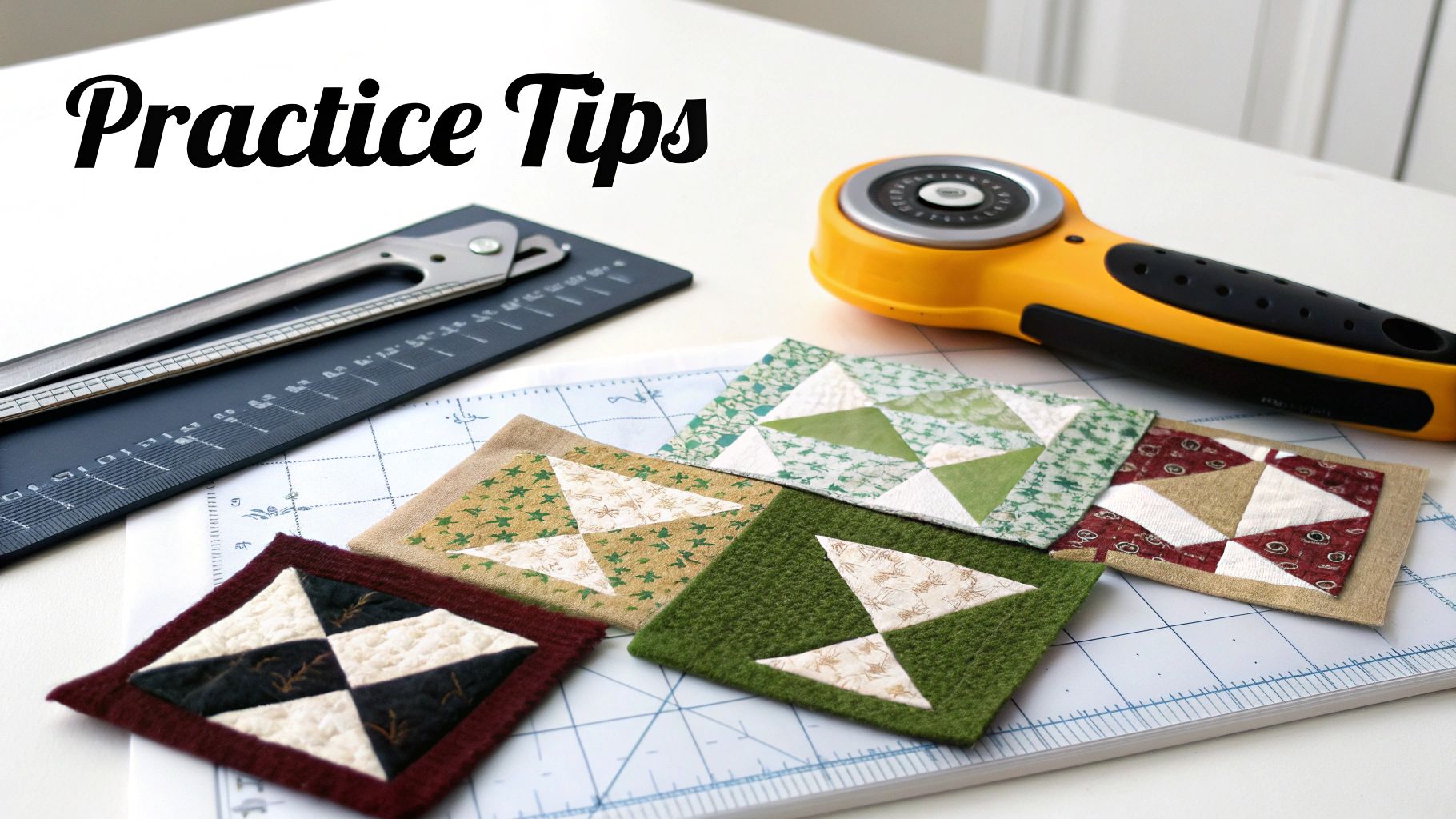
Before you even head out the door, take a moment to get your supplies in order. A simple tip I’ve learned is to label your rulers and rotary cutter with your name—it’s amazing how tools can get mixed up! If your fabric needs a good press, do it at home. These small steps mean you won’t be scrambling and can give your instructor your full attention from the get-go.
Most importantly, show up with an open mind. Your first seams might be a little crooked, and your corner points might not line up perfectly. Guess what? That’s completely okay! Every single quilter started right where you are. Embrace the wobbly stitches and don’t ever hesitate to ask a question.
The real learning often happens when you practice what you’ve learned between sessions. You'd be surprised what just 15-20 minutes of sewing a few seams at home can do for your confidence and muscle memory. Repetition is key to making those new techniques feel second nature.
Your beginner class is the starting line, not the finish. The real goal is to build the skills and confidence to tackle your next project and find your people in the quilting community.
Once your course wraps up, don't let that creative energy fade! Think about what comes next.
At High Country Quilts, our greatest joy is seeing former students come back into the shop, show off what they've made, and become a lasting part of our community.
Jumping into your first quilting class can bring up a lot of questions. I see it all the time with new students! Feeling prepared is the best way to walk in with confidence, so let’s clear up a few things you might be wondering about.
Honestly? Not at all. Any class labeled "Beginner" or "Intro to Quilting" is built for someone who has never touched a sewing machine before.
We start from square one. I mean it. We’ll show you how to thread the machine, wind a bobbin, and sew a straight seam. Don't let a lack of experience hold you back; these classes are designed specifically for you. A good instructor expects you to be a total novice and is ready to walk you through every single step.
That's a super common concern, but it’s rarely a problem. Most quilt shops and studios—including High Country Quilts—have classroom machines you can use. This is a huge bonus, as it lets you get a feel for the craft before you invest in your own equipment.
When you're looking at class descriptions, just check for details on machine rentals or usage fees. Sometimes it's free, sometimes there's a small charge. A quick phone call is the easiest way to confirm and reserve one. Plus, you get to test drive different models, which is incredibly helpful when you eventually decide to buy one.
One of the best pieces of advice I can give a new quilter is to simply ask. Whether it's about renting a machine, what supplies you really need, or a confusing step in a pattern, just ask. The quilting community is all about sharing knowledge and helping each other out.
This really depends on the class format, so you can find something that fits your schedule. There are two main types you'll run into:
Think about how you learn best. Do you like immersing yourself for a full day, or do you prefer learning in smaller chunks with time to let it all sink in? Either way, you'll be on your way to making your first quilt.
Ready to start your quilting adventure with some expert guidance? The friendly team at High Country Quilts is here to answer all your questions and help you find the perfect beginner class. Explore our class schedule and sign up today!
At High Country Quilts we care deeply about community. With our experiences in retail, we know that a store is not only a place to shop but also a place for the community to gather and share. During this busy...

Hi! We’re Adam and Renee Wheaton, the new owners of High Country Quilts! For more than 40 years, we’ve owned and operated vacuum and sewing businesses. Following in Renee’s father’s footsteps after he retired from All Discount Vacuum and Sewing in Colorado...


Leave a comment