

We Love Our Quilting Community
At High Country Quilts we care deeply about community. With our experiences in retail, we know that a store is not only a place to shop but also a place for the community to gather and share. During this busy...


You're standing in front of a bolt rack or scrolling a fabric shop late at night, and every red, white, and blue print starts to blur together. One fabric looks soft enough for a quilt back, another feels crisp in your hand, and a third sounds like it belongs on a porch in the wind. That confusion is normal, because American flag fabric can mean a decorative cotton print, or it can mean true flag-grade material built for outdoor use.
The choice matters more than most first-time makers expect. Cotton patriotic prints behave like quilting cotton, while nylon, polyester, and bunting fabrics are built for a different job, especially where sun, wind, and weather are involved. If you match the fabric to the project from the start, the sewing gets easier and the finished piece looks cleaner.
A beginner often starts with a simple question, “Which red, white, and blue fabric do I buy?” The answer depends on whether the project will hang indoors, sit on a table, or fly outside. A wall hanging can look beautiful in quilting cotton, while an outdoor flag needs a very different kind of construction and fiber behavior.
For quilts, runners, pillows, and other home décor, cotton patriotic print fabric is usually the most comfortable place to begin. It cuts cleanly, presses well, and behaves predictably under a rotary cutter and sewing machine. That makes it ideal for wall hangings, lap quilts, and table runners where the fabric won't take the abuse of weather.
If you're unsure whether a print is just decorative or meant for something more, look closely at the label. Fiber content, weight, and intended use tell you a lot before you ever cut a square. A cotton print that looks like a flag motif is not the same thing as a flag-grade textile made to hold up outdoors.
For digital makers or shop owners comparing options, a print-on-demand resource like PuppetVendors print on demand can help you understand how patriotic graphics are translated into finished fabric products. That's useful context when you're deciding whether you want a printed design or a construction-grade textile.
Practical rule: If the project is going to be washed, handled, and enjoyed indoors, cotton is usually the calmer, more forgiving choice.
Outdoor flags live by different rules. Federal specifications distinguish between cotton bunting, lightweight nylon bunting, heavyweight nylon bunting, and nylon-wool bunting for outdoor American flag fabric, and the heavyweight nylon version is specified as 200-denier single yarn with a weight of 32 oz/yd², 60 yarns per square inch in the warp, 56 in the filling, and minimum breaking strengths of 175 lb warp and 152 lb fill (DDD-F-416F specification). That kind of construction is built for durability, not just appearance.
A lot of new sewists are surprised that a true outdoor flag can feel thinner or more technical than quilting cotton. That's because the goal is different. The right flag fabric needs to move in wind, resist wear, and hold up under outdoor exposure, especially when the display is on a porch, pole, or commercial site.
If you're making a decorative patriotic banner for a window, cotton is often enough. If you're making something intended to behave like a real flag outside, start with the flag-grade category and confirm the intended use before you buy.
A patriotic project is easier to handle when the right tools are on the table before you cut the first strip. Fabric that shifts, needles that snag, or seams that stretch out of line can turn a simple banner into a pile of corrections. Start with the basics, then match the tools to the kind of fabric you chose.

For cotton projects, keep rotary cutters, a cutting mat, quilting rulers, sharp scissors, pins, and an iron close by. Cotton patchwork responds well to careful measuring, so the mat and ruler help stripes stay square and borders stay even. Pressing matters just as much as cutting, because each flattened seam gives the next seam a cleaner place to sit.
Synthetic flag fabric asks for a different setup. Ballpoint needles help the machine pass through nylon or polyester without making extra snags, and polyester thread usually suits outdoor wear better than thread picked only for color. If the fabric feels slippery, clips can hold layers more cleanly than pins because they leave fewer holes and let the cloth settle without distortion.
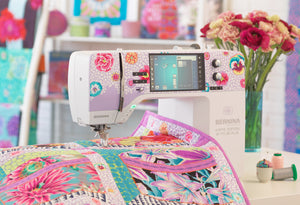
The presser foot also changes how the fabric behaves under the needle. A BERNINA walking foot feeds stacked layers at the same pace, which helps when stripes need to stay lined up, and a BERNINA appliqué foot gives better visibility for star work and other small shapes. For outdoor fabric, 200-denier nylon is a practical benchmark for standard residential use, while heavier 210-denier polyester is often chosen for harsher wind exposure. flag fabric selection guidance from runcustomflag.com
A machine that feeds evenly matters more than a decorative stitch when you are matching stripes and seams.
Choose supplies by project type, not only by color. A quilted wall hanging asks for cotton, batting, and a standard sewing setup, while an outdoor banner needs steadier thread choices, firmer handling, and fabric that can stand up to damp weather.
Outdoor flag guidance also points to ISO 105-B01/B02 and AATCC 16.3 lightfastness tests, with a blue-wool scale score of 4 or above considered acceptable. That matters because sun exposure often takes color before it takes shape, and faded red or blue can change the whole look of the piece.
The first cut is where many patriotic projects go sideways. Stripes drift, stars lose their points, and synthetic edges start fraying before the second piece is even on the table. Good prep prevents most of that trouble.

If your fabric is cotton, pre-wash it before you measure. That helps reduce shrinkage surprises after the project is sewn, especially when white background fabric sits next to red or blue sections. Press the fabric flat after washing so the grain line settles before you trim.
Use the ruler-and-rotary-cutter method for stripe pieces. Keep the long edge aligned to the grain, then cut slowly so your stripe widths stay consistent. Patriotic prints can look forgiving from a distance, but small alignment errors show up quickly once seams start crossing each other.
Nylon and polyester behave differently. They can fray at the cut edge faster than cotton, so it helps to finish or seal the edge before you spend time on assembly. A narrow edge treatment, or a stabilizing step before cutting detailed shapes, can save you from losing shape later.
Stars deserve special attention. Make your star template large enough to turn neatly when appliqué starts, because tiny points can collapse or distort under the needle. If you're unsure, cut the star slightly larger than you think you need, then trim after the shape has been secured.
Practical rule: Cut on the grain whenever you can. A straight grain keeps stripes stable, while off-grain pieces twist more easily during sewing.
A first patriotic project should teach one skill at a time. Start with a piece that lets you practice straight seams, then move to something with a back, then finish with a project that asks for cleaner corners and border control. That way, each project builds on the last.
A 24 x 36 inch wall hanging is a comfortable first make because it stays manageable on the cutting table. Use cotton patriotic prints, simple strip piecing, and fusible star appliqué. If you want clean edge stitching, a BERNINA #37 patchwork foot or a similar quarter-inch foot helps keep seam allowances consistent.
A simple assembly path works well here. Cut your stripe sections first, sew them into rows, then press each seam before joining the rows together. For appliqué, a short stitch length keeps the stars anchored without making the edges feel stiff.
A pillow teaches you pattern matching in a small space. An envelope back keeps the closure simple, and the front lets you align a stripe motif across the center seam. That alignment matters because even a small mismatch becomes obvious on a square pillow front.
Use cotton if you want a crisp, washable finish, and consider a walking foot if the layers shift while you sew the pillow front to the backing pieces. Keep the seam allowance even and press the back flaps before final assembly so the opening lies flat.
The table runner is the best place to practice neat finishing. Mitered corners show whether your cuts were accurate, and they also teach you how fabric behaves when it changes direction at the edge. It's a small project, but it rewards patience.
For a classic runner, cut the center panel first, then add borders in the order you want the eye to travel. A consistent stitch length helps the corners hold their shape, and a narrow seam allowance adjustment can keep bulky intersections from stacking up. If you're using a heavier fabric, slow the machine down and test the tension on scraps before sewing the final edge.
Cotton quilts and outdoor flag items need different care, and mixing those habits can shorten the life of both. Washing too aggressively can fade color or stress seams, while gentle handling keeps the fabric looking better for longer. The key is to match the care method to the fiber.

Cotton quilting projects can usually be machine washed in cold water, and a color-catcher sheet helps protect white sections from red dye bleeding. Dry on a low setting, then remove while slightly damp if you want the seams to relax without hard wrinkles. That's the easiest care path for indoor décor.
Nylon is different. It's better handled with a hand wash or gentle cycle, then air dried so the fabric doesn't take unnecessary heat. Polyester can tolerate a little more than nylon in some settings, but low-heat ironing is still the safer option if the project needs pressing.
Store quilts flat or rolled when you can. Sharp fold lines can become permanent, especially in projects that sit in storage between holidays or seasonal displays. For outdoor pieces, placement matters just as much as washing, because repeated sun exposure is usually the first thing that wears a bright patriotic finish down.
If the project is meant to live outdoors, rotate or bring it in when the weather is harsh. For anything sentimental, consider professional cleaning when a piece is too delicate for home laundering. That's especially true when the item has star appliqué, layered seams, or synthetic sections that could lose shape under heat.
A lot of makers use the phrase “American flag fabric” to mean any red, white, and blue cloth, but those aren't always the same thing. A patriotic print is a design choice. A true flag representation carries etiquette expectations, and those expectations matter when the project is displayed or used.
The Library of Congress notes that Federal Specification DDD-F-416F goes beyond appearance and covers the proper fabrics and thread, along with the required colors Old Glory Red, White, and Old Glory Blue (Library of Congress). That's the divide many crafters miss. A quilt block with stars and stripes is decorative art, but a finished item intended to function as a flag sits in a different category.
A patriotic print can borrow the look of the flag without becoming a flag itself.
The common mistake is assuming all flag imagery can be used the same way. A pillow, wall hanging, or tote with patriotic motifs is usually treated as décor. A representation meant to be displayed as a flag should be handled more carefully, especially if it will be outdoors or carried into public display settings.
Another practical point is sourcing. Recent federal procurement discussion in industry commentary says government-purchased flags must be manufactured entirely in the United States, with the fabric, thread, dyes, and final assembly all domestic (industry commentary on procurement policy). That doesn't mean every consumer project must follow procurement rules, but it does explain why “Made in USA” can matter so much to buyers who want a flag for formal use.
If you'd rather work with patriotic imagery in a decorative, everyday context, browse American flag stickers to see how the motif can be used outside fabric entirely. That kind of visual comparison helps many sewists separate symbolic design from official flag construction.
High Country Quilts helps beginners choose fabric with confidence, especially when a patriotic project needs the right balance of beauty, durability, and respectful use. If you're ready to pick up quality quilting cottons, ask about BERNINA guidance, or plan your next flag-inspired project, visit High Country Quilts and get started with a shop that knows how to support your stitching from the first cut to the final press.
At High Country Quilts we care deeply about community. With our experiences in retail, we know that a store is not only a place to shop but also a place for the community to gather and share. During this busy...

Hi! We’re Adam and Renee Wheaton, the new owners of High Country Quilts! For more than 40 years, we’ve owned and operated vacuum and sewing businesses. Following in Renee’s father’s footsteps after he retired from All Discount Vacuum and Sewing in Colorado...


Leave a comment