
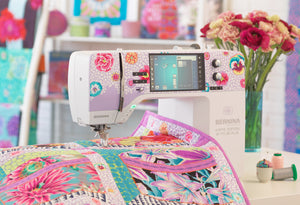

We Love Our Quilting Community
At High Country Quilts we care deeply about community. With our experiences in retail, we know that a store is not only a place to shop but also a place for the community to gather and share. During this busy...


You've got the quilt top spread out, the batting is creeping off the table, and pinning every layer feels like it's going to eat the whole evening. That's usually the moment a quilter reaches for 505 spray adhesive, because it turns a slippery stack of fabric into something you can manage in a small sewing room without wrestling it for an hour.
What makes this product different is simple. ODIF 505 Spray & Fix is a temporary fabric adhesive made for fabric and thread, not a general household glue, and it's positioned for basting quilts, stabilizing layers, and temporarily holding materials in place during sewing (quilting community discussion on 505's fabric-specific history). That purpose-built design is why quilters care about it so much. It's supposed to hold long enough to quilt cleanly, then release without turning your needle work into a sticky mess.
The trick isn't whether 505 works, it's how lightly you use it. In a home studio, the difference between a smooth quilt sandwich and a stiff, grabby one usually comes down to distance, ventilation, and restraint. A can that's sprayed like paint won't behave like basting at all.
505 isn't trying to replace every basting method. It's a low-tack, repositionable aerosol that gives you just enough hold to keep fabric layers from drifting while you sew, which is exactly why quilters use it for appliqué, machine embroidery, basting, and stabilizer placement (ODIF product description and usage notes). It's also described as odorless, colorless, acid-free, and not prone to gumming needles, which matters more than any glossy marketing line ever will when you're trying to stitch without constantly stopping to clean up.
Pins are reliable, but they slow you down and they get in the way when you're quilting dense lines, curves, or free-motion passes. 505 gives you a temporary hold that lets the layers stay where you placed them without poking your hands every few inches. That's especially useful when the quilt is too large for the machine bed to support easily and you need the layers to behave while you reposition.
Practical rule: if the fabric needs to stay put while you stitch, but shouldn't be permanently glued down, 505 is the right kind of hold.
The product also belongs to a mature adhesive category built on decades of spray and pressure-sensitive innovation. That broader history matters because quilting sprays exist only because adhesive technology matured toward controlled tack and cleaner release, not because someone watered down craft glue. You're using a specialized tool from a well-developed adhesive family, not an all-purpose shortcut.
For a shop-bought option with the same use case, 505 Spray Adhesive 7.2 fl oz is one of the sizes High Country Quilts carries in its fabric care and sprays selection. If you want to compare can sizes before you commit to a project, that's a practical place to start.
A good spray-baste starts before the can comes off the shelf. Clear the work area first, because overspray does not stay politely where you intended it to land. A hard floor, large table, or covered cutting surface works better than carpet, and the surface should be large enough that you can smooth the whole section without lifting and dragging the layers around.

Press the quilt top, backing, and batting flat before you do anything else. A wrinkle that's already in the backing doesn't vanish because adhesive was added on top of it. It gets trapped there, and you'll see it later as a pucker or a permanent ripple in the finished quilt.
Fabric prep matters too. If the cloth still has sizing or manufacturing finish on it, the adhesive won't behave as predictably. I also test a scrap when I'm working with a new fabric line, especially if the print is delicate, heavily dyed, or has a surface finish that feels different in hand.
A simple studio habit saves a lot of frustration:
Keep the fabric flat, keep the room ready, and keep the spray step quick. That sequence matters more than brand loyalty ever will.
The working distance is the part most beginners ignore, and it's the part that controls the result. Hold the can about 25 to 30 cm, roughly 10 to 12 inches, away from the fabric, and use short bursts, not one long blast (application guidance). That light mist gives you tack without turning the fabric damp, stiff, or shiny.

For most work, spray the batting or the smaller fabric piece, not the entire quilt top. That keeps overspray away from the front of the quilt and gives you more control over where the adhesive lands. The can should be shaken first, then moved in a light pass, then put down before the surface starts to look wet.
If it looks wet, you've probably used too much.
Once the spray is on, you only get a short working window before the tack sets up. Place the fabric immediately, then smooth from the center outward so air doesn't get trapped under the layer. If the piece shifts, peel it back gently and reset it while the adhesive is still active instead of forcing the layers into place.
The same technique adapts across projects. For basting, I spray the batting in sections and build the quilt sandwich piece by piece. For appliqué, I use a lighter pass and position fast. For stabilizer, I only need a quick mist to stop drift under the hoop.
You can also use this product in a cleaner, more precise way by learning with a live demo.
A good can leaves you with hold, not a soaked sandwich. That's the line to protect.
A quilt sandwich asks for a different hand than a tiny appliqué piece. For basting, I work in sections, spray the batting, smooth the backing over it, then bring the top into place so overspray stays away from the right side. That approach is cleaner in a home sewing room because the adhesive stays where the layers will be hidden once quilting starts.
Appliqué needs less adhesive. A quick mist on the back of the appliqué shape is usually enough to hold it to the base fabric, and then the machine stitching can secure the edges. For stabilizer placement, the goal is even simpler, just enough tack to keep the sheet from wandering while the hoop is loaded and the stitching starts.

The common mistake is treating temporary as harmless in every setting. It is not harmless in every project, because a temporary hold still leaves adhesive in the fabric system, even if the bond is light and washes out later. 505 is generally described by the manufacturer as acid-free, non-toxic, and designed to wash out over time, which makes it useful for working quilts, appliqué, and stabilizer tasks, but still worth a careful choice for anything meant to sit folded for a long time (manufacturer FAQ).
In class, I separate the methods by purpose:
| Basting Method Comparison for Keepsake Quilts | |||
|---|---|---|---|
| Method | Hold Time | Best For | Heirloom Suitability |
| 505 spray adhesive | Temporary | Quilting, appliqué, stabilizer placement | Good for working quilts, more caution for stored heirlooms |
| Pin basting | Long-lasting until removed | Large quilts, long quilting sessions | Strong choice for keepsake quilts |
| Thread basting | Long-lasting until removed | Hand quilting, delicate work | Strong choice for heirloom quilts |
That table reflects real trade-offs in the sewing room. Pin basting takes more setup time, but the hold stays put without relying on an aerosol bond. Thread basting is even slower, yet it gives me the most confidence on a quilt I expect to handle carefully for the long term. 505 earns its place when speed matters and the project will move on to quilting, appliqué, or stabilizer work soon after the spray goes on.
The question with 505 is not whether it holds a quilt together on the day you spray it. It is what happens when the quilt becomes a wedding gift, a memory quilt, or a competition piece that will spend time folded, stored, or displayed before it ever sees a wash. The product is described as acid-free and wash-out-friendly, but storage conditions, humidity, and heat are separate concerns that do not disappear just because the adhesive is temporary.
For a quilt that will be quilted soon, handled regularly, or washed after use, 505 fits the job well. For a quilt that may be folded away, framed, or stored for years, I hesitate before using spray alone as the whole basting strategy. Pin basting and thread basting take more time, but they do not depend on an aerosol bond fading at some point later in the project's life.
A separate customs ruling describes 505 as a plastic-resin based adhesive for home craft and industrial sewing use, which helps explain what kind of product it is chemically. That still does not tell us enough about repeated heat exposure, packed storage, or decades of display, so I do not treat it like an archival adhesive with a proven preservation record.
If the quilt is a daily-use piece, 505 is usually a sensible tool. If the quilt is a family archive, a memorial textile, or a show piece that will live mostly in storage, I compare the choices more carefully and usually favor a slower basting method.
For heirloom work, the basting method should match the quilt's future, not just the day you spray it.
That is the part many quick tutorials skip. The can is useful, but it should not make the preservation plan for a one-of-a-kind quilt.
A can of 505 belongs in the same category as any other aerosol solvent in the sewing room. The main concern is flammability, and the product is identified that way in the safety and handling guide. I keep it away from irons, open flame, space heaters, and any surface that adds heat to the room while I am spraying.

A small home sewing room needs moving air. Open a window if you can, spray with the can pointed away from your face, and let the adhesive settle for a moment before you press the layers together. I also keep the can out of the hot zone around the iron, because a quick reach across the board can put the nozzle closer to heat than it should be.
Storage needs the same kind of discipline. The safety and handling guide warns against temperatures above 120°F, or 50°C, so a hot car or a sunny garage is the wrong place for it. Don't puncture the can, and don't store it like a general household spray that can sit anywhere on the shelf.
If indoor air is already a concern in your workspace, read Covenant Aire Solutions for healthier air before you turn the room into a spray booth. Good ventilation is part of good sewing, and it matters even more in a small room where the overspray has nowhere to go.
Stiff fabric usually means the can was too close or stayed on the surface too long. Lighter passes solve that faster than trying to press stiffness out later. If needles pick up residue, the spray likely landed on the quilt top instead of the backing, and a press cloth or parchment barrier during the batting spray step helps keep that under control.
If a layer will not reposition, the adhesive has already set. Re-spray the piece instead of tugging at it. If the nozzle clogs, clear it carefully so the spray pattern stays even, then test on scrap before you go back to the quilt.
Overspray cleanup is manageable on hard surfaces. Warm water works for a lot of the mess, and Murphy's Oil Soap can help with residue on the table or floor. Catch the problem early, before it transfers to the machine or becomes part of the project.
A scrap test saves real frustration. Spray a small piece, wait briefly, press it, and stitch a few lines through it before you commit yardage. That habit tells you more about the can, the fabric, and the room than any label ever will.
The people who get comfortable with 505 fastest usually do three things well. They spray lightly, keep the distance steady, and test on scrap before they commit to the quilt. Those habits are easier to learn when someone shows them in person, especially if you're working in a small home sewing room and want to avoid wasting yardage while you figure it out.
High Country Quilts in Colorado Springs offers beginner quilting sessions, appliqué workshops, and BERNINA machine training, which makes it a practical place to watch how temporary adhesive behaves on real fabric instead of only reading about it. The shop also sells 505 Spray Adhesive in multiple sizes, including 14.7 oz, 7.2 fl oz, and 8.5 fl oz, so you can choose the can that fits the project you're starting. If you want to compare can sizes and keep your materials in one stop, the shop can help you do that while you talk through the kind of work you plan to spray.
The value of a live class is straightforward. You see how little spray is enough, where overspray starts to become a problem, and how to handle a quilt sandwich without overthinking every move. You also get a feel for flash-off time, residue control, and the difference between a light, useful hold and a surface that feels stiff because too much adhesive landed in one place.
That saves the trial-and-error tax beginners often pay at home. It also gives you a clearer standard for when 505 is the right choice and when pin basting still makes more sense for a particular quilt.
At High Country Quilts we care deeply about community. With our experiences in retail, we know that a store is not only a place to shop but also a place for the community to gather and share. During this busy...

Hi! We’re Adam and Renee Wheaton, the new owners of High Country Quilts! For more than 40 years, we’ve owned and operated vacuum and sewing businesses. Following in Renee’s father’s footsteps after he retired from All Discount Vacuum and Sewing in Colorado...


Leave a comment