

We Love Our Quilting Community
At High Country Quilts we care deeply about community. With our experiences in retail, we know that a store is not only a place to shop but also a place for the community to gather and share. During this busy...


Last Updated: October 17, 2026
When you buy quilting fabric in person, you see exactly what you're getting. No surprises when the package arrives. No mismatched colors from your screen. At High Country Quilts in Highlands Ranch, quilters can hold fabrics under natural light, feel the weave, and compare colors side by side before committing to a purchase.
This matters more than most online shoppers realize. A turquoise that looks vibrant on your monitor might photograph as teal or blue-green in person. Thread counts vary. Weaves feel different. Some quilting cotton has a crisp hand while others feel softer. These details change how your finished quilt looks and feels.

Shopping in person gives you control. You're not guessing. You're making informed decisions based on what you can see and touch right now.
Walking into a fabric store with a plan beats wandering aimlessly. Bring your project sketch or a photo of your quilt design. Know your color palette before you arrive.
Start by identifying your base color. This is usually your lightest or darkest shade. Look for fabrics that match that base tone. Then add your accent colors around it. Most successful quilts use three to five coordinating fabrics, not ten random prints.
Touch every bolt you consider. Quilting cotton should feel smooth but have some structure. Run your fingers along the weave. Check how the print sits on the fabric. Some prints align perfectly with the grain. Others sit crooked. This affects how your pieces line up when you sew.
Ask store staff for recommendations. At High Country Quilts locations, team members know their inventory and can suggest combinations you might not have considered.
Take your time. Don't rush through choices. A few extra minutes now saves frustration later.
Color matching happens best under natural light. Fabric stores know this. That's why many have windows or bright overhead lighting designed for accurate color assessment.
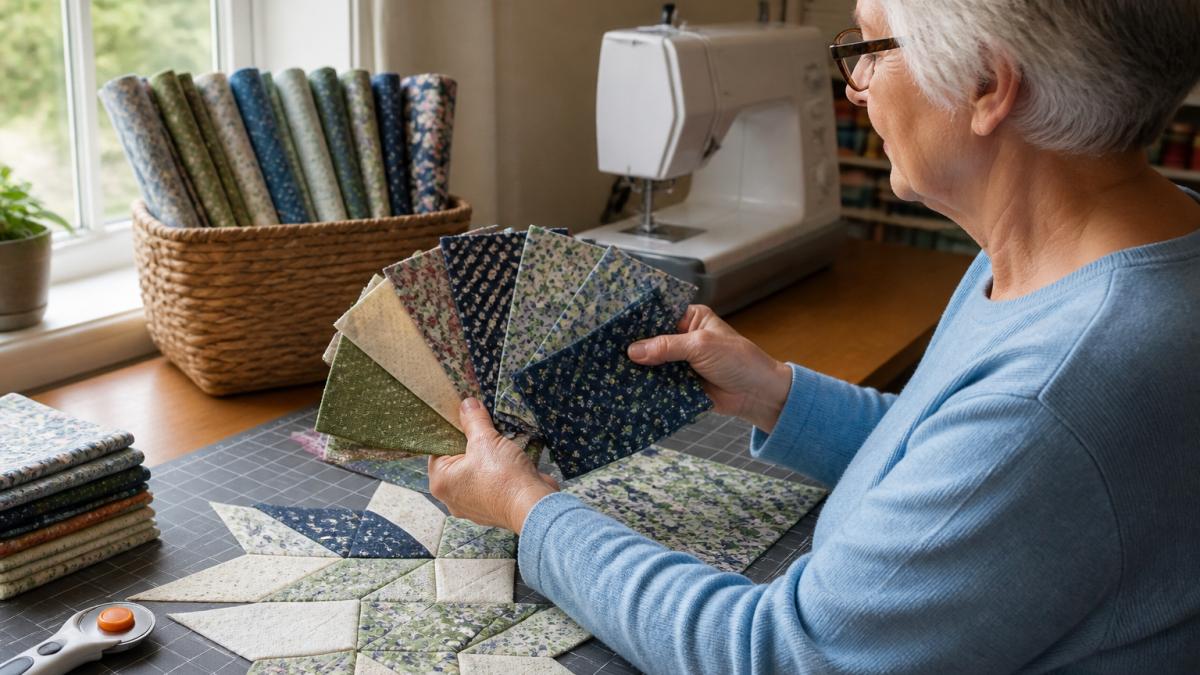
Hold your fabrics together as they'll appear in your finished quilt. If you're using strips, fold them into strips. If you're doing a patchwork, lay pieces out to see how they interact. Colors change when they sit next to each other.
Compare colors in different lighting. Step outside if the store allows it. Check how your choices look in daylight versus fluorescent light. This prevents the common mistake of buying fabrics that look great indoors but clash in natural sunlight.
Create a small test combination. Many stores let you take photos of your selected fabrics together. Some quilters buy a quarter yard of each choice to audition them at home under their own lighting.
Bring swatches of thread you plan to use. Thread color matters as much as fabric color. Matching thread to fabric in person ensures your seams blend or pop exactly as intended.
Not all quilting cotton feels or performs the same. Quality differences show up immediately when you examine fabric in person.
Run the bolt through your hands. Quality quilting cotton has a consistent weave with no thin spots. The thread count should feel balanced. Too loose and it frays easily. Too tight and it's hard to needle.
Look at the print registration. This means how precisely the pattern aligns with the weave. Poor registration shows up as blurry or offset prints. Check several inches of the bolt. One good spot doesn't mean the whole bolt is consistent.
Examine the selvage. This is the finished edge on both sides of the bolt. It should be clean and straight. Damaged or uneven selvages suggest the fabric wasn't handled well during production or storage.
Feel the hand of the fabric. This is quilter speak for how it feels. Good quilting cotton has a slight stiffness that makes it easy to cut and sew accurately. Limp fabric shifts as you work. Stiff fabric resists your needle.
Ask about fiber content. Quality quilting cotton is 100% cotton. Blends behave differently and may not hold up through multiple washings. The product listing at High Country Quilts shows fiber content clearly so you know exactly what you're buying.
Most quilting stores sell fabric by the yard. One yard is 44 to 45 inches wide by 36 inches long. This is the standard for quilting cotton. Many quilters buy quarter yards or half yards to test colors and prints before committing to larger quantities.
When you shop in person, you can request exact yardage. Need 2.5 yards? The staff cuts it for you right there. No waiting for shipping. No minimum order requirements. This flexibility saves money on projects that need unusual amounts.
Bulk purchasing makes sense for your favorite prints. If you find a fabric you love, buy extra. Quilting fabrics go out of print regularly. A print you want next month might not be available in six months.
Compare the per-yard cost of buying bulk versus buying small amounts. Often, larger cuts cost slightly less per yard. The savings add up across multiple projects. At High Country Quilts in Highlands Ranch, staff can help you calculate the best purchase strategy for your needs.
Store excess fabric properly. Keep it in a cool, dry place away from direct sunlight. Acid-free tissue paper protects it from dust. Proper storage means your fabric stays fresh for years.
Not all quilting cotton feels or performs the same. Quality differences show up immediately when you examine fabric in person.
MO 1 800 Notion Turquoise RS5214 15 Ruby Star →
Run the bolt through your hands. Quality quilting cotton has a consistent weave with no thin spots. The thread count should feel balanced. Too loose and it frays easily. Too tight and it's hard to needle.
Look at the print registration. This means how precisely the pattern aligns with the weave. Poor registration shows up as blurry or offset prints. Check several inches of the bolt. One good spot doesn't mean the whole bolt is consistent.
Examine the selvage. This is the finished edge on both sides of the bolt. It should be clean and straight. Damaged or uneven selvages suggest the fabric wasn't handled well during production or storage.
Feel the hand of the fabric. This is quilter speak for how it feels. Good quilting cotton has a slight stiffness that makes it easy to cut and sew accurately. Limp fabric shifts as you work. Stiff fabric resists your needle.
Ask about fiber content. Quality quilting cotton is 100% cotton. Blends behave differently and may not hold up through multiple washings. The product listing at High Country Quilts shows fiber content clearly so you know exactly what you're buying.
Walking into a physical fabric store connects you with people who know their craft. Staff at High Country Quilts can answer questions that take hours to research online. They've seen quilting trends come and go. They know which fabric combinations work and which ones don't.
Many stores offer classes. Beginners learn cutting and piecing basics. Intermediate quilters tackle complex patterns. Advanced students explore techniques like free-motion quilting or appliqué.
Community matters in quilting. Fabric stores host sewing circles, challenge groups, and show-and-tell events. You meet other quilters. You share ideas. You see finished projects that inspire your next creation. This social connection rarely happens when shopping online.
Staff recommendations save time and money. Instead of buying ten fabrics to audition, a knowledgeable employee suggests three that will definitely work. They know the store's inventory deeply.
Getting personalized advice means your projects turn out better. Beginners feel confident instead of overwhelmed. Experienced quilters discover new techniques and products they didn't know existed.
Online shopping seems cheaper at first glance. No shipping costs to High Country Quilts locations. No drive time. No parking. But the real cost calculation includes more factors.
Online photos don't show accurate colors. You buy based on your screen's display settings. Your monitor might show colors differently than your phone or tablet.
Shipping adds up fast. A $15 fabric bolt plus $8 shipping plus potential return shipping costs $23 or more. Buying in person at High Country Quilts in Highlands Ranch means no shipping surprises.
Online stores have minimum order requirements sometimes. You need to spend $35 or $50 to justify free shipping. This forces you to buy more than you planned.
Quality issues surface faster in person. You catch thin spots, poor print registration, and weave problems before paying. Online returns require photos, descriptions, and waiting for approval. Some stores deny returns on fabric.
Time matters too. Researching fabrics online takes hours. Reading reviews, comparing photos, scrolling through endless options. Shopping in person takes 30 minutes to an hour. You see everything at once.
The convenience of staying home feels good until your quilt doesn't come together the way you imagined.
Buying quilting fabric in person gives you accuracy, quality control, and expert support that online shopping can't match. You see true colors under real light. You feel fabric quality before committing money. You get personalized recommendations from people who understand quilting.
High Country Quilts in Highlands Ranch offers all these advantages. With over 20,000 products in stock and staff who genuinely care about your projects, you'll find everything you need for your next quilt. Whether you're selecting the MO 1 800 Notion Honey RS5210 14 Ruby Star for a playful sewing-themed project or exploring the Barron Goes Camping Campground Light Blue for a children's quilt, you'll make confident choices when shopping in person.


Visit High Country Quilts today. See your fabrics in person. Get expert guidance. Start your next project with certainty.
Buying quilting fabric in person lets you see true colors under natural light, feel the weight and weave of cotton, and assess quality firsthand. Online photos often misrepresent colors due to screen settings and lighting. In-store shopping also connects you with staff who can guide fabric selection, help you match colors for your specific quilt design, and answer questions about fiber content and care. You avoid costly returns and the frustration of receiving fabric that doesn't match your vision.
Quality quilting cotton fabric should feel smooth and tightly woven with consistent thread density. Check the weight by holding it, premium quilting fabric has a substantial feel without being stiff. Examine the print clarity; colors should be crisp and evenly applied. Look at the selvage edges for the manufacturer's name and fiber content (100% cotton is standard). Run your fingers across the surface to detect any loose threads or weaving flaws. High Country Quilts carries premium fabric lines that meet professional quilting standards.
Bring your existing fabrics or a photo of your color palette to the store. Hold potential new fabrics next to your selections under the store's lighting and near a window to see how colors interact in natural light. Many fabric stores have design walls where you can pin samples to visualize combinations. Staff can suggest complementary colors and help you balance warm and cool tones. Shopping in person eliminates the guesswork of online shopping and prevents color mismatches that are expensive to fix after cutting.
Bring any fabric swatches, thread colors, or project photos that represent your color scheme. Bring measurements of your project space if you're shopping for home decor items. A list of required yardage helps you stay focused and avoid impulse purchases. Consider bringing a magnifying glass if you want to inspect weave detail closely. Wear neutral-colored clothing so fabric colors show true against your body. Comfortable shoes are essential since quality fabric stores have substantial floor space to explore.
Shopping for quilting fabric in person transforms how you approach your projects. The investment of time pays dividends in accuracy, quality, and confidence. High Country Quilts in Highlands Ranch is ready to help you find exactly what you need to create beautiful quilts that last for generations.
At High Country Quilts we care deeply about community. With our experiences in retail, we know that a store is not only a place to shop but also a place for the community to gather and share. During this busy...

Hi! We’re Adam and Renee Wheaton, the new owners of High Country Quilts! For more than 40 years, we’ve owned and operated vacuum and sewing businesses. Following in Renee’s father’s footsteps after he retired from All Discount Vacuum and Sewing in Colorado...


Leave a comment