
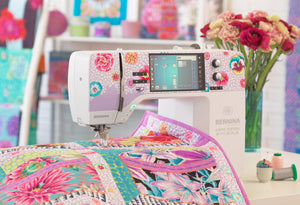

We Love Our Quilting Community
At High Country Quilts we care deeply about community. With our experiences in retail, we know that a store is not only a place to shop but also a place for the community to gather and share. During this busy...


Last Updated: October 19, 2026
Yes, a professional quilting class is worth it for most beginners and for any quilter stuck at the same skill ceiling. A quilting class is structured, instructor-led instruction where you build a specific project under supervision, and that hands-on correction is what you cannot get from a video. At High Country Quilts, we have watched students finish their first real quilt in a single course instead of abandoning a half-pieced top in a closet.

The value comes down to one thing: feedback. You can watch a tutorial on chain piecing a hundred times and still sew a wavy seam allowance, because nobody is looking over your shoulder to say "your quarter-inch is drifting." A class fixes that in an afternoon.
Below, we break down what a class actually costs you in time and money, what to bring, and how to pick one that matches your goals. We will also be honest about when a class is not worth it, because it isn't for everyone.
Most quilting classes follow a predictable rhythm: a short demo, then supervised sewing, then a check of your work before you move on. Expect to leave with a finished block or small project, not just notes.
A typical session runs two to four hours. The instructor demonstrates a technique at the front, you repeat it at your machine, and they circle the room correcting seam allowances, pressing habits, and tension problems. Class sizes stay small for exactly this reason.
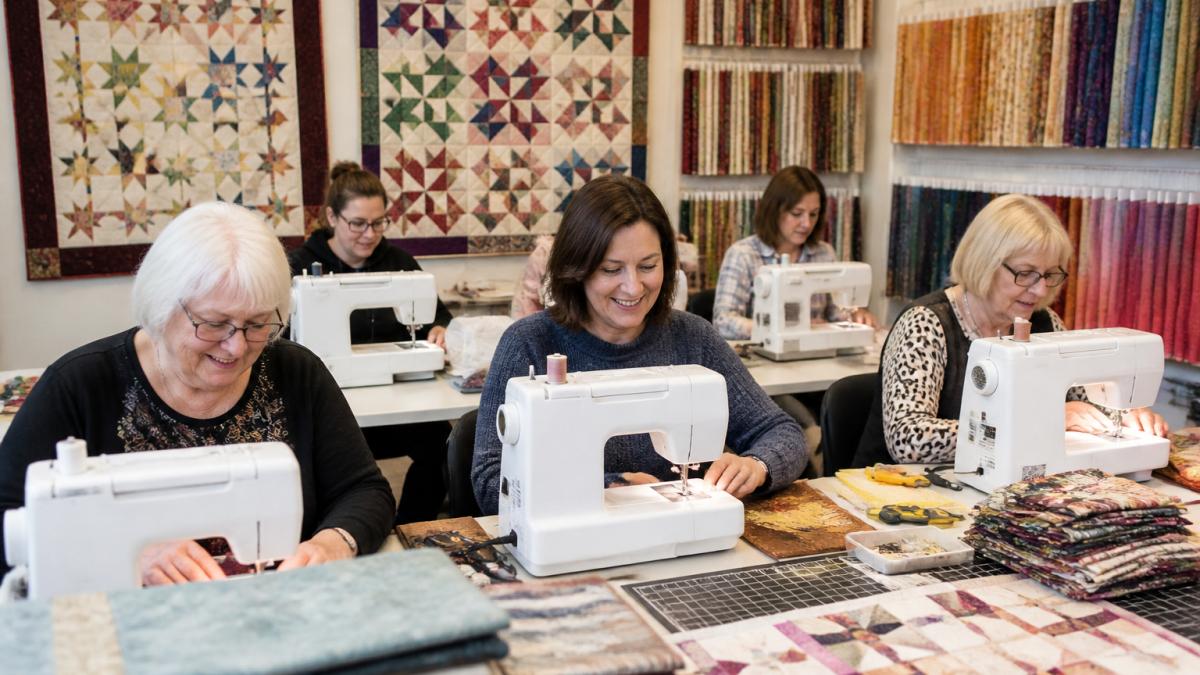
What you will actually practice:
Class pricing varies widely by format, length, and whether supplies are included, so ask for the full breakdown before you register. A single-session workshop usually costs less than a multi-week course, and a class that bundles fabric and patterns can cost more upfront but saves you shopping trips.
Here is how the formats typically compare on cost and commitment:
| Format | Typical Commitment | Cost Consideration | Best For |
|---|---|---|---|
| Single workshop | One session, 2-4 hours | Lowest upfront cost | Testing whether you enjoy it |
| Multi-week beginner course | 3-6 sessions | Higher total, better value per hour | Building a full first project |
| Technique-specific class | One to two sessions | Mid-range, skill-focused | Quilters fixing a specific weakness |
| Project-based class | Varies by project | Includes pattern and often fabric | Finishing a quilt start to finish |
For a concrete example, our Freehand Quilting class with Valerie is $50.00 for a hands-on session on longarm designs, and it requires previous longarm experience. That is the pattern to watch for: technique classes assume a base skill level, so read the prerequisites before you pay.
The real cost question is cost versus benefit. A $50 class that fixes a habit costing you fabric on every project pays for itself quickly. A class that repeats what you already know does not.
Most beginner classes ask you to bring a basic sewing kit and your machine, and the shop supplies the pattern or a fabric kit. Confirm the list before you register so you are not buying duplicate tools.
What to buy versus borrow matters. Do not buy a specialty presser foot or a new machine before your first class. Use what you have, learn what the technique actually requires, then buy with purpose. A common mistake is arriving with a full new toolkit and no idea which pieces you will use.
Pick a class by matching the instructor's stated skill level and project outcome to where you actually are, not where you hope to be. The right class stretches you one step; the wrong one either bores you or buries you.
Use these criteria when comparing options:
Ask the shop directly: "What will I have finished by the end?" and "What skill level is this really for?" A good instructor answers both without hedging.
In-person classes win on correction and community; online learning wins on cost and schedule. Neither is universally better, and many quilters use both.
| Factor | In-Person Class | Online Learning |
|---|---|---|
| Feedback | Real-time, hands-on correction | Self-diagnosed, delayed |
| Cost | Higher per session | Often free or low-cost |
| Schedule | Fixed dates and times | Flexible, self-paced |
| Community | Built-in, local quilters | Varies by platform |
| Machine help | Instructor sees your actual machine | Generic troubleshooting |
| Best for | Beginners and stuck quilters | Refreshers and advanced self-starters |
The honest limitation of online learning is that you cannot see your own mistakes. You can replicate a technique wrong for months without knowing. The limitation of a class is scheduling: you have to show up when it runs.
Our recommendation: take one in-person class to establish correct habits, then use online resources to expand. Once your foundation is solid, self-teaching works. Before that, it is guesswork.
The challenge most quilters face is not lack of information, it is lack of correction, and that is exactly what a class provides. If you are deciding whether a professional quilting class is worth it, start with one beginner session and judge by what you finish.
At High Country Quilts, we support that decision with authorized BERNINA sales and service, more than 20,000 products in stock, and classes led by working quilters across our Colorado locations. Our staff will help you match a class to your skill level and your machine.
Get started with High Country Quilts and book a class that finally moves your quilting forward.
It depends on what you want to learn. A quilting class costs more than a video tutorial, but you get hands-on correction, a machine you can try before buying, and immediate answers to mistakes that would otherwise take hours to fix alone. For beginners, the cost of one class often prevents hundreds of dollars in wasted fabric and tools. For experienced quilters, specialty classes like longarm freehand quilting at $50 teach techniques that are hard to learn from a screen.
Most beginner classes cover rotary cutting, accurate seam allowances, pressing, and assembling a simple block or small quilt top. You will also learn how to read a pattern, choose fabrics that work together, and troubleshoot tension and stitch problems on your machine. Expect to leave with a finished sample and a clear idea of what to practice next. Classes that include machine time let you try a BERNINA before you commit to a purchase.
Prices vary by length and topic. Specialty classes, such as a hands-on freehand longarm quilting session, run around $50 per registration at High Country Quilts. Beginner and project classes are often priced per session or as a series, and supplies are usually extra. Always ask whether fabric and thread are included, and whether you need to bring your own machine or one is provided. That total, not just the registration fee, tells you the real cost.
Not always. Many quilt shops provide machines for class use, especially when the class is designed to let you try a specific brand. If you are shopping for a machine, a class is a low-pressure way to test one before buying. Ask the store whether machines are supplied and what model you will use. If you bring your own, arrive early enough to set up and have the manual with you in case the instructor needs to adjust settings.
At High Country Quilts we care deeply about community. With our experiences in retail, we know that a store is not only a place to shop but also a place for the community to gather and share. During this busy...

Hi! We’re Adam and Renee Wheaton, the new owners of High Country Quilts! For more than 40 years, we’ve owned and operated vacuum and sewing businesses. Following in Renee’s father’s footsteps after he retired from All Discount Vacuum and Sewing in Colorado...


Leave a comment