
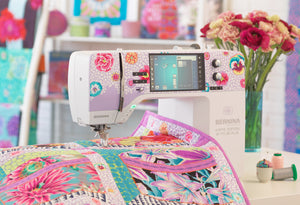

We Love Our Quilting Community
At High Country Quilts we care deeply about community. With our experiences in retail, we know that a store is not only a place to shop but also a place for the community to gather and share. During this busy...


You're standing in a quilt shop with a precut batting package in one hand and a sample pulled from a tall roll in the other. The package has a familiar project size printed on it, while the roll promises a continuous supply, but the label doesn't immediately answer the questions that matter. Which option costs less for your quilt? Which one leaves less unusable material? Is buying a roll sensible if you're still finishing your first few projects?
Batting by the roll is best understood as a yield-and-efficiency decision, not merely a bulk packaging choice. A roll can reduce interruptions and seams, but only when its width, fiber, storage needs, and remaining length match the way you quilt.
The history of this format helps explain why it became useful. Before ready-made batting existed, quilters had to card and layer their own fibers. Commercial ready-made batts were being offered by the mid-1800s, and the International Quilt Museum notes that by 1929 Stearns & Foster was printing a free quilt pattern inside each Mountain Mist batting wrapper. The museum's history of Mountain Mist batting shows how batting gradually became a standardized quilting supply.
The beginner in front of the batting wall has three very different packages within reach. A small precut sits in a plastic sleeve, a roll stands upright on a tall rack, and a bolt can be cut to order by the shop staff. The torn sample from the roll feels continuous and easy to handle, but the packaged piece seems less intimidating for a first throw.
That's where the comparison begins. The price tag alone doesn't tell you which option is cheaper per quilt, because the answer depends on the batting's width, how much you need, how much you'll trim, and whether you'll use the leftover material. A roll may offer better yield for repeated projects, while a precut can be the safer choice when you need only one small piece.

A useful first question: “How many quilts will this material realistically serve?”
Rolls occupy more space and ask you to make decisions by continuous length rather than by a printed crib, twin, or queen label. They can be convenient for wide quilts, longarm work, or regular shop restocking, but they also require a storage plan. The rest of the decision becomes much easier once you know what a roll measures and how its width affects usable coverage.
Batting by the roll is a long, continuous length of quilt batting wound around a core and sold according to linear length. Instead of buying a piece cut for one named quilt size, you purchase the amount you need from a continuous roll. Product formats vary, and current manufacturer listings include rolls measuring 60 inches by 30 linear yards, 93 inches by 30 linear yards, and 120 inches by 30 linear yards, along with products listed at 96 inches by 30 yards. Quilters Dream's batting user guide provides examples of these standardized roll formats.
A roll differs from packaged batting in a practical way. A precut package gives you a fixed piece, often convenient for a defined project. Yardage from a shorter bolt is the same basic selling concept in a smaller format. The roll gives you more continuous material to measure and cut yourself.
A buyer can't judge yield from linear length alone. A 48-inch roll behaves very differently from a 96-inch roll, and cotton products may also be offered in 90-inch and 102-inch widths. Hobbs lists by-the-yard products with weight identified per linear yard, including BY-348 at about 3.3 ounces per yard and BY-696 at 6 ounces per yard, which gives makers and retailers a way to compare bulk as well as coverage. Hobbs Batting's by-the-yard product specifications illustrate why width and weight belong in the same buying conversation.
Shops use roll formats because continuous material can serve many project sizes without opening a new package for each quilt. It can also reduce the need to join smaller pieces for a wide top. That convenience matters most when you have several projects planned, not when a roll is likely to sit untouched.

Fiber changes the quilt's drape, loft, warmth, needle feel, and wash behavior. The roll format doesn't determine those qualities. You can find several fiber families in both rolled and packaged forms, so choose the material for the finished quilt first, then choose the selling format.
| Fiber | Best For | Climate Fit | Cost Tier |
|---|---|---|---|
| Cotton | Heirloom quilts and bed covers | Moderate climates, breathable everyday use | Mid-range |
| Polyester | Kids' quilts, charity quilts, and practical projects | Damp storage areas or situations needing stable loft | Budget |
| Wool | Lightweight warm throws and wall hangings | Seasonal temperature changes | Higher |
| Bamboo | Bed quilts with a silky hand and heavier drape | Warm or moderate climates | Mid to higher |
| Blends | Projects needing balanced handling and feel | Flexible, depending on the blend | Varies |
A cotton-polyester blend, commonly around 80% cotton and 20% polyester, is a forgiving starting point for many beginners. It combines cotton's breathable feel with polyester's added stability and modest loft. It's suited to hand or machine quilting and works well when you're still learning how your needle, thread, and quilting design interact with the middle layer.
Cotton alone offers a traditional hand and comfortable drape. It's a natural fit for heirloom-style bed covers, especially in moderate climates where breathability matters more than maximum loft. Polyester holds its shape and loft, making it a practical option for children's quilts, charity projects, and material kept in damp-prone storage areas.
Wool provides lightweight warmth and can suit experienced quilters making throws or wall hangings. Its cost tier is generally higher, so it makes sense when its warmth, resilience, or distinctive loft is central to the project rather than readily available.
Bamboo and bamboo-cotton blends appeal to makers who want a silky hand and heavier drape in a bed quilt. Cotton-wool and cotton-bamboo blends aim to balance the qualities of their component fibers. Read the product label carefully, especially for loft and care instructions, because the blend ratio affects the result.
Start with the quilt top, not the roll. Measure its finished width and length, then add 4 inches on every side so the batting has room for shifting, quilting tension, and final trimming. That means you add 8 inches to the measured width and 8 inches to the measured length before deciding how much continuous batting to cut.
Suppose your quilt top is roughly 65 by 90 inches. Adding the required overhang makes the batting piece roughly 73 by 98 inches. On a 90-inch-wide roll, you'll need a little more than two linear yards, or about 2.3 linear yards for this twin-size example. The width already covers the needed crosswise measurement, so the length you purchase is the key calculation.

Lay the unrolled batting on a clean, flat floor or another surface large enough to support it. Use a long rotary ruler, a measuring tape, and a removable marking tool. Smooth the batting without stretching it, align the roll's edge, mark the cut line across the full width, and cut with a rotary cutter or sharp fabric scissors.
A flat surface prevents the material from bowing as you measure. If the batting curls after being unrolled, let it relax before cutting rather than forcing it into a stretched position.
Cutting rule: Measure twice, cut once, and keep the roll's factory edge aligned whenever possible.
A single continuous piece is usually simpler, but a seam can solve a width or leftover problem. If you need to join two pieces, overlap the cut edges by at least 3 inches, baste the join securely, and check that the seam doesn't create a thick ridge beneath the quilt top. For a wide quilt, buying enough width to avoid a join may be worth the added material and handling ease.
Use the video below as a visual supplement for the measuring and cutting process.
Standing in the batting aisle with several quilts planned, compare the yield you will use, not only the price on the label. A cotton roll priced around $8 per linear yard at a 90-inch width works out to roughly $2.85 per square yard. A packaged queen piece in the same fiber often costs $3.50 or more. These figures are examples from the supplied market comparison, not fixed prices. Fiber, brand, width, shipping, and shop pricing can change the result. The market overview of quilt batting also points buyers toward total cost and waste.
| Format | Approx. Price | Price per Sq Yard | Typical Trim Waste |
|---|---|---|---|
| Cotton roll | Around $8 per linear yard | Roughly $2.85 | Near zero when cut to size |
| Packaged queen batting | $3.50 or more | Depends on package dimensions | About 5% to 8% |
| Precut smaller package | Varies by size and fiber | Often higher than bulk yardage | Depends on the project |
Packaged batting is convenient, but its standard dimensions may leave strips along the edges after you fit it to your quilt top. The supplied comparison estimates about 5% to 8% waste on packaged batting, while a roll cut to your measurements can bring that amount close to zero. Offcuts still happen. Allow for awkward remnants, cutting mistakes, and pieces too small to use comfortably.
A roll makes better financial sense when you have a plan for the remaining material. The supplied comparison places the usual break-even point around three to four medium quilts The market overview of quilt batting, but your project mix may lead to a different result. Someone making one small throw may spend more overall on a roll, even when its per-yard rate looks lower.
Use the roll's full yield as part of the calculation. List the quilts you expect to make, estimate the batting each will require, and include usable leftovers rather than treating the entire roll as immediate savings.
Storage has a cost too, even without a separate charge. If the roll occupies limited closet space, loses loft, or develops mildew before the next project, the apparent saving disappears. Compare the batting you are likely to use with the batting you would only be keeping.
Open a roll carefully and keep the unused length supported as you work. If the remaining batting loosens or loses its shape, re-roll it around a clean cardboard tube so the material stays organized rather than forming a soft pile. A tube also makes the roll easier to move without dragging the fibers across the floor.
Wrap the roll loosely in a breathable cotton sheet. Plastic can trap moisture, so it shouldn't be your first choice for long-term wrapping. Store the covered roll horizontally, off the floor, in a dry closet or another climate-controlled area where dust and humidity are limited.

Don't compress the roll beneath heavy fabric stacks. Pressure can flatten polyester and wool loft permanently, leaving the next quilt with a different hand from the original material. Label the tube with the fiber content and purchase date, so you won't have to guess whether the remaining batting suits a washable child's quilt, a warm throw, or a low-loft wall hanging.
Light creases may relax when you lay the batting flat. A damp cloth and gentle steam can help refresh lightly marked areas, but keep heat controlled and avoid pressing the iron directly onto the batting unless the manufacturer's care instructions allow it.
Storage check: Mildew spots are a discard signal. Don't place visibly mildewed batting inside a quilt.
For broader guidance on protecting fabric, tools, and quilt materials between projects, browse our quilting storage guide. Good storage protects the investment you made in continuous material and makes the next cutting session less frustrating.
The best purchasing channel depends on what you need to inspect and how certain you are about the product. A local quilt shop lets you feel the loft, compare drape, and see the color before buying. Staff can often cut custom yardage from a roll while you watch, which is useful when you're unsure how much overhang your project needs.
Chain fabric stores may carry polyester and basic cotton rolls, but their selection can be narrower for wool or bamboo. They're convenient when you need material immediately and already know the fiber and width that fit your quilt.
Phone ordering works well for repeat buyers who already know their preferred brand, weight, and width. A batting manufacturer or distributor may offer wholesale pricing, but freight shipping becomes part of the calculation because rolls are bulky.
Online specialty stores and marketplaces expand access to unusual fibers and widths. The trade-off is that you can't handle the batting first, and shipping for a 25-yard roll can equal or exceed the batting itself. Missouri Star Quilt Company's guide to batting by the roll discusses the appeal of continuous batting for large projects and longarm workflows, while your final decision still depends on the seller's specific dimensions and shipping terms.
| Channel | Typical Price Level | Selection | Inspection Possible | Best For |
|---|---|---|---|---|
| Local quilt shop | Varies | Curated and practical | Yes | Beginners and custom cuts |
| Chain fabric store | Often accessible | Basic cotton and polyester | Sometimes | Immediate, familiar purchases |
| Phone order | May suit wholesale buying | Brand-dependent | No | Repeat buyers |
| Online specialty site | Varies with freight | Broadest reach | No | Unusual fibers or widths |
| Shop or guild co-op | Shared purchasing | Depends on members | Usually partial | Splitting yardage and freight |
Class attendance at quilt shops or guilds can occasionally create a co-op purchase. Several members share a roll, divide the yardage, and split freight, which can make a specialty format more approachable. Confirm the fiber, width, cutting plan, and payment arrangement before committing.
A beginner finishing a first small throw probably doesn't need a full roll. One or two yards of low-loft cotton or polyester from a precut package or a shop-cut length may be easier to handle while you learn how batting responds to basting, quilting, and washing.
An intermediate quilter planning a twin-size donation quilt has a clearer reason to compare roll pricing. Measure the top, add the overhang, calculate the linear length, and ask a local shop whether it can sell a partial roll. This approach preserves the flexibility of continuous batting without requiring a large unused supply.
An advanced quilter producing multiple bed-sized quilts each year may benefit from a wholesale roll, especially when the width reduces the need for a join. Keep the unused portion protected in a suitable storage container, but don't buy more than you can use while the batting remains in good condition.
The central question is simple: Will you use the remaining roll within a year? If the answer is uncertain, a smaller cut remains the safer choice. A roll saves material and interruptions only when its yield matches your actual project schedule, storage space, and preferred fiber.
Write down the next quilt top's width and length today. Then contact the nearest quilt shop and ask about roll-yardage pricing, available widths, fiber content, and whether the staff can cut the amount you need. If you're comparing a specific product, you can also view the Hobbs Fusible Heirloom Batting 96-inch roll and check whether its continuous format fits your upcoming projects.
For comfortable reading, set body copy at a minimum of 16px, with 18px a strong choice for long-form quilting guides, based on accessible typography guidance. Use clear headings at a larger size, with mobile H1 text commonly adjusted to 28px to 36px and body text kept at 16px or above, as described in mobile typography guidance. Keep body line spacing generous, around 1.5, and header line spacing compact, around 1.2, so measurements and buying details stay easy to scan on a phone.
High Country Quilts offers batting by the yard and packaged batting options, including extra-wide formats that can help you compare a roll with your next quilt's actual yield. Visit High Country Quilts to review available quilting supplies, ask about suitable batting for your project, and take the next step with a roll purchase that fits your plans.
At High Country Quilts we care deeply about community. With our experiences in retail, we know that a store is not only a place to shop but also a place for the community to gather and share. During this busy...

Hi! We’re Adam and Renee Wheaton, the new owners of High Country Quilts! For more than 40 years, we’ve owned and operated vacuum and sewing businesses. Following in Renee’s father’s footsteps after he retired from All Discount Vacuum and Sewing in Colorado...


Leave a comment